5.1.2(a) - Excretion and homeostasis
Excretion is one of the ways a mammal keeps its internal environment suitable for life. In this lesson, you will define excretion precisely, distinguish it from similar-looking processes, and explain why removing carbon dioxide and nitrogenous waste matters for metabolism and homeostasis.
What Excretion Means
Metabolism is the sum of the chemical reactions taking place inside cells. These reactions make useful products, but they also make waste products. If a waste product is made by metabolic reactions and then removed from the body, that removal is excretion.
Excretion
Excretion is the removal from the body of waste products of metabolism.
The key phrase is waste products of metabolism. The examples assessed here are metabolic wastes. Excretion can also remove excess substances such as water and ions; it is not simply any material leaving the body. Undigested food remains the important contrast because it has not entered cell metabolism.
That gives a useful contrast:
| Process | What is removed or released? | Is it excretion? |
|---|---|---|
| Excretion | Waste products made by metabolism, such as carbon dioxide or nitrogenous waste | Yes |
| Egestion or defaecation | Undigested food that was never absorbed into body cells | No |
| Secretion | A substance released by cells for a useful function, such as a hormone or digestive enzyme | No |
This distinction matters because exam answers often lose credit when they call every release from the body "excretion". Breathing out carbon dioxide is excretion because carbon dioxide is made during respiration in cells. Removing undigested fibre in faeces is not excretion because that material has not been produced by cell metabolism.
Why Waste Removal Matters
Homeostasis means maintaining a stable internal environment. A-level biology often focuses on temperature, blood glucose and water potential, but waste concentration is also part of the internal environment. If metabolic wastes accumulate, the fluid around cells changes and enzyme-controlled reactions become less reliable.
Metabolism depends on enzymes. Enzymes have active sites with specific shapes and charges, so they work best within a suitable range of conditions. Waste products can disturb those conditions. Excretion is therefore not just "getting rid of rubbish"; it protects the conditions needed for metabolism to continue.
[DIAGRAM: excretion_metabolic_waste_routes: Lesson 096: Excretion and homeostasis - diagram 01; asset_slug: 096_m05_1_2_excretion_and_homeostasis__diagram_01; recommended_method: drawn_biology; description: Flow diagram linking body-cell metabolism to carbon dioxide and nitrogenous waste, their route-level excretory removal, and stable internal conditions for enzyme-controlled reactions.]
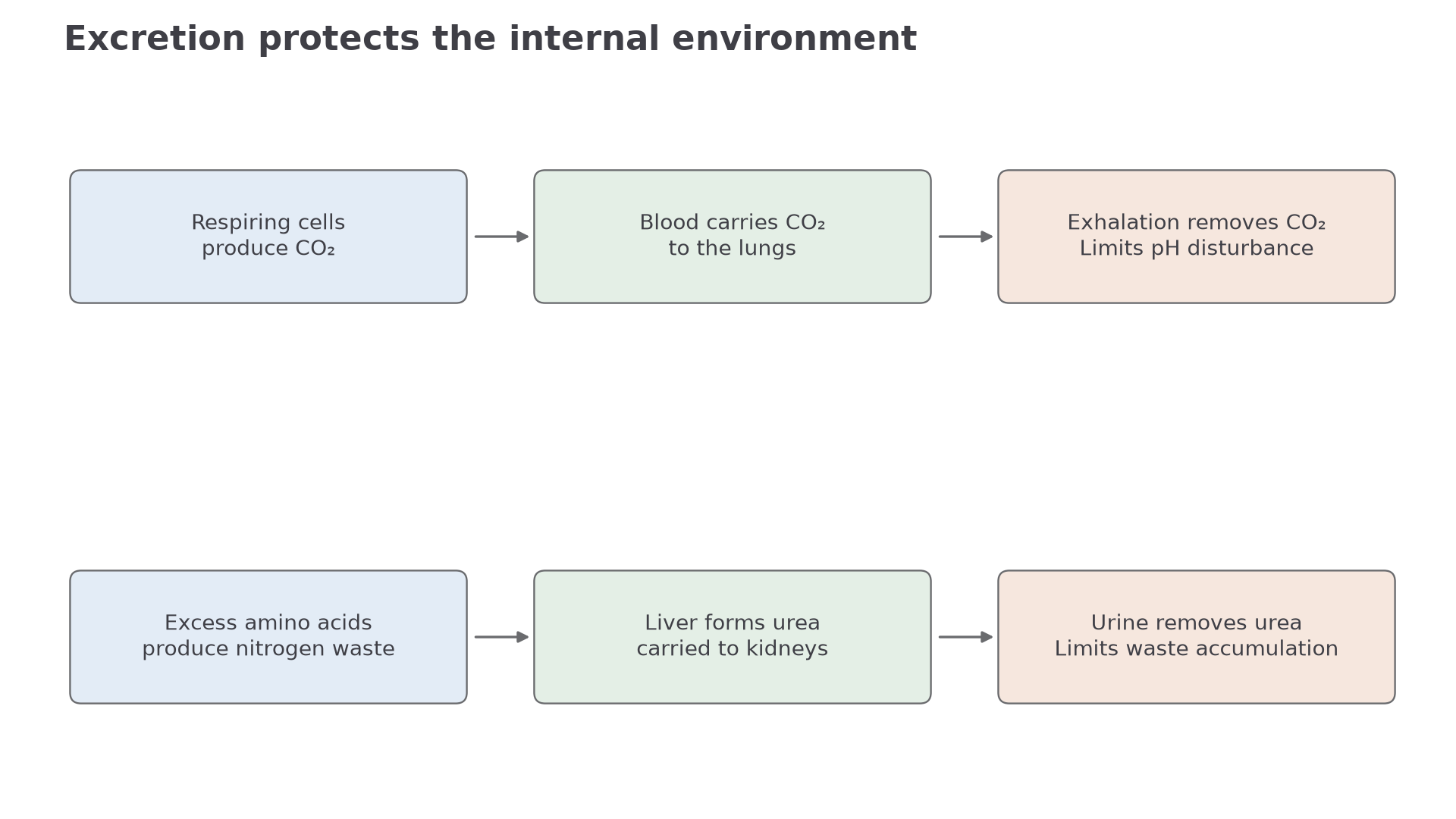
The diagram keeps the boundary of this lesson clear. You need to understand the idea that waste is produced by cells and removed from the body. The detailed liver, nephron and ADH mechanisms are separate lessons.
Excretion helps maintain homeostasis because it prevents metabolic wastes from building up to levels that would disrupt enzyme-controlled metabolism.
Continue this lesson.
You’re previewing NovaLearn without an account. Create a free account to read the rest.
Create free account