9.4C - Chemical test for ammonia
Learn the chemical test for ammonia gas and why it uses damp red litmus paper. Then use the apparatus correctly so an alkaline liquid cannot give a misleading result.
The ammonia test and why it works
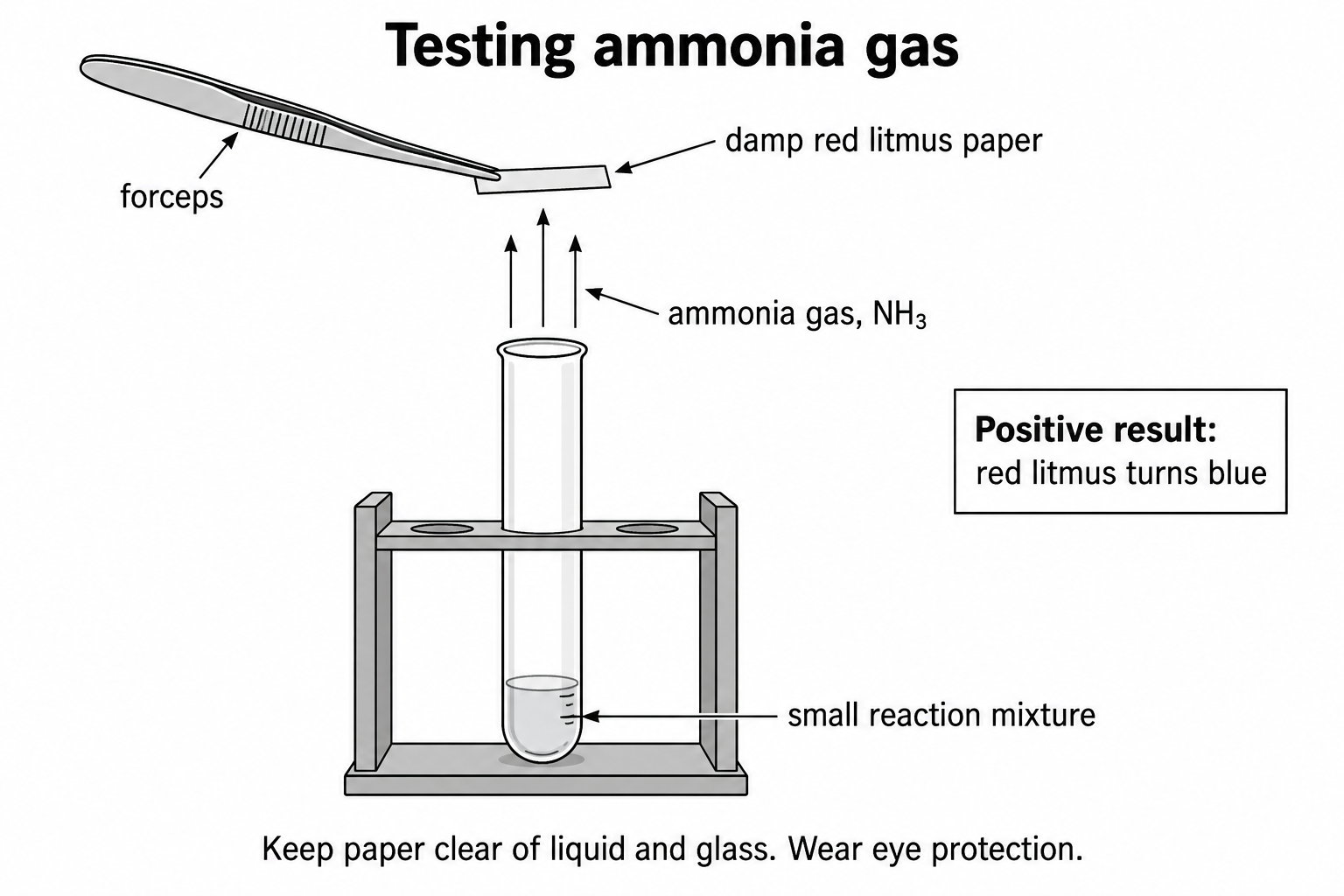
Ammonia, NH₃, is a colourless gas. Hold damp red litmus paper in the gas: ammonia turns it blue. A smell is not a substitute for this chemical test.
The moisture lets ammonia dissolve. The resulting solution is alkaline because it contains hydroxide ions, which turn red litmus blue. Dry paper is a poor test; blue paper is already blue and cannot show the required change.
Ammonia is different from ammonium, NH₄⁺, a positive ion in ammonium salts. Warming an ammonium salt with sodium hydroxide solution produces ammonia gas; the litmus tests that gas, not the original ion.
Testing the gas without contamination
[DIAGRAM: asset_name: ammonia_litmus_test: Testing ammonia gas; asset_slug: 208_9_4c_chemical_test_for_ammonia_diagram1; file: 208_9_4c_chemical_test_for_ammonia_diagram1_repaired.png; recommended_method: imagegen; description: Monochrome diagram showing forceps holding damp red litmus clear above an open test tube, a small reaction mixture, upward gas arrows and the positive result red litmus turns blue. Paper does not touch liquid or glass.]
Continue this lesson.
You’re previewing NovaLearn without an account. Create a free account to read the rest.
Create free account