5.22C - Nitrogen, phosphorus and potassium fertilisers
Learn which elements N, P and K represent, why fertilisers supply them as compounds, and how to identify them in a fertiliser mixture.
Nutrients for plant growth
Fertilisers supply nutrient compounds to promote plant growth. They can help replace nutrients removed from soil when crops are harvested. A fertiliser supplies mineral nutrients; plants make their own sugars by photosynthesis.
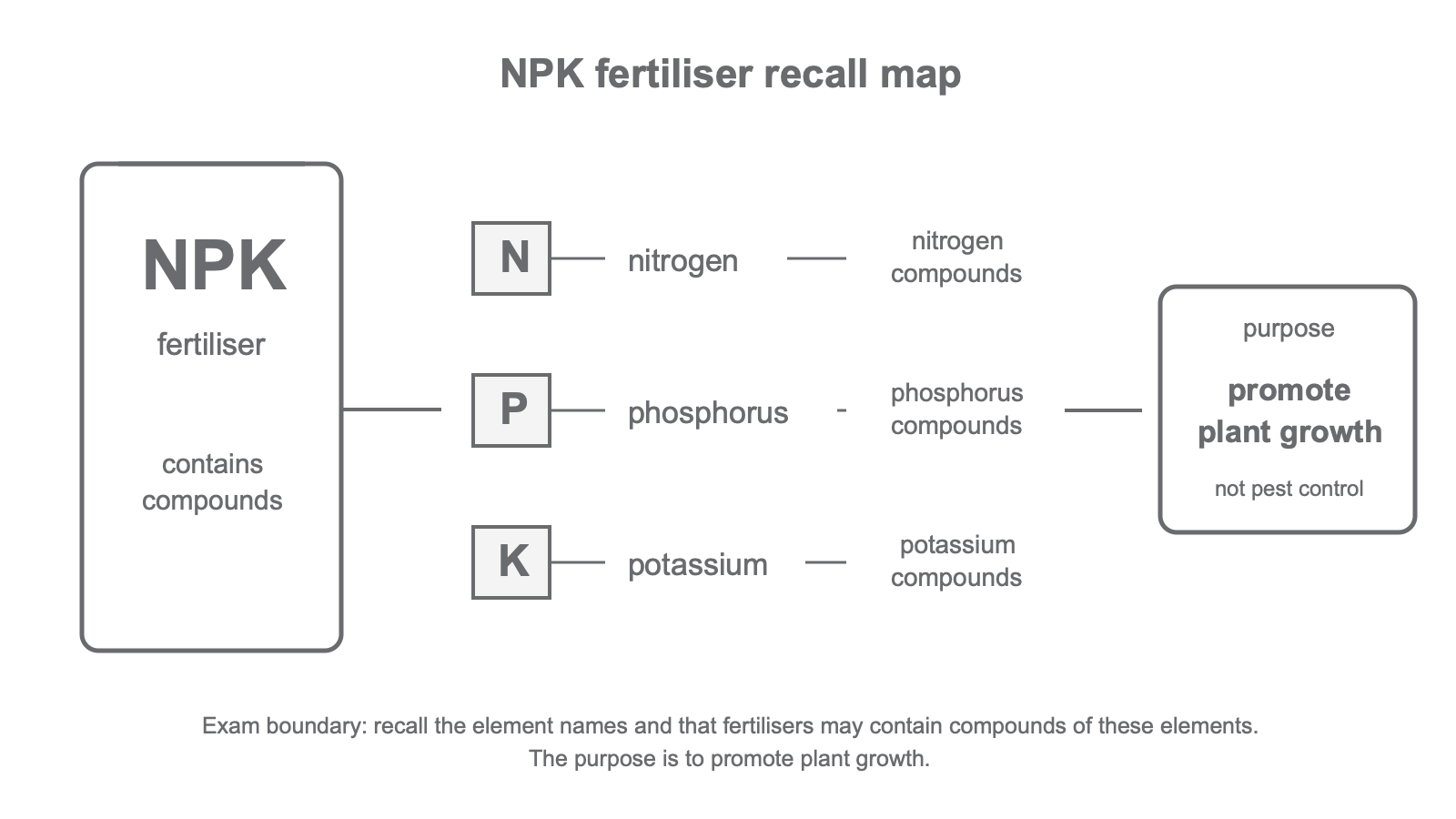
The letters NPK identify three nutrient elements:
| Symbol | Element | Example of a compound supplying it |
|---|---|---|
| N | nitrogen | ammonium nitrate |
| P | phosphorus | a phosphate |
| K | potassium | potassium chloride |
[DIAGRAM: asset_name: NPK fertiliser recall map - diagram 1; asset_slug: 141_5_22c_fertilisers_may_contain_nitrogen_phosphorus_and_potassium_compounds_to_pro_diagram1; file: diagram_assets/141_5_22c_fertilisers_may_contain_nitrogen_phosphorus_and_potassium_compounds_to_pro_diagram1.png; recommended_method: deterministic_drawn; description: Monochrome exact recall map showing an NPK fertiliser bag linked to N = nitrogen, P = phosphorus, K = potassium, then to nitrogen, phosphorus and potassium compounds and the purpose "promote plant growth"; assessed recall visual; all labels are repeated in nearby prose for accessibility.]
Continue this lesson.
You’re previewing NovaLearn without an account. Create a free account to read the rest.
Create free account