5.2C - Oxidation of metals and corrosion
You will connect oxidation at a metal surface with corrosion, then distinguish the rusting of iron from corrosion of other metals.
How oxidation damages a metal
Corrosion
Corrosion is deterioration of a metal caused by chemical reactions with its surroundings, especially oxidation.
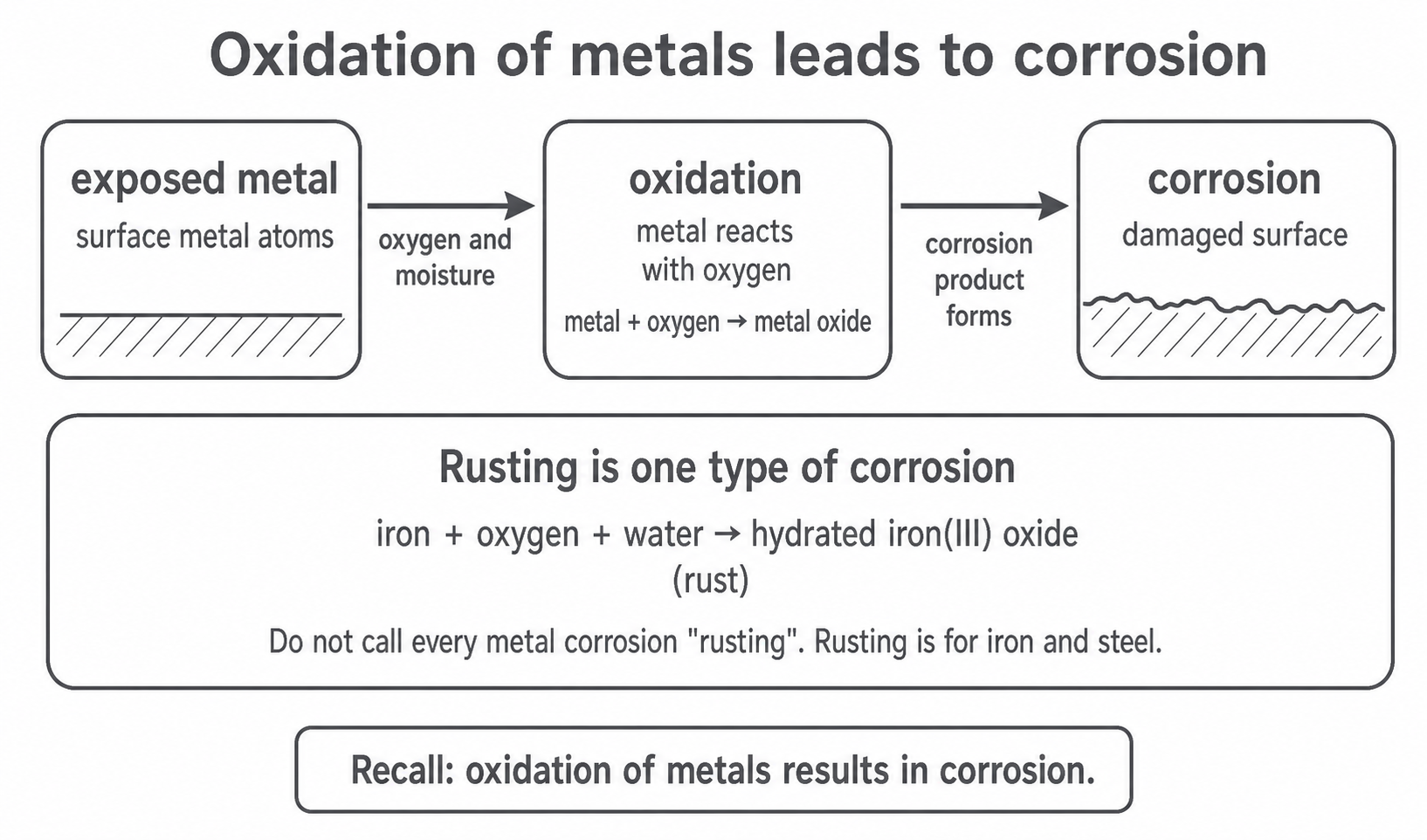
In oxygen-based corrosion, metal atoms react to form compounds at the surface. The metal has been oxidised. Oxidation can mean gain of oxygen; more generally, it means loss of electrons. The surface is chemically changed, rather than simply getting dirty or being scratched.
A common word equation is:
A corrosion layer can flake, crumble or stain, and continued corrosion can weaken an object. Some metals form an adherent oxide layer that limits further attack; oxidation does not mean that every metal rapidly falls apart.
[DIAGRAM: asset_name: oxidation_to_corrosion: Oxidation of metals leads to corrosion - diagram 1; asset_slug: 121_5_2c_oxidation_of_metals_results_in_corrosion_diagram1; file: 121_5_2c_oxidation_of_metals_results_in_corrosion_diagram1_imagegen_v1.png; recommended_method: deterministic_drawn; description: Exact monochrome flow diagram for Edexcel 1CH0 separate Chemistry 5.2C. It shows an exposed metal surface contacted by oxygen and moisture, an arrow labelled oxidation, formation of metal oxide or related corrosion product at the surface, then a damaged corroded surface. A lower callout states that rusting is corrosion of iron only and gives the word equation iron + oxygen + water -> hydrated iron(III) oxide (rust). Deterministic drawing is required because the assessed distinction between oxidation, corrosion and rusting must be precise.]
Continue this lesson.
You’re previewing NovaLearn without an account. Create a free account to read the rest.
Create free account