4.6 - Why extracting metals requires reduction
Understand why extracting a metal from a compound requires reduction. You will distinguish mining and physical separation from the chemical change that produces the metal.
Getting the ore is only the start
Most metals are obtained from ores containing metal compounds mixed with rock. Mining removes the ore from the ground. Crushing or sorting can separate useful material from unwanted rock, but these physical processes do not change a metal compound into the metal element.
For example, a piece of iron oxide still contains iron chemically combined with oxygen after it has been crushed. Making the grains smaller does not remove the oxygen. Native metals are different: they are already uncombined elements. The reduction rule here concerns extracting metals from their compounds.
Reduction produces the metal
Reduction in extraction
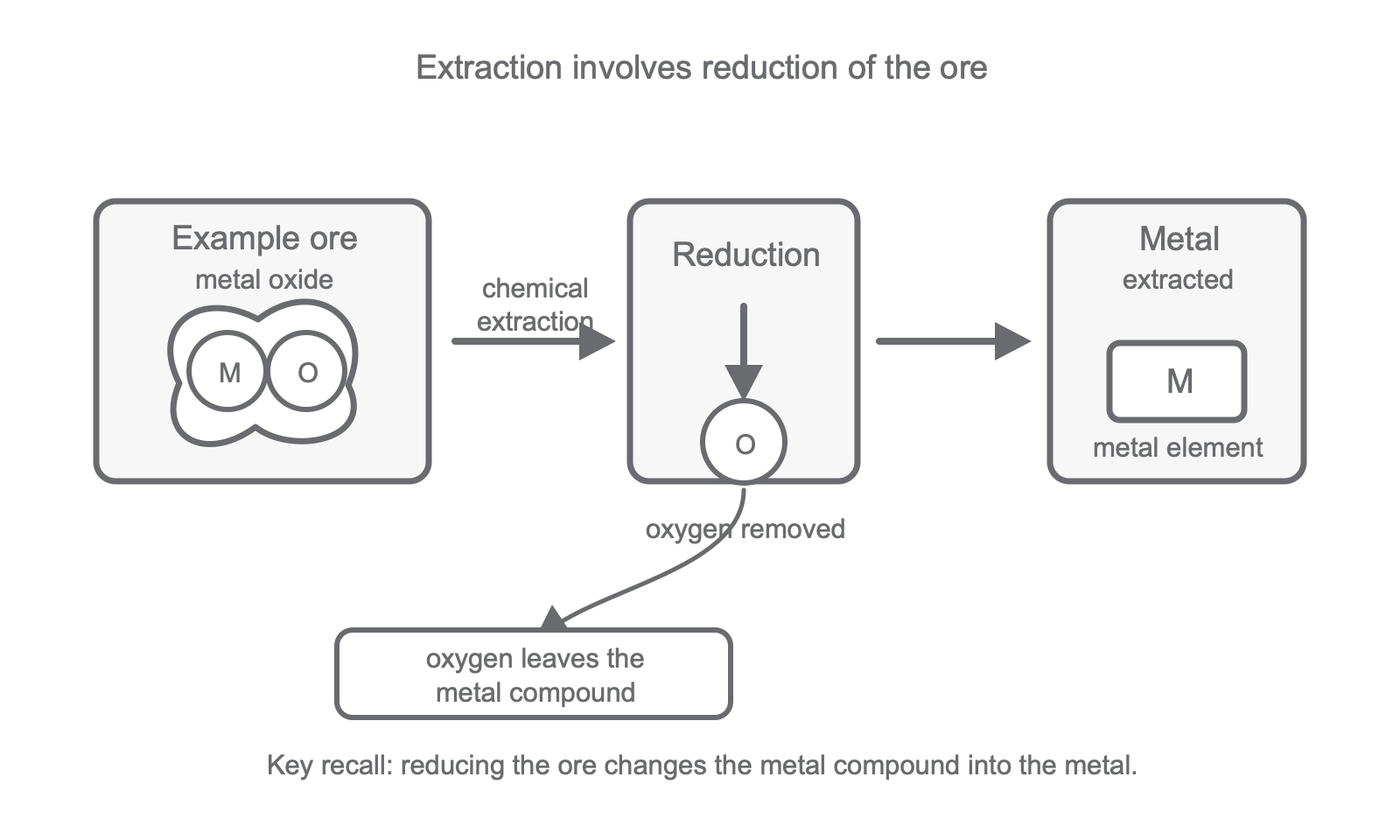
For a metal oxide, reduction removes oxygen from the oxide to produce the metal. More generally, metal ions are reduced by gaining electrons to become metal atoms.
Continue this lesson.
You’re previewing NovaLearn without an account. Create a free account to read the rest.
Create free account