3.20 - Predicting precipitates using solubility rules
When two clear salt solutions are mixed, sometimes nothing visible happens. At other times, ions from the two solutions form an insoluble solid called a precipitate. This lesson teaches the prediction skill: use the solubility rules to decide whether a precipitate forms, and name the solid if one forms.
The Prediction Route
A precipitate is an insoluble solid formed by a reaction between substances in solution. Dissolved ions move through the water; when a suitable positive and negative ion meet, they can form an insoluble solid.
For the common salt mixtures here, use this route:
- Write down the two named solutions.
- Pair each metal or ammonium part with the other negative ion to make the possible new salts.
- Apply the solubility rules to each possible new salt.
- If a possible salt is insoluble under the common solubility rules, predict that a precipitate forms.
- Name the insoluble salt as the precipitate. If both possible new salts are soluble, state that no precipitate forms.
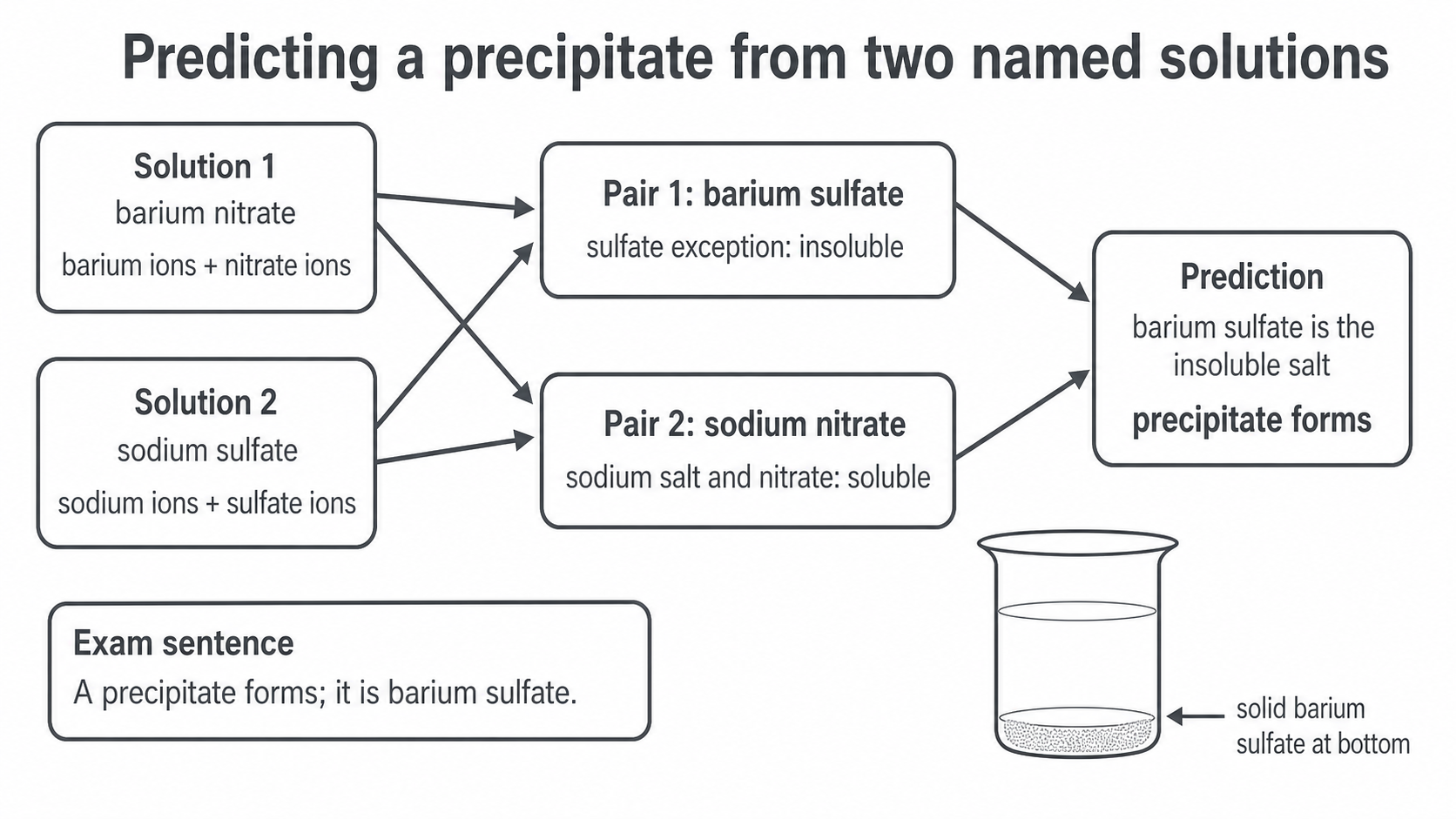
The soluble ions remain separately dissolved. Pairing names is a way to check possible solids; it does not mean every ion has formed a new molecule in the water.
The worked diagram combines barium ions from one solution with sulfate ions from the other. Sodium and nitrate ions remain dissolved.
Using the Rules
The rules from the previous specification point are the working toolkit for this lesson:
| Possible salt type | Rule needed for prediction |
|---|---|
| sodium, potassium or ammonium salt | soluble |
| nitrate | soluble |
| chloride | soluble except silver chloride and lead chloride |
| sulfate | soluble except lead sulfate, barium sulfate and calcium sulfate |
| carbonate | insoluble except sodium carbonate, potassium carbonate and ammonium carbonate |
| hydroxide | insoluble except sodium hydroxide, potassium hydroxide and ammonium hydroxide |
Continue this lesson.
You’re previewing NovaLearn without an account. Create a free account to read the rest.
Create free account