3.7 - Dilute and concentrated solutions
This Higher-tier lesson compares solutions using the amount of solute per volume, and explains how dilution changes concentration without removing solute.
Comparing amount per volume
A solute is the substance dissolved; the solvent is the liquid in which it dissolves. A solution contains both.
A dilute solution contains a relatively small amount of dissolved substance per unit volume of solution. A concentrated solution contains a relatively large amount per unit volume. These are relative terms: a dilute solution still contains solute.
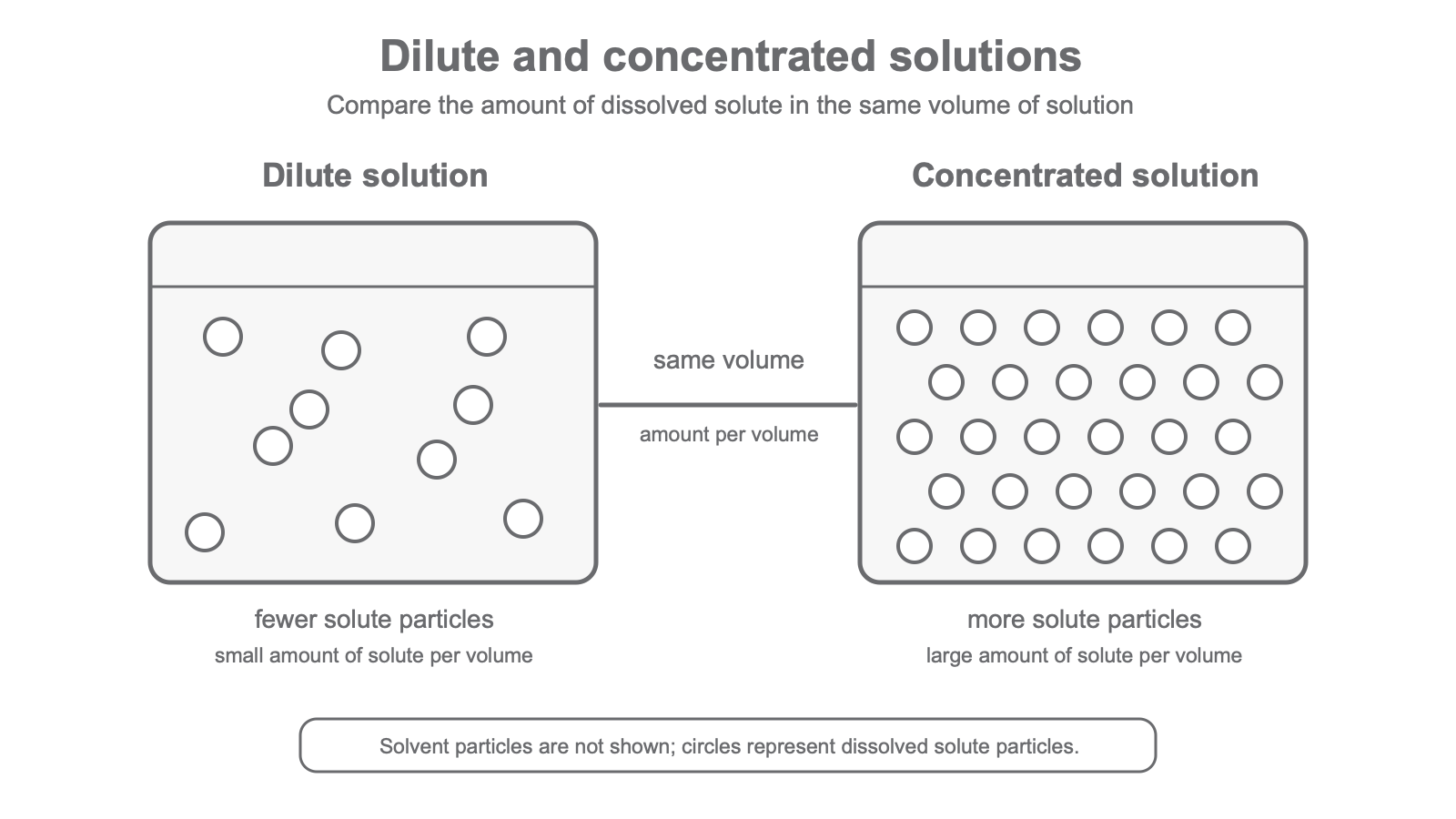
The figure omits solvent particles. In real solutions the particles move and are not arranged in rows. The equal-volume comparison is what makes the greater particle count evidence for greater concentration.
Worked comparison: A contains 2 g of a solute in 20 cm³ of solution; B contains 4 g of the same solute in 100 cm³. In 20 cm³, B has 4 ÷ 5 = 0.8 g. A therefore has more solute per equal volume, even though B's whole container holds more solute.
Continue this lesson.
You’re previewing NovaLearn without an account. Create a free account to read the rest.
Create free account