9.37C - Evaluating nanoparticle risks
Explain why some nanoparticulate materials may pose risks, how exposure affects those risks, and how evidence can support a balanced decision about a proposed use.
Separate Chemistry.
Hazard, exposure and risk
A hazard is a potential source of harm. Risk concerns the chance and seriousness of that harm in a particular situation. It depends on the material's hazard and the route, likelihood and amount of exposure.
Nanoparticles are not one substance. Composition, size, shape, surface coating and solubility can all affect their behaviour. Loose airborne powder gives a different exposure from the same particles fixed inside an intact solid.
[DIAGRAM: asset_name: Nanoparticulate exposure pathways - diagram 1; asset_slug: 241_9_37c_possible_risks_associated_with_some_nanoparticulate_materials_diagram1; file: 241_9_37c_possible_risks_associated_with_some_nanoparticulate_materials_diagram1_imagegen_v1.png; recommended_method: deterministic_drawn; description: Monochrome exact teaching diagram showing a nanoparticulate material source with arrows labelled inhalation to lungs, skin contact, ingestion from contaminated hands or water, and environmental release to air/water/soil. The visual teaches that possible risk depends on route, dose and whether particles are released; it is assessed/exact because arrow labels and exposure-route wording matter.]
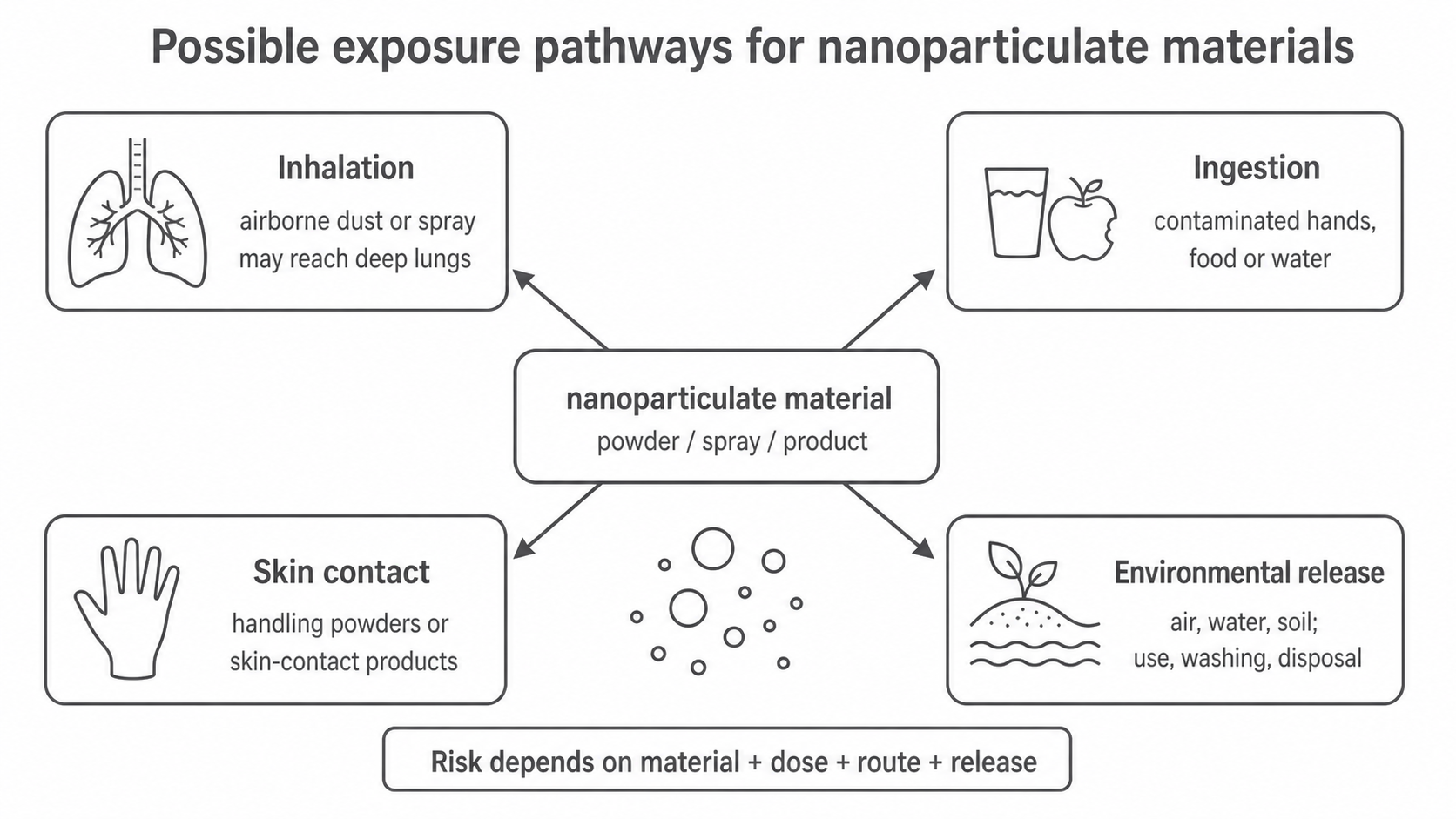
Possible exposure includes breathing in dust or spray (inhalation), swallowing particles from contaminated hands, food or water (ingestion), and skin contact. Release during manufacture, washing, wear or disposal can also expose organisms in air, water or soil.
Skin contact does not necessarily mean entry through skin. Intact skin is a barrier to many nanoparticles; effects and any penetration depend on the material and conditions. Avoid assuming that every nanoparticle passes into the bloodstream.
Possible harm and uncertain evidence
Small airborne particles may reach deep into the lungs. Some materials can then interact with cells and cause inflammation or other harm. Their high surface area per unit volume gives more surface for interactions with surrounding substances. Some nanoparticles therefore behave differently from a lump of the same material.
Whether harm occurs depends on dose and the particular material. Shape and persistence also matter: particles that remain in the body for a long time may have different effects from those cleared quickly. Dissolving does not automatically remove every concern, because the dissolved substance may itself have effects.
Continue this lesson.
You’re previewing NovaLearn without an account. Create a free account to read the rest.
Create free account