6.8 - Chemical test for chlorine
Learn how damp litmus paper identifies chlorine gas and why the final bleaching observation matters.
Testing for chlorine
Expose damp blue litmus paper to the gas. Chlorine bleaches the paper white, often after a brief red stage. The red stage may be too quick to see; bleaching is the essential positive observation.
[DIAGRAM: asset_name: chlorine_litmus_test: Damp blue litmus test for chlorine - diagram 1; asset_slug: 154_6_8_chemical_test_for_chlorine_diagram1; file: diagram_assets/154_6_8_chemical_test_for_chlorine_diagram1.png; recommended_method: deterministic_drawn; description: Exact monochrome apparatus-and-observation diagram for Edexcel GCSE Chemistry 1CH0 6.8. Shows a gas jar or test tube containing chlorine gas, damp blue litmus paper held in the gas, and a second panel showing the positive observation: the litmus paper is bleached white, with a note that a brief red stage may appear first. Labels must state "damp blue litmus paper", "chlorine gas, Cl2(g)" and "positive result: white / bleached". Deterministic drawing is required because the litmus type, gas identity and observation wording are assessed.]
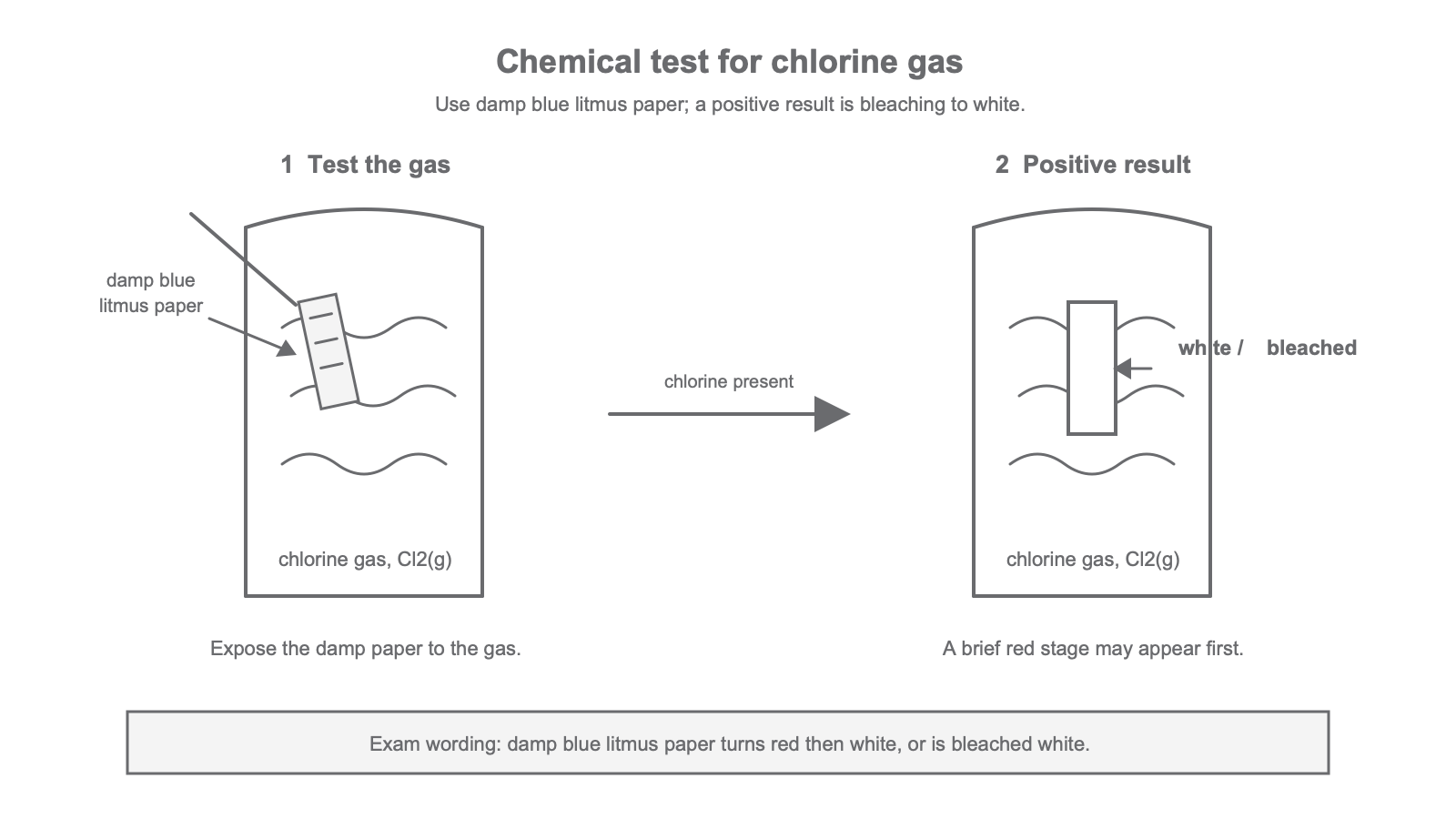
Water on the damp paper allows chlorine to form substances that bleach the litmus dye. Dry paper is therefore unsuitable for this standard test.
Continue this lesson.
You’re previewing NovaLearn without an account. Create a free account to read the rest.
Create free account