4.8.2b - Big Bang Theory, Dark Mass and Dark Energy
The Big Bang theory is a scientific model about how the universe began and changed over time. In this physics-only lesson, the important point is not that scientists "saw" the Big Bang happen, but that observations of the universe support a model in which the universe was once much smaller, hotter and denser. The lesson also covers supernova evidence for accelerating expansion and the fact that dark mass and dark energy are still not fully understood.
The Big Bang model
The Big Bang theory suggests that the universe began from a very small region that was extremely hot and dense. Since then, space itself has expanded. This model is used to explain the universe we observe today.
Big Bang Theory
The Big Bang theory is the model that the universe began from a very small, extremely hot and dense region and has expanded since.
The word theory can be misleading in everyday language. In science, a theory is not just a guess. It is an explanation that is supported by observations and evidence, and it can be improved or changed if new evidence shows that the model is incomplete.
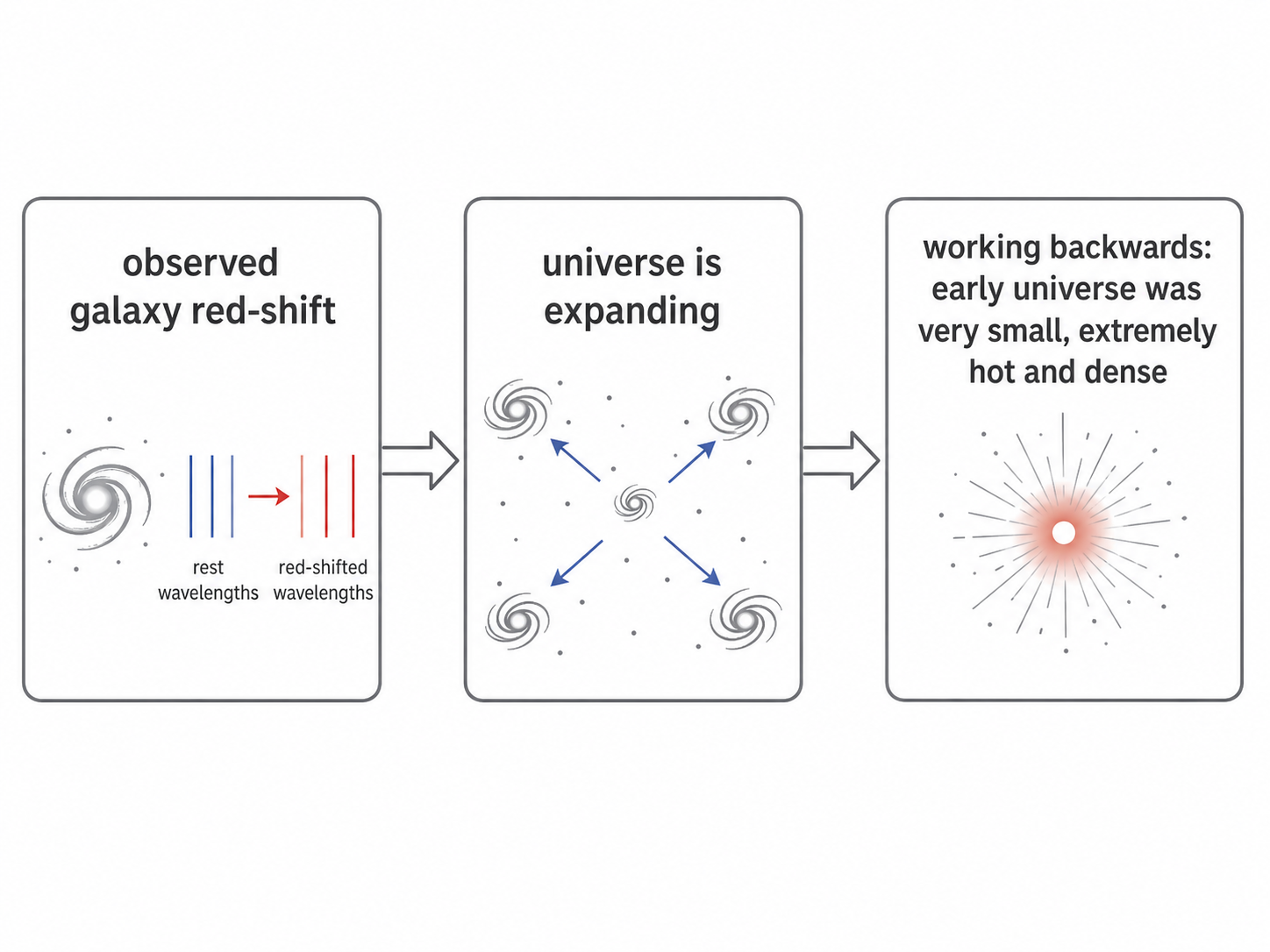
This lesson uses one idea from red-shift as a prerequisite: observations show that most distant galaxies are moving away from us, and more distant galaxies generally show a bigger red-shift. That evidence supports the idea that space itself is expanding. If the universe is expanding now, then working backwards suggests that it was once much smaller, hotter and denser.
From observations to theories
Scientists use observations to build and test explanations. A useful scientific theory should explain known observations and help scientists decide what further evidence to look for.
For the Big Bang theory, the reasoning is:
- observations show red-shift from most distant galaxies
- more distant galaxies generally have greater red-shift and are receding faster
- this pattern supports the idea that space is expanding
- an expanding universe supports the model that the universe was once much smaller, hotter and denser
[DIAGRAM: asset_name: Big Bang evidence chain - diagram 1; asset_slug: 117_4_8_2b_big_bang_theory_dark_mass_and_dark_energy_diagram1; file: diagram_assets/117_4_8_2b_big_bang_theory_dark_mass_and_dark_energy_diagram1.png; recommended_method: image_gen; description: Labelled evidence-flow diagram showing observations of galaxy red-shift leading to the expanding-universe model, then working backwards to the Big Bang model: a very small, extremely hot and dense early universe.]
This is not the same as saying the evidence proves every detail of the model forever. Scientific models are judged by how well they explain observations. New evidence can strengthen a model, limit it, or show that extra ideas are needed.
Supernovae and accelerating recession
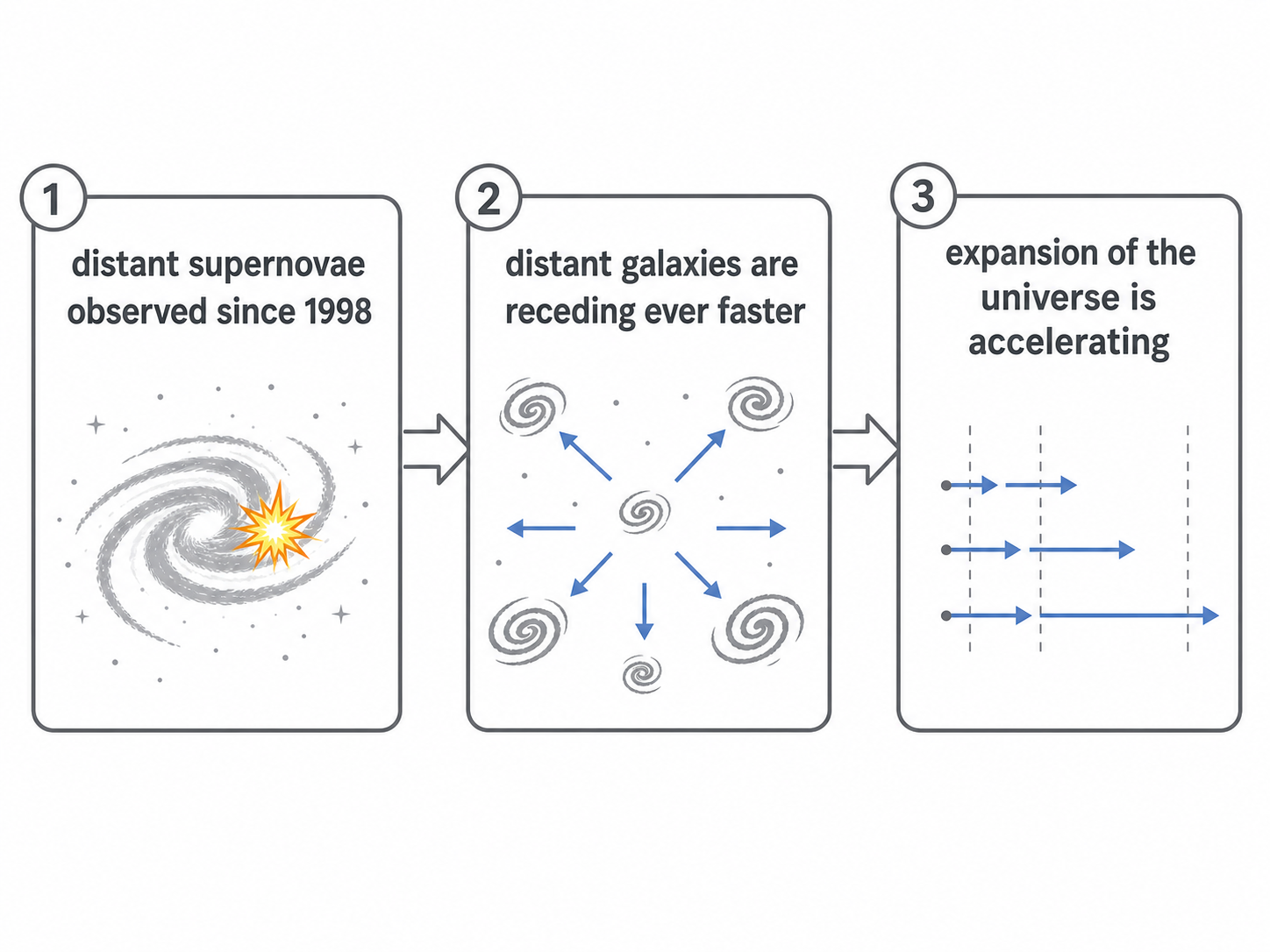
A supernova is an extremely bright explosion of a star. Some supernovae in distant galaxies can be used as observations of very distant parts of the universe. Since 1998 onwards, observations of supernovae have suggested that distant galaxies are receding ever faster.
The key GCSE idea is qualitative:
- red-shift evidence supports an expanding universe
- supernova observations suggest the expansion is not just continuing
- the recession of distant galaxies is getting faster over time
[DIAGRAM: asset_name: Supernova evidence for accelerating expansion - diagram 2; asset_slug: 117_4_8_2b_big_bang_theory_dark_mass_and_dark_energy_diagram2; file: diagram_assets/117_4_8_2b_big_bang_theory_dark_mass_and_dark_energy_diagram2.png; recommended_method: image_gen; description: Labelled flow diagram showing observations of distant supernovae since 1998 leading to the conclusion that distant galaxies are receding ever faster, which means the expansion of the universe is accelerating.]
Continue this lesson.
You’re previewing NovaLearn without an account. Create a free account to read the rest.
Create free account