4.4.3.1 - Background Radiation
Background radiation is the small amount of ionising radiation that is around us all of the time. It comes from natural sources and from some man-made sources. In this physics-only lesson, the exam focus is where background radiation comes from, why dose can vary with occupation or location, and how radiation dose is written in sieverts and millisieverts.
What background radiation is
Background radiation is present even when no obvious radioactive source has been deliberately placed nearby. A radiation detector can still register counts because there are natural radioactive materials in the environment and some artificial radioactive materials left from human activity.
Background Radiation
Background radiation is ionising radiation that is around us all of the time from natural and man-made sources.
The word background does not mean harmless or dangerous by itself. It means the radiation is already present in the surroundings, so any extra source would be measured on top of it. At GCSE, the key idea is that everyone receives some background radiation, but not everyone receives exactly the same dose.
Natural sources
Natural background radiation comes from sources that are already present in nature. The AQA examples to know are radioactive materials in rocks and cosmic rays from space.
Rocks and soils can contain small amounts of naturally radioactive material. Some building materials are made from rocks, so they can also make a small contribution. Radon gas is another natural source linked to rocks and soil; it can seep from the ground into buildings, and the amount depends strongly on the local geology.
Cosmic rays come from space. The atmosphere absorbs some of this radiation, so the dose from cosmic rays is usually higher at greater altitude. This is why flying can increase a person's dose from cosmic radiation.
[DIAGRAM: asset_name: background-radiation-sources-and-dose-factors - diagram 1; asset_slug: 048_4_4_3_1_background_radiation_diagram1; file: diagram_assets/048_4_4_3_1_background_radiation_diagram1.png; recommended_method: image_gen; description: Labelled concept diagram showing a person receiving background radiation from natural sources (rocks/soil/radon and cosmic rays from space) and man-made sources (fallout from nuclear weapons testing and nuclear accidents), with side callouts for location effects and occupation effects and a unit note that 1000 mSv = 1 Sv. Built-in Codex Image Gen raster diagram selected for a clean GCSE classroom visual.]
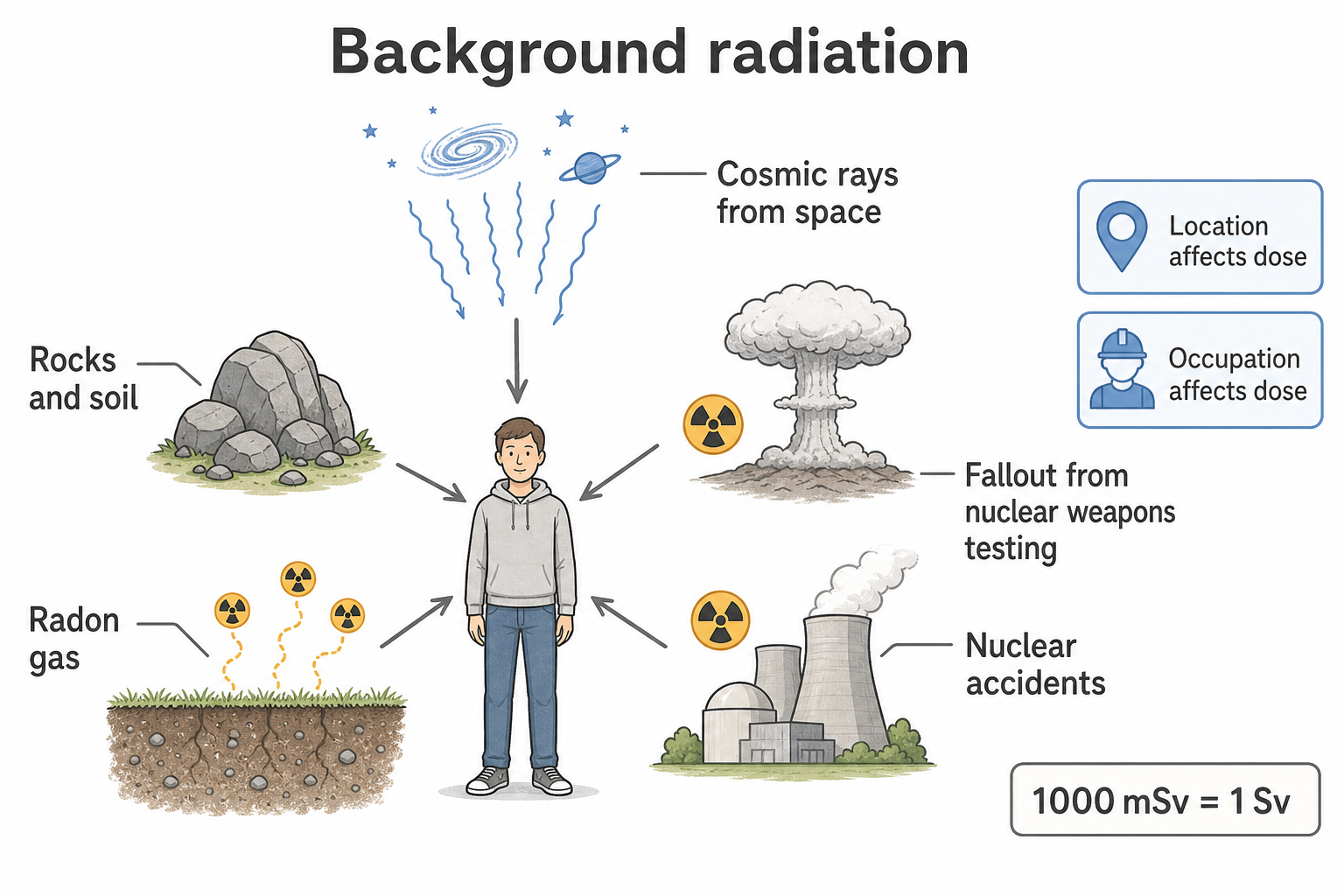
The common mistake is to write that background radiation only comes from human activity. In fact, most ordinary background radiation is natural.
Man-made sources
Man-made background radiation comes from human activities that add radioactive material or ionising radiation to the environment. The AQA named examples are:
- fallout from nuclear weapons testing
- fallout from nuclear accidents
Fallout means radioactive material that has been released and then spreads or settles in the environment. The lesson does not require the details of a particular accident or weapon test. The exam point is simpler: background radiation has natural sources and man-made sources.
There are other artificial sources of radiation in real life, but the required named background examples for this lesson are the two fallout examples above. Keep this section focused on sources of background radiation, not on the detailed uses of nuclear radiation.
Continue this lesson.
You’re previewing NovaLearn without an account. Create a free account to read the rest.
Create free account