4.5.5.2 - Atmospheric Pressure
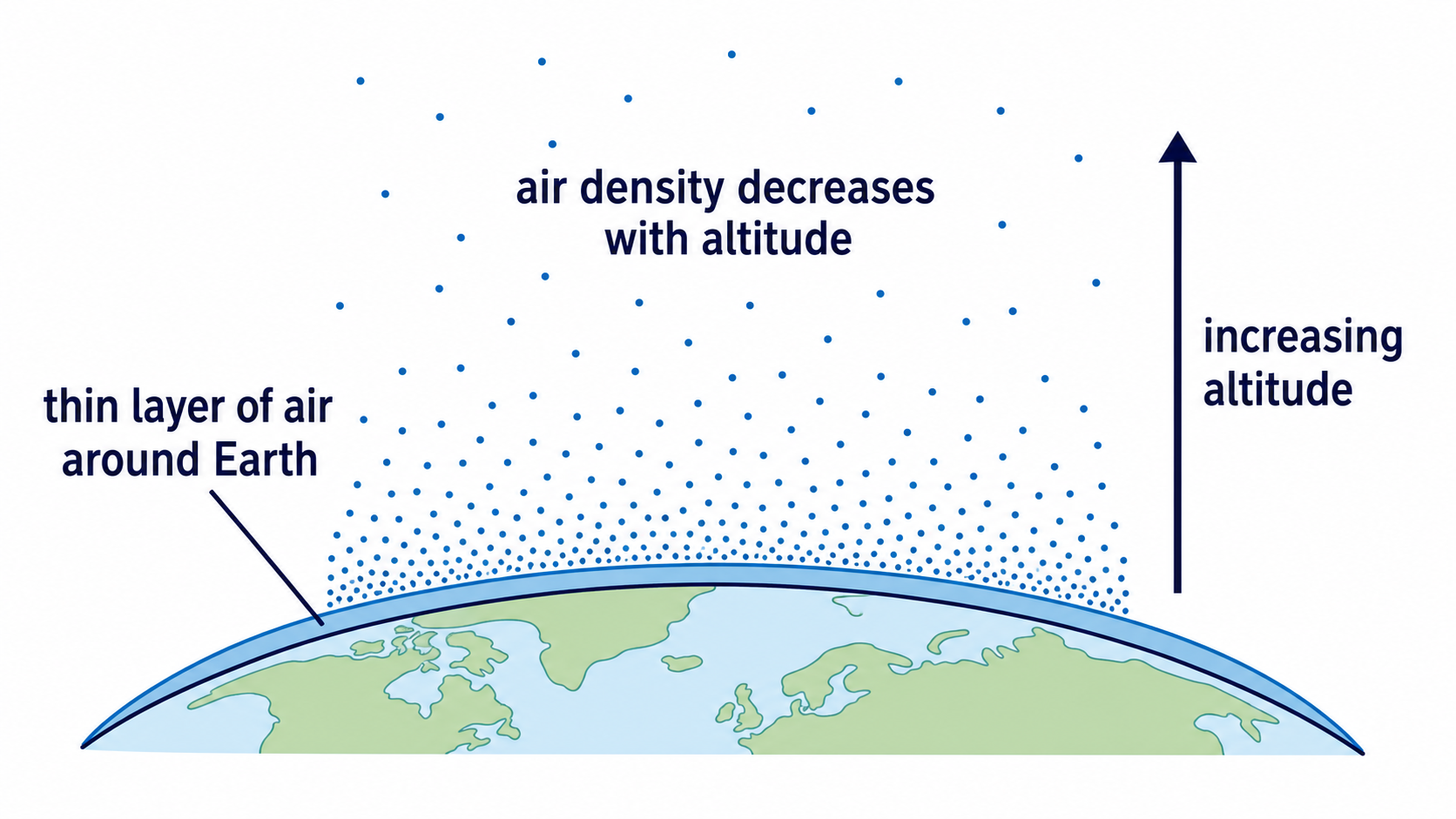
The atmosphere is a thin layer of air around the Earth. In this Physics-only lesson, you will use a simple model to explain atmospheric pressure: air molecules collide with surfaces, and the amount of air above a surface changes with height.
A simple model of the atmosphere
The Earth's atmosphere is the layer of air around the Earth. It is thin compared with the size of the Earth, even though it extends many kilometres above the surface.
In the AQA model for this lesson, the important ideas are:
- the atmosphere is made from air
- air is made from molecules
- the atmosphere is held around the Earth by gravity
- the atmosphere gets less dense with increasing altitude
Altitude
Altitude is height above the Earth's surface or above ground level.
Air density means how much air there is in a given volume. Near the ground, the air is denser because there are more air molecules in each cubic metre. Higher up, the air is less dense because the molecules are more spread out.
[DIAGRAM: asset_name: simple_atmosphere_density_gradient - diagram 1; asset_slug: 065_4_5_5_2_atmospheric_pressure_diagram1; file: diagram_assets/065_4_5_5_2_atmospheric_pressure_diagram1.png; recommended_method: image_gen; description: Labelled model generated with built-in Codex Image Gen of the Earth with a very thin atmosphere. Air molecule dots are dense close to the surface and become more spread out with increasing altitude. Labels state that the atmosphere is a thin layer of air around Earth and that air density decreases with altitude.]
Do not turn this into a full weather or space-science lesson. For GCSE Physics here, the atmosphere model is only needed to explain pressure and height.
Pressure from molecular collisions
Air molecules are in constant random motion. When they hit a surface, they exert tiny forces on it during the collisions. There are huge numbers of collisions every second, so their combined effect is atmospheric pressure.
Atmospheric pressure
Atmospheric pressure is the pressure caused by air molecules colliding with a surface.
A surface does not need to be inside a sealed container for this to happen. A table, a window, a pressure sensor and the surface of your skin are all being hit by air molecules in the atmosphere.
The greater the number of air-molecule collisions with a surface each second, the greater the pressure on that surface. If there are fewer air molecules near a surface, there are usually fewer collisions with it, so the pressure is lower.
Why pressure decreases with height
Atmospheric pressure depends on how much air is above a surface. A surface at a low height has a large amount of air above it. That air has weight, so the lower air is compressed more and is denser.
At a greater height, there is less air above the surface. Less air above means less weight of air pressing down from above. The air is less dense, so fewer air molecules collide with a surface each second. The atmospheric pressure is lower.
The exam chain is:
- As height above ground level increases, there is less air above the surface.
- There are fewer air molecules above the surface, so the weight of air above it is smaller.
- The air is less dense at greater altitude.
- Fewer air molecules collide with the surface each second.
- Atmospheric pressure decreases as height increases.
Continue this lesson.
You’re previewing NovaLearn without an account. Create a free account to read the rest.
Create free account