4.4.2.4 - Radioactive Contamination and Irradiation
Radioactive sources can be useful, but they must be described carefully because two different hazards are easy to mix up. Irradiation means being exposed to nuclear radiation. Contamination means radioactive atoms are actually present where they are not wanted. This lesson keeps those ideas separate, then uses them to choose sensible precautions and explain why studies about radiation effects must be checked by other scientists.
Contamination and irradiation
Radioactive contamination is about radioactive material being in the wrong place. It may be on a surface, on skin, on clothing, in food, in water, or inside the body.
Radioactive contamination
Radioactive contamination is the unwanted presence of materials containing radioactive atoms on other materials.
The hazard from contamination is due to the decay of the contaminating atoms. The atoms are still radioactive, so they can emit nuclear radiation while they remain on or in the contaminated material.
Irradiation is different. Irradiation means an object is exposed to nuclear radiation from a source, but radioactive atoms are not transferred to the object.
Irradiation
Irradiation is the process of exposing an object to nuclear radiation. The irradiated object does not become radioactive.
[DIAGRAM: asset_name: irradiation-and-contamination-comparison - diagram 1; asset_slug: 047_4_4_2_4_radioactive_contamination_and_irradiation_diagram1; file: diagram_assets/047_4_4_2_4_radioactive_contamination_and_irradiation_diagram1.png; recommended_method: image_gen; description: Assessed two-panel comparison. Left panel shows irradiation: a sealed radioactive source emits radiation arrows towards an object, with no radioactive atoms transferred and the object labelled not radioactive after exposure. Right panel shows contamination: radioactive dust/atoms are shown on and inside an object, still decaying and emitting radiation.]
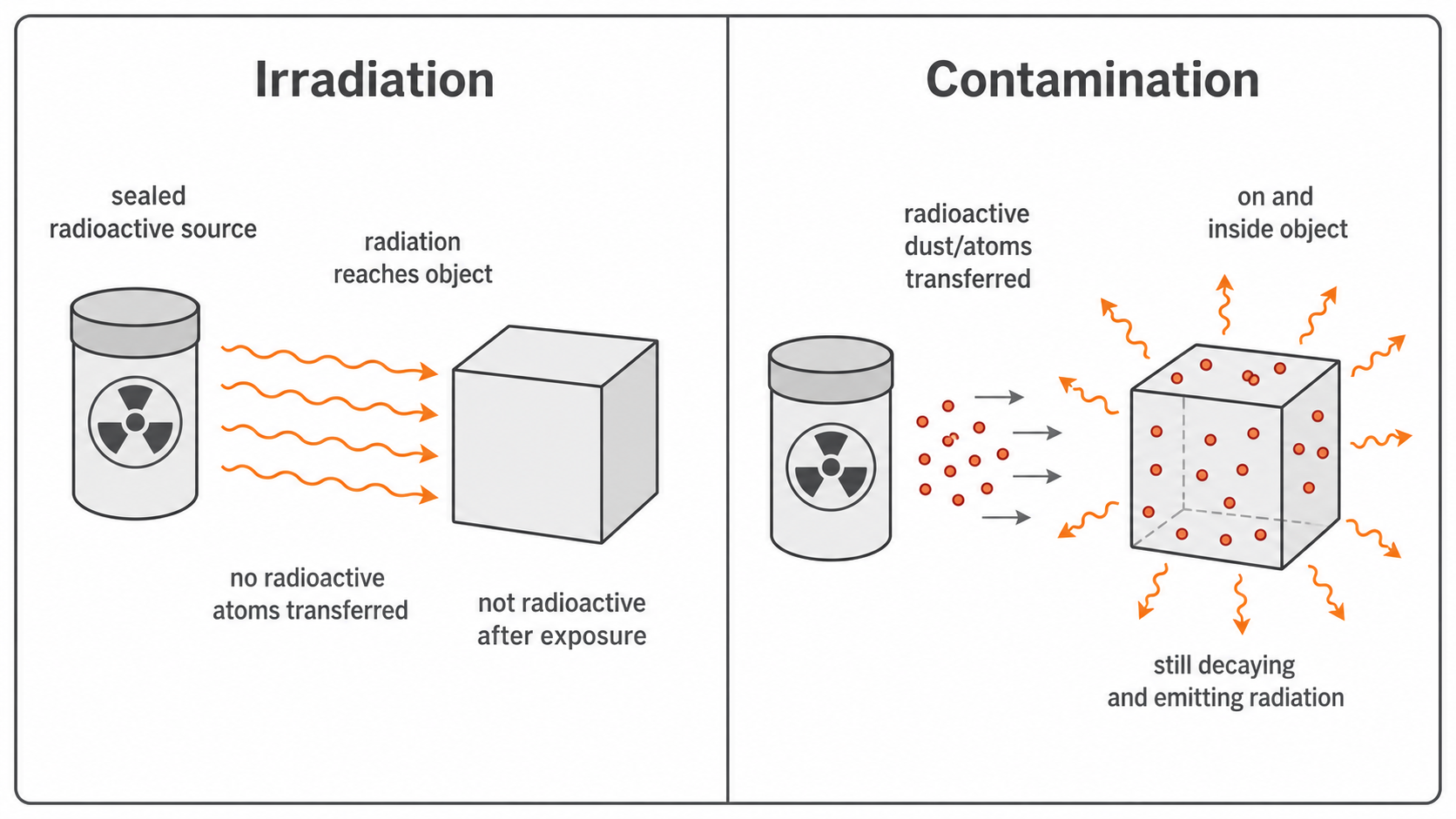
The quickest way to decide which word to use is to ask:
| Question | If the answer is yes |
|---|---|
| Has radioactive material moved onto or into the object? | contamination |
| Has the object only been exposed to radiation from a source? | irradiation |
For example, a sealed source held near paper irradiates the paper. If powder containing radioactive atoms spills onto the paper, the paper is contaminated.
Comparing the hazards
The hazard from irradiation is exposure to radiation from a source. If the source is removed, shielded or moved further away, the exposure can be reduced. The irradiated object itself is not a continuing radioactive source.
The hazard from contamination can continue for longer because the contaminating radioactive atoms remain on or in the material. They keep decaying until they are removed or until the radioactive atoms have decayed. Contamination can also spread if the radioactive material is moved to other surfaces.
The type of radiation emitted affects the hazard. Use your earlier radiation-types knowledge carefully:
| Situation | Why the radiation type matters |
|---|---|
| radioactive material outside the body | more penetrating radiation can reach tissue through air, clothing or skin |
| radioactive material inside the body | strongly ionising radiation can damage nearby cells because it is emitted very close to body tissue |
That is why contamination inside the body can be especially dangerous. Radioactive atoms that are inhaled or swallowed may irradiate nearby cells from inside the body.
Do not write that contamination is always more dangerous in every possible situation. The hazard depends on the source, the radiation emitted, how close the source is, how long the exposure lasts, and whether radioactive material has entered the body. What you can compare securely is the reason for the hazard.
Continue this lesson.
You’re previewing NovaLearn without an account. Create a free account to read the rest.
Create free account