4.7.3.6 - Maintaining biodiversity
Biodiversity is affected by human activity. Some human interactions damage ecosystems and reduce biodiversity, but other interactions are designed to protect species, habitats and resources. In this lesson, the key skill is not just naming conservation methods: it is explaining how each method helps biodiversity and evaluating the conflicting pressures involved.
Biodiversity and human impact
Biodiversity means the variety of living organisms in an area. A biodiverse ecosystem usually contains many species, many individuals within those species, and many habitats or niches for organisms to live in.
Biodiversity
The variety of different species of organisms in an ecosystem, or on Earth.
Human interactions with ecosystems can be negative or positive. Negative interactions include destroying habitats, replacing mixed habitats with one crop, producing waste, clearing forests and increasing carbon dioxide emissions. These can reduce biodiversity because fewer organisms can survive, feed, reproduce or find shelter.
Positive interactions are actions that reduce the negative effects of humans on ecosystems. These include breeding programmes for endangered species, protection and regeneration of rare habitats, field margins and hedgerows in farming, reducing deforestation and carbon dioxide emissions, and recycling resources rather than dumping waste in landfill.
[DIAGRAM: asset_name: maintaining-biodiversity-programmes - diagram 1; asset_slug: 110_4_7_3_6_maintaining_biodiversity_diagram1; file: diagram_assets/imagegen_regen_all/110_4_7_3_6_maintaining_biodiversity_diagram1_imagegen.png; recommended_method: codex_image_gen; description: Monochrome concept map linking negative human interactions to reduced biodiversity and the five in-scope programmes used to reduce their effects, with an evaluation reminder about conflicting pressures.]
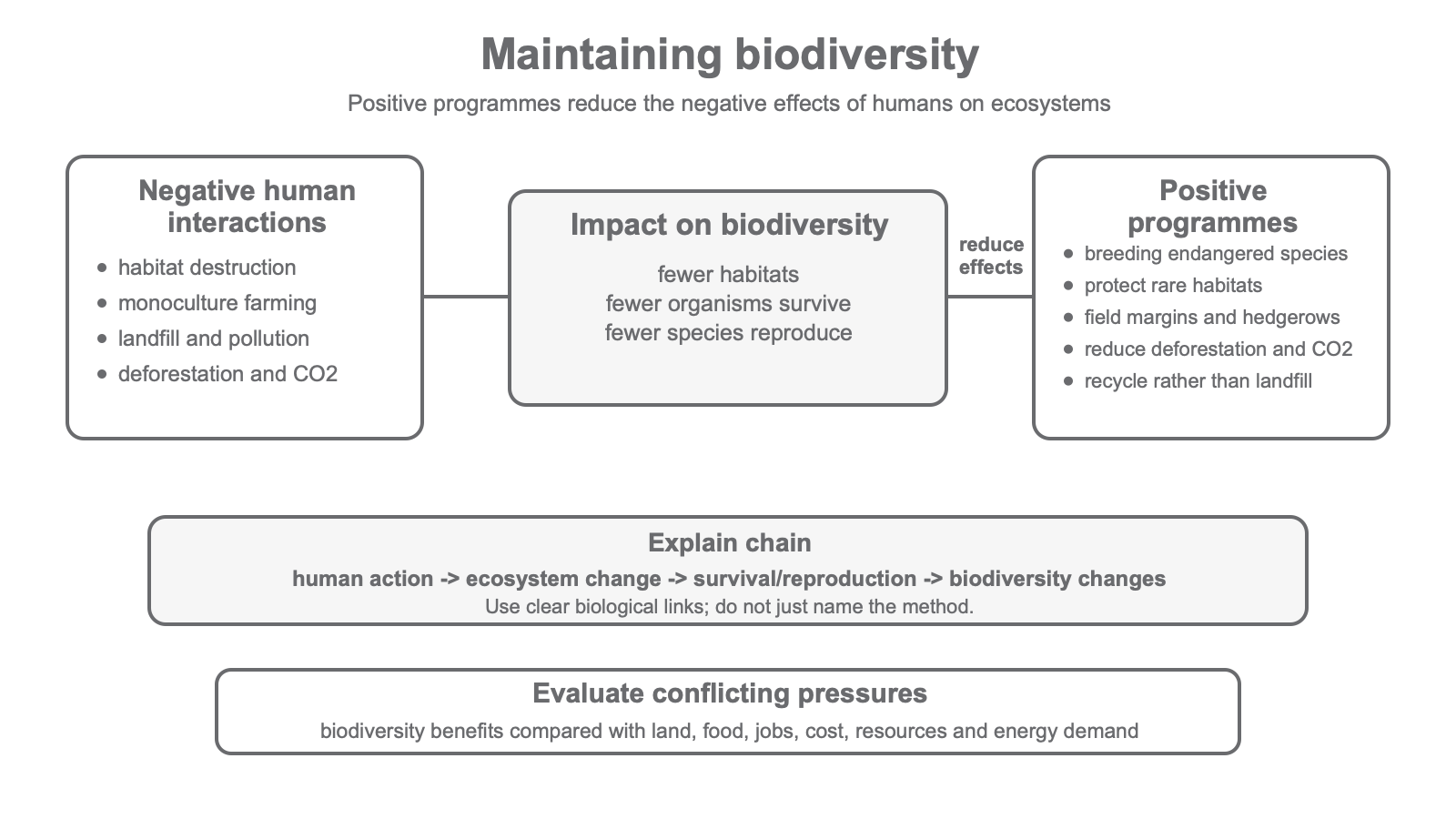
The best explanations use a chain of reasoning. For example: if a habitat is protected, fewer organisms lose their shelter and food sources, so more species can survive and reproduce, which helps maintain biodiversity.
Breeding programmes and habitats
Some species become endangered because their population is very small. A breeding programme aims to increase the number of individuals of an endangered species. This may happen in a zoo, conservation centre or protected site, with careful choice of breeding pairs.
Endangered species
A species at risk of extinction because its population size is very low or falling.
Breeding programmes can help biodiversity because they reduce the chance that a species disappears completely. If the species can later be released into a suitable habitat, the wild population may increase. This is most likely to work when the original threat, such as hunting or habitat loss, has also been reduced.
Protecting rare habitats also helps maintain biodiversity. A rare habitat may contain species that are not found in many other places. Protection prevents further damage, while regeneration actively improves the habitat, for example by restoring native plants, removing damaging waste or allowing damaged land to recover.
Habitat regeneration
Improving or restoring a damaged habitat so that more organisms can live there.
A limitation is that these programmes can be expensive and slow. They may conflict with human demands for land, housing, farming, transport or jobs. That does not mean conservation is unimportant; it means an evaluation must compare benefits and costs using the information given.
Field margins and hedgerows
Modern farming often grows only one type of crop over a large area. This is called monoculture. It can reduce biodiversity because many other plant species are removed, so fewer insects, birds and other animals can use the area.
Monoculture
Growing one type of crop in an area.
One way to reduce this impact is to reintroduce field margins and hedgerows. A field margin is a strip at the edge of a field that is not planted with the main crop. A hedgerow is a line of shrubs or small trees, often between fields or along field edges.
[DIAGRAM: asset_name: field-margins-hedgerows-monoculture - diagram 2; asset_slug: 110_4_7_3_6_maintaining_biodiversity_diagram2; file: diagram_assets/imagegen_regen_all/110_4_7_3_6_maintaining_biodiversity_diagram2_imagegen.png; recommended_method: codex_image_gen; description: Monochrome labelled farm-field schematic showing a single-crop area bordered by field margins and hedgerows, with labels for habitat, corridor, food and shelter, and reduced crop area as a trade-off.]
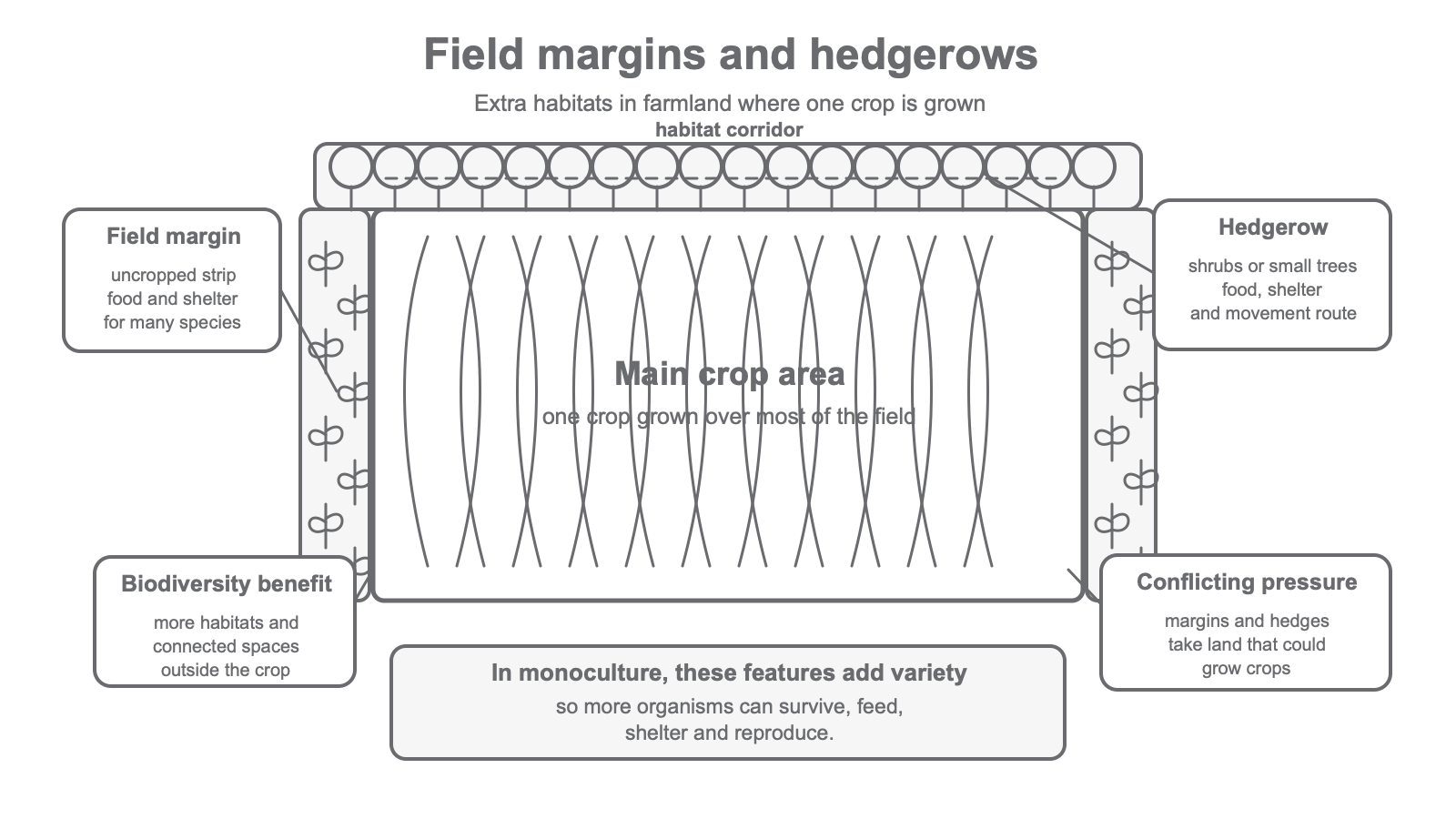
Field margins and hedgerows help maintain biodiversity because they provide habitats, food and shelter for organisms that cannot live in the crop itself. They can also connect habitats, allowing organisms to move between areas. This is especially important where large areas of farmland contain only one crop.
The conflict is that field margins and hedgerows take up space that could be used to grow crops. Farmers may also need money or support to manage them. In an exam-style evaluation, this is a typical pressure: biodiversity is helped, but food production and farm income may be affected.
Continue this lesson.
You’re previewing NovaLearn without an account. Create a free account to read the rest.
Create free account