4.6.2.1 - Variation
Individuals in the same population are not identical. AQA calls these differences in characteristics variation. In this lesson, the important boundary is why phenotype differs: genes, the environment during development, or both, with mutation as the original source of genetic variants.
Phenotype from genome and environment
A phenotype is the set of observable characteristics of an organism. Eye colour, plant height, blood group, leaf shape, body mass and scarring are all examples of characteristics that can form part of phenotype.
Phenotype
The observable characteristics of an organism.
The genome is all the genetic material of an organism. The genome affects phenotype because genes contain instructions that influence how cells develop and work. However, AQA does not describe phenotype as genes alone. The genome interacts with the environment during development.
Genome
The entire genetic material of an organism.
The environment means the conditions in which an organism develops. For a plant, this could include light, mineral ions, water and temperature. For an animal, it could include diet, exercise, injury, disease, temperature or other conditions experienced during development.
The safest sentence for this specification point is:
phenotype develops from the genome interacting with the environment.
This wording matters because it prevents two common mistakes. One mistake is saying every characteristic is controlled only by genes. The other is saying the environment changes an organism's genes whenever its phenotype changes. The environment can affect the phenotype without changing the genome.
Causes of variation
Variation means differences in the characteristics of individuals in a population. A population is a group of organisms of the same species living in the same area at the same time.
Variation
Differences in the characteristics of individuals in a population.
AQA groups the causes of variation into three categories:
| Cause of variation | What it means | Example at GCSE level |
|---|---|---|
| Genetic causes | Individuals inherit different genes or alleles | Natural eye colour or blood group in humans |
| Environmental causes | Individuals develop in different conditions | A scar caused by injury or a plant growing taller in better light |
| Genetic and environmental causes together | Both inherited information and development conditions affect the characteristic | Height or body mass can be influenced by inherited genes and nutrition |
[DIAGRAM: asset_name: phenotype-variation-causes - diagram 1; asset_slug: 080_4_6_2_1_variation_diagram1; file: diagram_assets/imagegen_regen_all/080_4_6_2_1_variation_diagram1_imagegen.png; recommended_method: codex_image_gen; description: Monochrome flow diagram linking inherited genome and development environment to phenotype, separating genetic, environmental and combined causes of variation, and summarising mutation outcomes as most no effect, some influence phenotype and very few determine phenotype.]
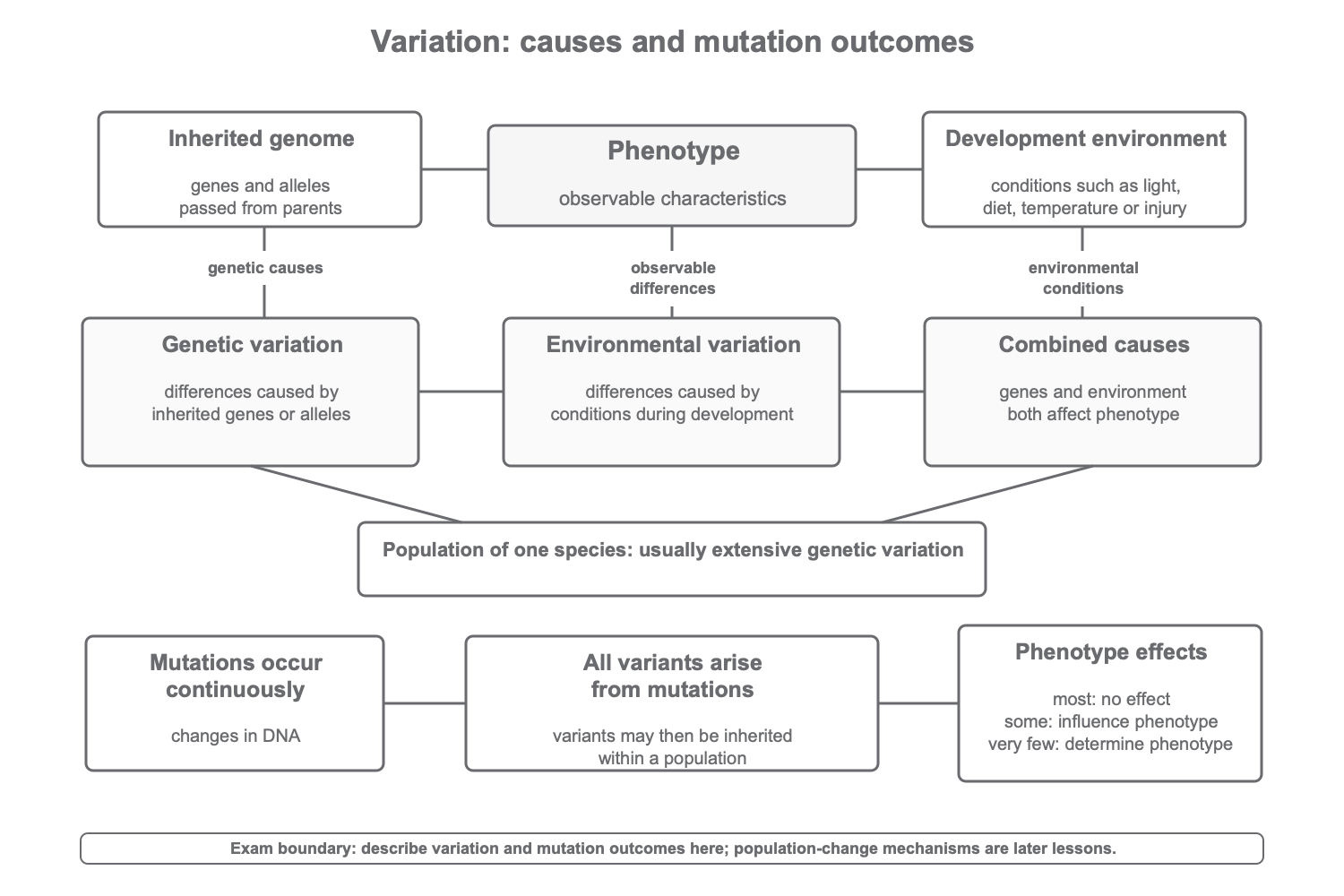
Be careful with examples. A characteristic can be mostly genetic, mostly environmental, or a mixture. For example, a scar from a cut is environmental because it depends on injury. Height is usually a mixture because inherited genes influence potential height, but nutrition and health during development can also affect the final phenotype.
Genetic variation in populations
There is usually extensive genetic variation within a population of a species. This means individuals in the same population often do not have exactly the same genetic information.
The word extensive does not mean every individual is completely different in every gene. It means there are many genetic differences spread through the population. Those differences can affect visible characteristics, hidden cell processes, or sometimes have no visible effect at all.
Genetic variation matters for this lesson because it helps explain why individuals in a population can have different phenotypes even if they live in similar conditions. If seedlings of the same species are grown in the same classroom tray but still differ in leaf shape or flower colour, genetic differences may be part of the explanation.
Do not jump from genetic variation exists to a Punnett square unless the question gives a single-gene inheritance setup. Genetic crosses were taught in earlier inheritance lessons. This lesson is broader: whole populations usually contain many genetic differences.
Continue this lesson.
You’re previewing NovaLearn without an account. Create a free account to read the rest.
Create free account