4.3.1.7 - Vaccination
Vaccination protects against infectious disease by preparing the immune system before the real pathogen causes illness. For AQA, the core sequence is small and precise: a dead or inactive form of a pathogen is introduced, white blood cells make antibodies, and if the same pathogen enters later the response is faster. Vaccination also matters at population level because immunising many people can reduce the spread of pathogens.
What vaccination introduces
A vaccination introduces a small quantity of dead or inactive forms of a pathogen into the body. This is enough to stimulate the immune system, but it is not the same as giving someone a full active infection.
Vaccination
The introduction of a small quantity of dead or inactive pathogen to stimulate white blood cells to produce antibodies.
The important word is stimulate. The vaccine triggers the person's own white blood cells to produce antibodies; it does not supply ready-made antibodies.
Antibody
A protein produced by white blood cells that helps target and destroy a specific pathogen.
Do not write that a vaccine contains antibodies unless a question specifically tells you this. In this AQA topic, the vaccine stimulates white blood cells to produce antibodies.
Individual protection sequence
Vaccination prevents illness in an individual because the immune system has already practised making the correct antibodies.
The sequence is:
- A small quantity of dead or inactive pathogen is introduced.
- White blood cells produce antibodies against that pathogen.
- If the same pathogen re-enters the body later, white blood cells respond quickly.
- The correct antibodies are produced quickly.
- The pathogen is destroyed or controlled before it causes infection and illness.
[DIAGRAM: asset_name: vaccination-sequence - diagram 1; asset_slug: 036_4_3_1_7_vaccination_diagram1; file: diagram_assets/imagegen_regen_all/036_4_3_1_7_vaccination_diagram1_imagegen.png; recommended_method: codex_image_gen; description: Monochrome sequence diagram showing small quantities of dead or inactive pathogen introduced by vaccination, white blood cells producing correct antibodies, the same pathogen entering later, a rapid antibody response, and infection being prevented.]
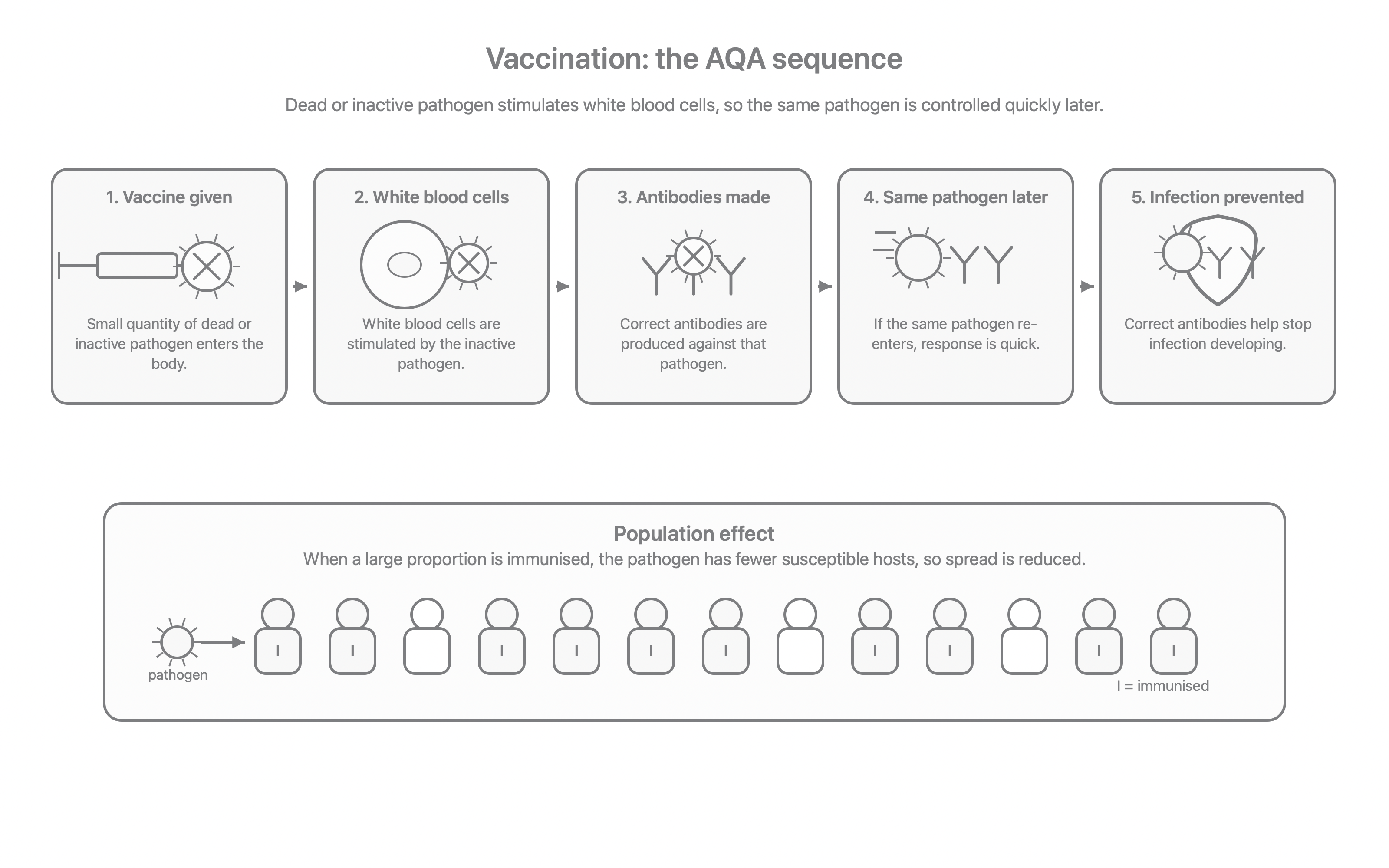
The words same pathogen matter. A vaccine prepares the body for a particular pathogen, so the later response must involve the correct antibodies for that pathogen.
Correct antibodies are specific
Antibodies are not a general shield against all pathogens. The AQA wording is that the white blood cells produce the correct antibodies. This means the antibodies must match the pathogen involved.
For example, if a vaccine prepares the body for pathogen A, the strongest answer is not just "the body makes antibodies". A better answer is "white blood cells make antibodies against pathogen A, and if pathogen A enters later the correct antibodies are produced quickly."
This precision prevents two common mistakes. First, do not say that the body produces antibiotics; antibiotics are medicines, not immune-system proteins. Second, do not say that vaccination destroys every pathogen. Vaccination prepares the body for the same pathogen or pathogen material used in that vaccine.
In vaccination answers, link the inactive pathogen to white blood cells, then to correct antibodies, then to a quick response against the same pathogen later.
Continue this lesson.
You’re previewing NovaLearn without an account. Create a free account to read the rest.
Create free account