4.5.2.4 - Control of Body Temperature
Body temperature control is a Biology-only part of AQA GCSE Biology. The core idea is that the brain monitors body temperature, receives information from the skin, and triggers effectors that transfer more or less energy between the skin and the environment. Higher-tier students must also be able to explain how these mechanisms lower or raise body temperature in a given context.
Why temperature is controlled
Body temperature is one of the internal conditions controlled by homeostasis. Keeping internal conditions close to their optimum helps enzymes and cells work properly.
This lesson is not about measuring fever or treating heat illness. It is about the GCSE Biology control system that responds when body temperature is too high or too low.
Thermoregulation
Thermoregulation is the monitoring and control of body temperature.
The controlled condition is body temperature. The main control centre is in the brain, and the main effectors in this lesson are blood vessels in the skin, sweat glands and skeletal muscles.
Detecting temperature change
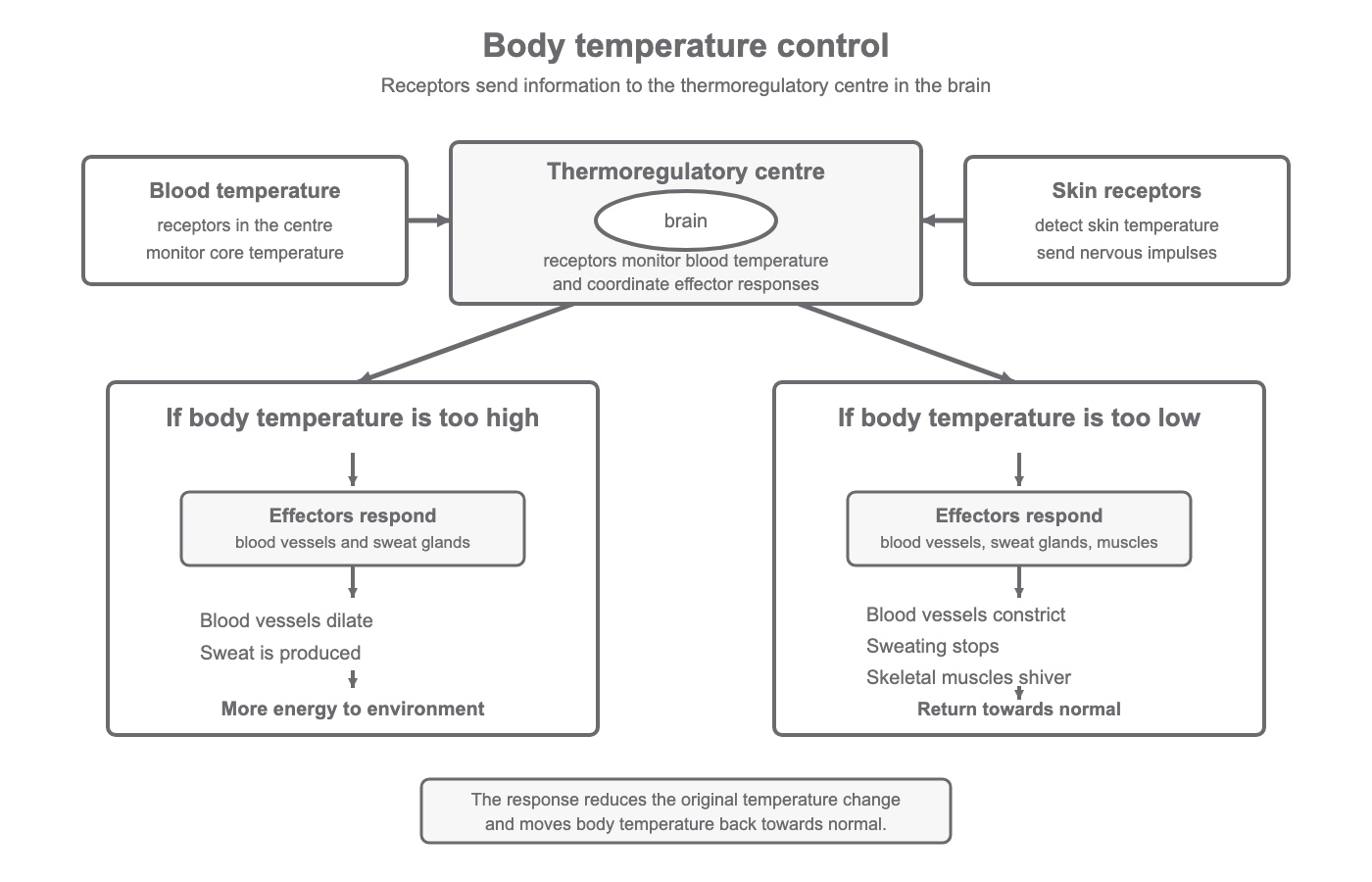
Body temperature is monitored and controlled by the thermoregulatory centre in the brain. This centre contains receptors that are sensitive to the temperature of the blood. That gives the brain information about core body temperature.
The skin also contains temperature receptors. These receptors detect temperature changes at the body surface and send nervous impulses to the thermoregulatory centre.
Receptor
A receptor is a cell or group of cells that detects a stimulus, such as a change in temperature.
In this control system, information flows from receptors to the thermoregulatory centre. The thermoregulatory centre then sends information to effectors, including sweat glands, through neurones as nervous impulses.
[DIAGRAM: asset_name: thermoregulation_feedback_map - diagram 1; asset_slug: 057_4_5_2_4_control_of_body_temperature_diagram1; file: diagram_assets/imagegen_regen_all/057_4_5_2_4_control_of_body_temperature_diagram1_imagegen.png; recommended_method: codex_image_gen; description: Monochrome deterministic feedback map showing blood-temperature receptors in the thermoregulatory centre and skin temperature receptors sending nervous impulses to the thermoregulatory centre, then two response routes: too hot to vasodilation and sweating; too cold to vasoconstriction, sweating stops and shivering. Label the outcome as return towards normal body temperature without adding hormone or kidney detail.]
Responses when too hot
If body temperature is too high, two named responses are required by AQA: blood vessels dilate and sweat is produced from the sweat glands.
Vasodilation
Vasodilation is the widening of blood vessels.
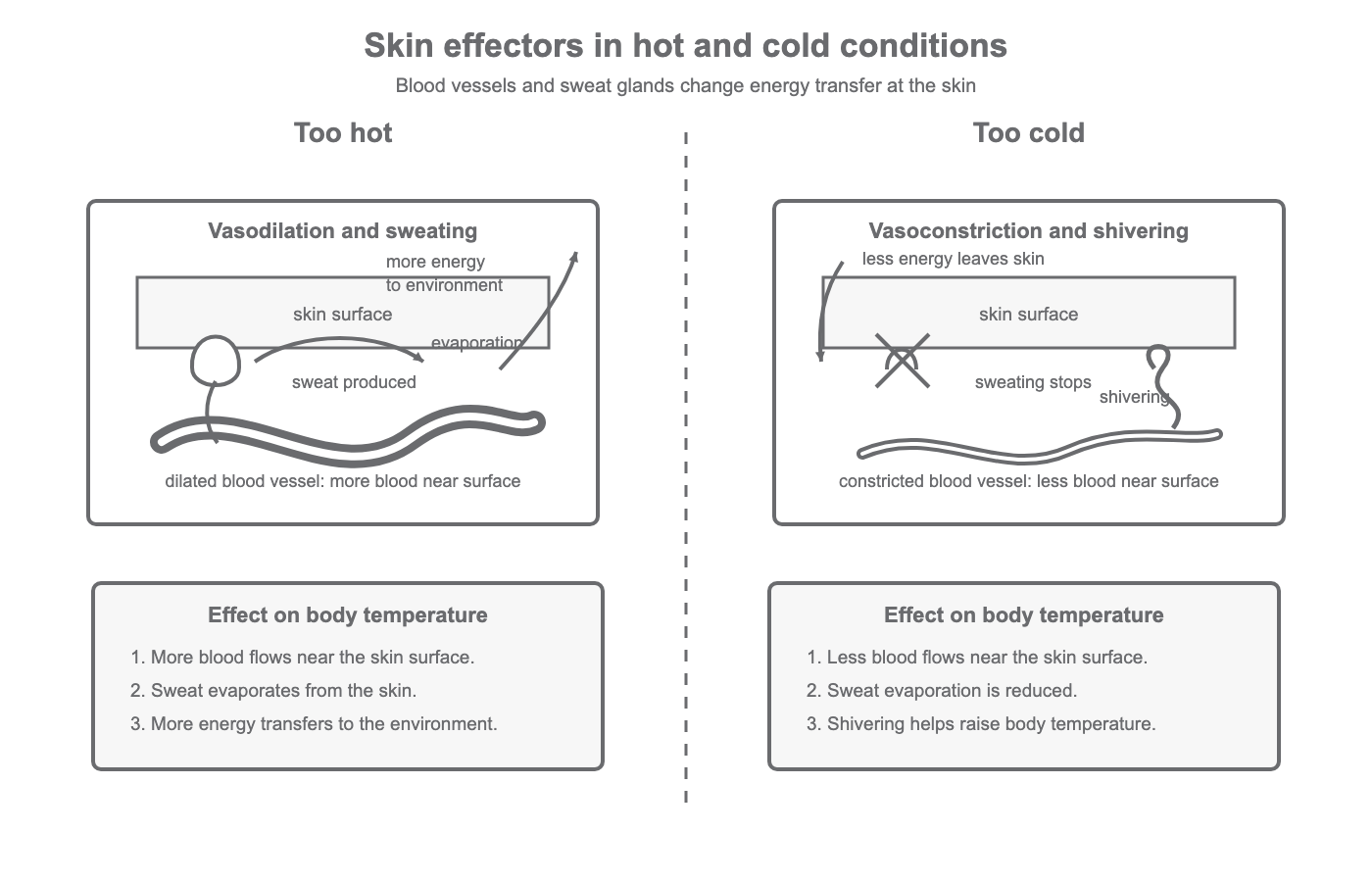
In this lesson, vasodilation refers to blood vessels near the skin. More blood flows close to the surface of the skin. This helps transfer more energy from the skin to the environment.
Sweat glands produce sweat onto the skin surface. When sweat evaporates, energy is transferred from the skin to the environment. That helps cool the body.
For all students, the required idea is that vasodilation and sweating both cause a transfer of energy from the skin to the environment. For Higher-tier students, the extra skill is explaining the mechanism in a given context.
[DIAGRAM: asset_name: skin_effectors_hot_and_cold - diagram 2; asset_slug: 057_4_5_2_4_control_of_body_temperature_diagram2; file: diagram_assets/imagegen_regen_all/057_4_5_2_4_control_of_body_temperature_diagram2_imagegen.png; recommended_method: codex_image_gen; description: Monochrome deterministic comparison of skin effectors in hot and cold conditions. Hot side shows dilated blood vessel close to skin surface, sweat gland producing sweat, evaporation arrow and increased energy transfer to environment. Cold side shows constricted blood vessel, sweating stopped, skeletal muscle shivering callout and reduced energy transfer from skin.]
Continue this lesson.
You’re previewing NovaLearn without an account. Create a free account to read the rest.
Create free account