4.6.1.4 - DNA and the Genome
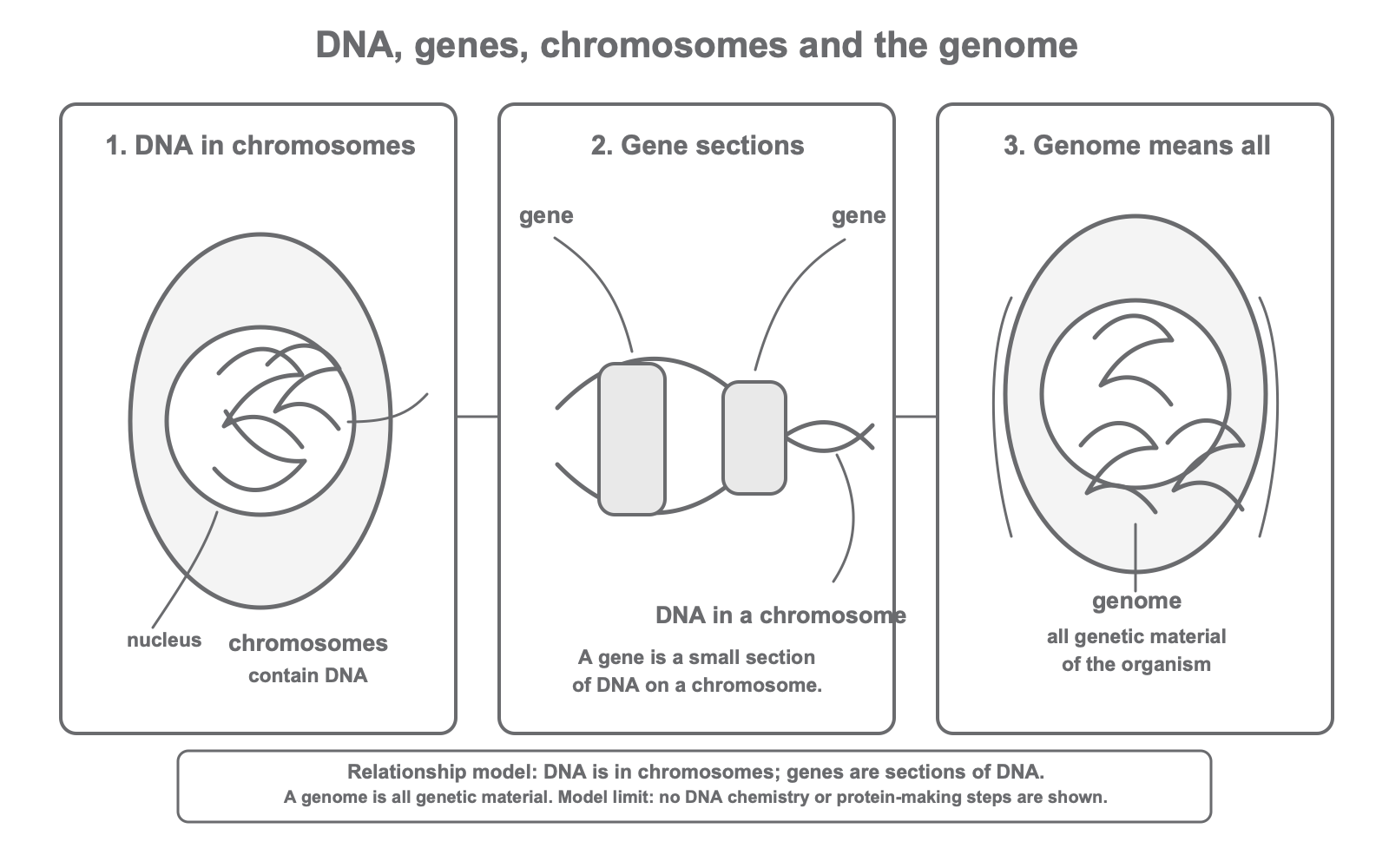
DNA is the chemical genetic material in cells, and the genome is the full set of genetic material in an organism. This lesson keeps the scale clear: DNA is contained in chromosomes, genes are sections of DNA on chromosomes, and a genome is all the genetic material together. The key exam skill is to describe these relationships accurately and discuss why studying the human genome is useful, without drifting into the detailed DNA structure taught in the next lesson.
DNA in chromosomes
The genetic material in the nucleus of a cell is a chemical called DNA. DNA is a polymer, which means it is a long molecule made from repeating smaller units. At this point in the course, you only need the boundary-safe structure statement: DNA is made up of two strands forming a double helix.
DNA
DNA is the chemical genetic material in cells.
In cells with a nucleus, DNA is contained in structures called chromosomes. A chromosome is not separate from DNA; it is a structure that contains DNA. This is why exam answers should say that chromosomes contain DNA, not that DNA contains chromosomes.
Genes are sections of DNA
A gene is a small section of DNA on a chromosome. Each gene codes for a particular sequence of amino acids. The amino acids are joined to make a specific protein.
Gene
A gene is a small section of DNA on a chromosome.
The phrase codes for is important. In this lesson, it means the gene carries the information for the amino-acid sequence of a protein. The detailed DNA chemistry and the detailed mechanism for making proteins belong to the next DNA-structure lesson, so do not add them here unless a question gives that information.
[DIAGRAM: asset_name: dna-gene-genome-relationship: DNA, genes, chromosomes and the genome - diagram 1; asset_slug: 073_4_6_1_4_dna_and_the_genome_diagram1; file: diagram_assets/imagegen_regen_all/073_4_6_1_4_dna_and_the_genome_diagram1_imagegen.png; recommended_method: codex_image_gen; description: Monochrome relationship model showing a nucleus containing chromosomes, a magnified chromosome/DNA line with labelled gene sections, and the genome as all genetic material in an organism. It avoids detailed DNA chemistry and protein-making steps.]
What genome means
The genome of an organism is the entire genetic material of that organism. A genome is bigger than a single gene because it includes all the DNA, including all the genes.
Genome
The genome of an organism is the entire genetic material of that organism.
Use the words in the correct order:
- DNA is the chemical genetic material.
- DNA is contained in chromosomes.
- A gene is a small section of DNA on a chromosome.
- A genome is the entire genetic material of an organism.
This order stops two common mistakes: calling a genome one gene, and saying that a gene contains a chromosome. A gene is a section; a genome is the whole set.
The human genome and medicine
The whole human genome has now been studied. For GCSE Biology, the importance of this is limited to three areas. The first two are about medicine: searching for genes linked to different types of disease, and improving the understanding and treatment of inherited disorders.
Continue this lesson.
You’re previewing NovaLearn without an account. Create a free account to read the rest.
Create free account