4.7.3.2 - Waste Management
More people, and a higher standard of living, usually means more resources are used and more waste is produced. This lesson is about why that matters for ecosystems: if waste and chemical materials are not handled properly, they can pollute water, air and land. AQA expects you to name precise pollution examples and link them to the death of plants and animals, which can reduce biodiversity.
Why waste increases
Human population growth means there are more people needing food, water, homes, transport, manufactured products and energy. A higher standard of living means many people use more resources per person, for example through more packaging, more electronic goods, more travel and more processed materials.
That combination increases the amount of waste that has to be handled safely. Waste becomes a biology problem when it escapes into ecosystems as pollution.
Pollution
Pollution is the release of substances into the environment that can harm organisms or damage their habitat.
In this specification point, the important link is:
more people and higher living standards -> more resource use -> more waste and chemical materials -> more chance of pollution if handling is poor.
Pollution routes
AQA names three places where pollution can occur in this lesson: water, air and land. For exam answers, do not write only "waste" or "chemicals" if a named pollutant is needed; choose a precise example from the correct route.
[DIAGRAM: asset_name: pollution-route-map - diagram 1; asset_slug: 106_4_7_3_2_waste_management_diagram1; file: diagram_assets/imagegen_regen_all/106_4_7_3_2_waste_management_diagram1_imagegen.png; recommended_method: codex_image_gen; description: Monochrome flowchart showing rapid population growth and higher standard of living leading to more resources used, more waste produced, mishandled waste and chemicals, then three pollution routes: water from sewage, fertiliser and toxic chemicals; air from smoke and acidic gases; land from landfill and toxic chemicals. The final box links plant and animal deaths to reduced biodiversity.]
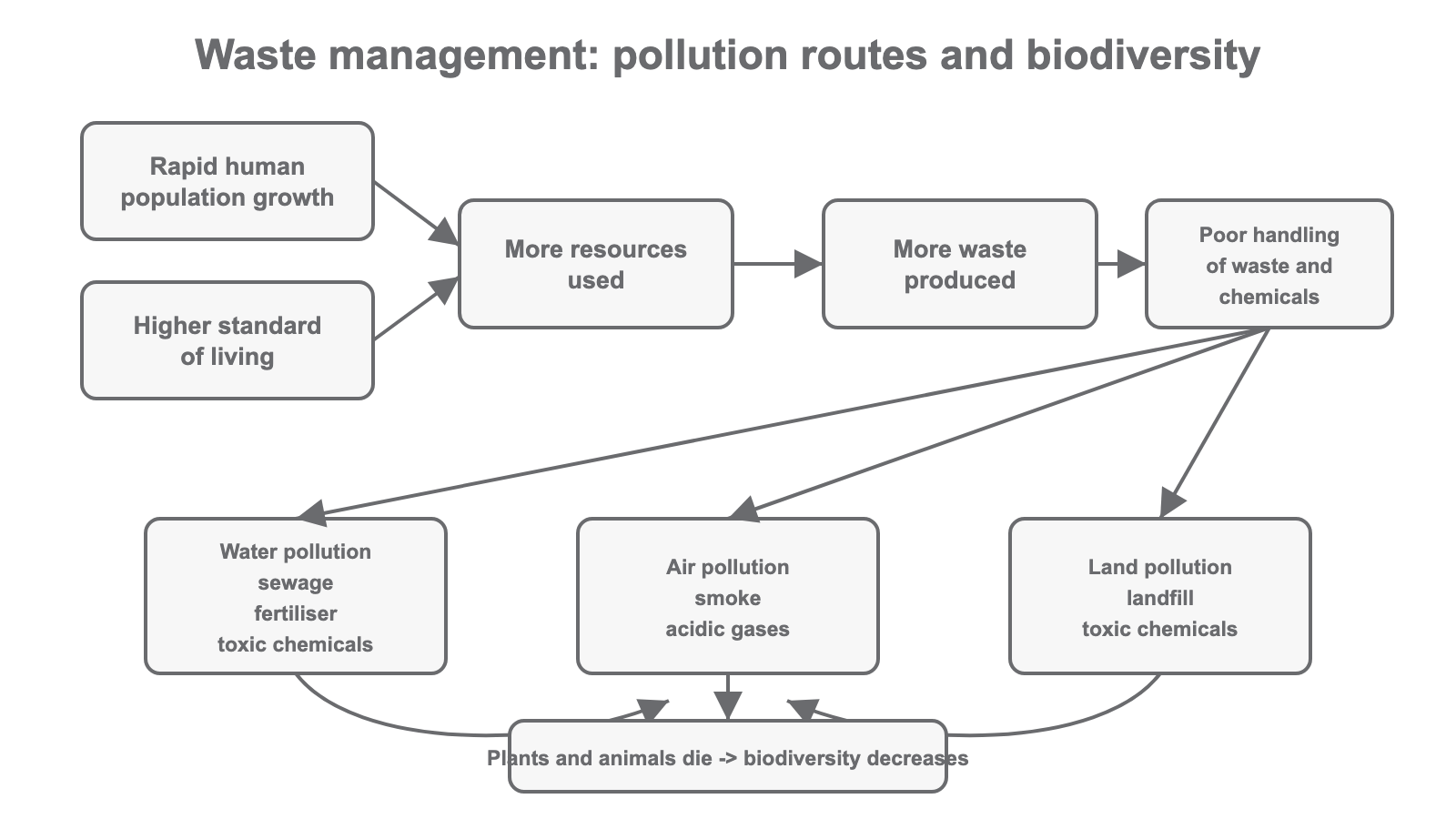
Use this route table as your mental checklist:
| Where pollution occurs | AQA examples to name | Main biological consequence |
|---|---|---|
| Water | Sewage, fertiliser, toxic chemicals | Aquatic plants and animals can die |
| Air | Smoke, acidic gases | Plants and animals can be harmed directly or through damaged habitats |
| Land | Landfill, toxic chemicals | Soil organisms, plants and animals can be poisoned or displaced |
The table is deliberately short. It helps you stay inside this lesson rather than drifting into neighbouring human-impact topics.
Water pollution effects
Water pollution matters because aquatic organisms depend on suitable water conditions. The three AQA examples are sewage, fertiliser and toxic chemicals.
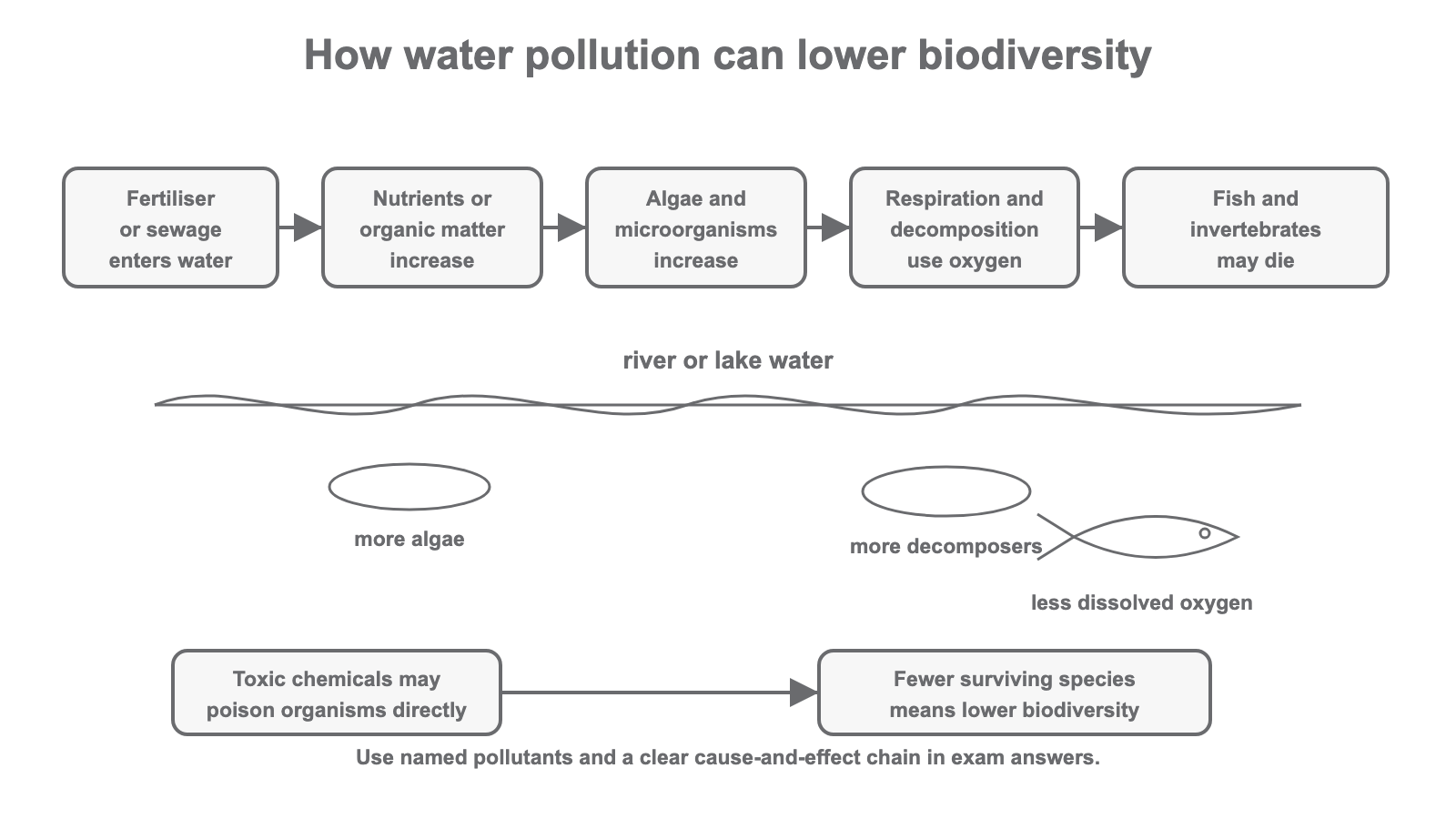
Sewage contains waste organic matter and microorganisms. Fertiliser contains mineral ions that plants and algae can use for growth. If these enter rivers, lakes or ponds, microorganisms and algae may increase. When dead organic material is decomposed, microorganisms respire and use dissolved oxygen from the water. If dissolved oxygen falls too low, fish and many invertebrates cannot respire aerobically enough to survive.
[DIAGRAM: asset_name: water-pollution-oxygen-chain - diagram 2; asset_slug: 106_4_7_3_2_waste_management_diagram2; file: diagram_assets/imagegen_regen_all/106_4_7_3_2_waste_management_diagram2_imagegen.png; recommended_method: codex_image_gen; description: Monochrome cause-and-effect chain for water pollution. Fertiliser or sewage enters water, nutrients or organic matter increase, algae and microorganisms increase, decomposition and respiration use dissolved oxygen, fish and invertebrates die, and aquatic biodiversity decreases. Include a separate side note that toxic chemicals may poison organisms directly.]
Continue this lesson.
You’re previewing NovaLearn without an account. Create a free account to read the rest.
Create free account