4.7.3.1 - Biodiversity
Biodiversity is about variety: how many different species are present on Earth or in a particular ecosystem. This lesson focuses on why high biodiversity makes ecosystems more stable, why humans depend on maintaining it, and how waste, deforestation and global warming can reduce it.
What biodiversity means
Biodiversity is the variety of all the different species of organisms on Earth, or within an ecosystem. An ecosystem could be a woodland, pond, field, coral reef or any other area where organisms interact with each other and with their surroundings.
Biodiversity
Biodiversity is the variety of all the different species of organisms on Earth, or within an ecosystem.
The word species matters. A field with 500 individuals from one species has many organisms, but low biodiversity if few different species live there. A field with many different plant, animal, fungal and microorganism species has greater biodiversity, even if the total number of organisms is not given.
When an exam question asks about biodiversity, avoid answering only with "lots of animals" or "many organisms". The creditworthy idea is variety of different species.
Biodiversity and stability
A great biodiversity helps to ensure the stability of an ecosystem. Stability means the ecosystem is less likely to change drastically when one species is affected by disease, weather, competition or human activity.
High biodiversity reduces the dependence of one species on another for food, shelter and the maintenance of the physical environment. If one food source decreases, there may be other food sources available. If one shelter species is damaged, there may be other plants or structures that still provide shelter. If one species that helps maintain conditions decreases, other species may partly support the same physical environment.
[DIAGRAM: asset_name: biodiversity-and-stability-network - diagram 1; asset_slug: 105_4_7_3_1_biodiversity_diagram1; file: diagram_assets/imagegen_regen_all/105_4_7_3_1_biodiversity_diagram1_imagegen.png; recommended_method: codex_image_gen; description: Monochrome two-panel concept diagram comparing a lower-biodiversity ecosystem with few species and one main dependency route against a greater-biodiversity ecosystem with more species and multiple food, shelter and physical-environment routes. Labels show that reduced dependence on one species increases ecosystem stability. Keep the visual conceptual and do not introduce pyramid diagrams or detailed food-web assessment content.]
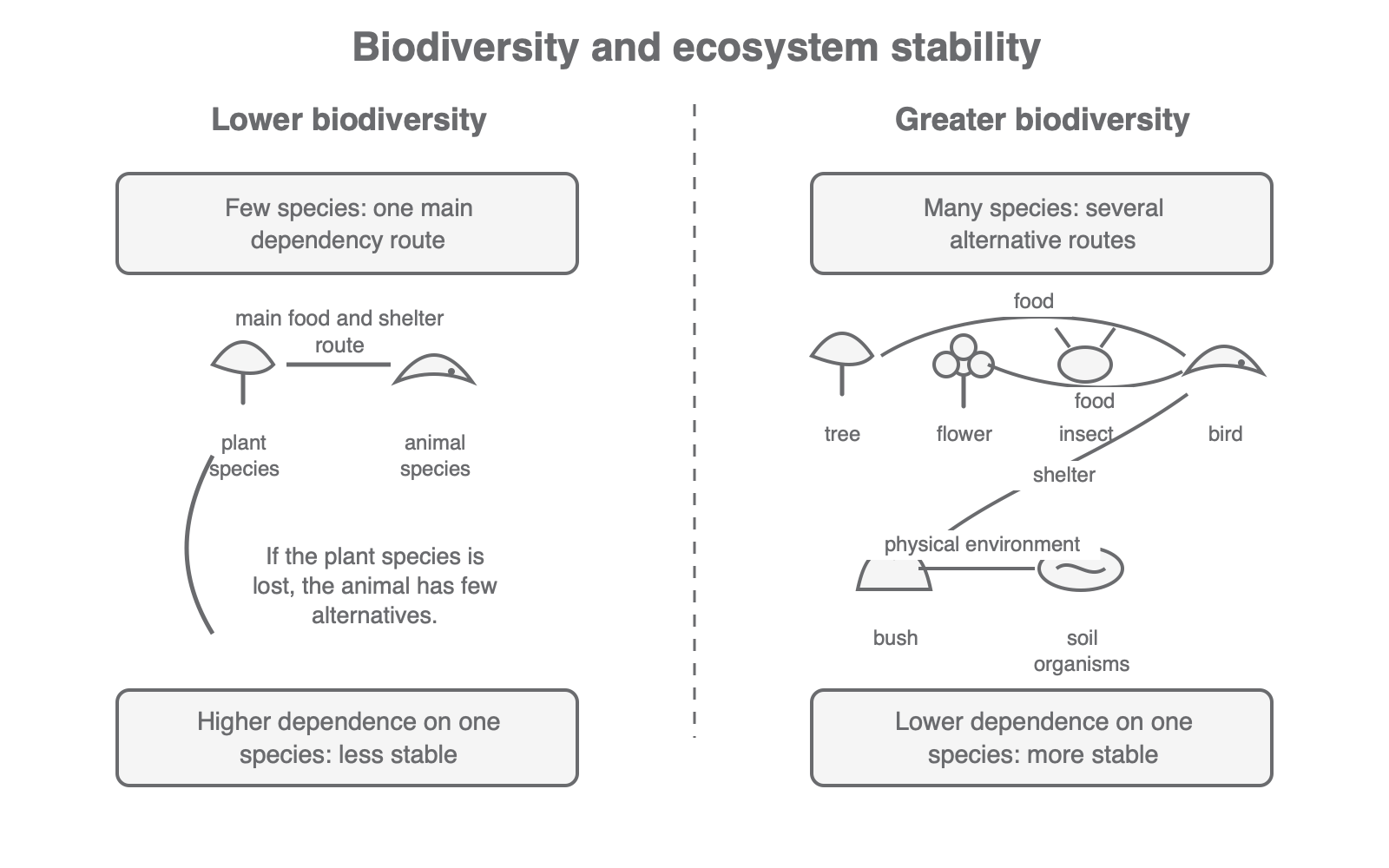
The key exam link is: more species means more possible interactions, so the ecosystem is less dependent on any one species. This makes it more likely that the ecosystem can continue functioning if one population falls.
A full exam answer should turn this into linked reasoning: name high biodiversity, state the reduced dependence, then explain why a fall in one population has a smaller effect on the whole ecosystem.
Why humans depend on biodiversity
Humans are part of ecosystems, not separate from them. The future of the human species relies on maintaining a good level of biodiversity because stable ecosystems support food supplies, shelter materials and the physical environment humans live in.
For example, humans depend on crops, livestock, wild species, soil organisms, pollinators and many other organisms. If biodiversity falls, ecosystems can become less stable, so these supports become less reliable.
Many human activities are reducing biodiversity. The specification names waste, deforestation and global warming as activities or effects you should be able to explain. Measures have been taken to try to stop biodiversity reduction, but the detailed methods for maintaining biodiversity are covered in a later specification point.
Continue this lesson.
You’re previewing NovaLearn without an account. Create a free account to read the rest.
Create free account