3.8-3.10B - Human reproductive systems and menstrual-cycle hormones
Human reproduction depends on structures that make and move gametes, and on hormones that prepare the uterus and time the release of an egg. This lesson keeps to the Edexcel International GCSE Biology boundary: the male and female reproductive systems, then the menstrual-cycle roles of oestrogen, progesterone, FSH and LH. The cycle is taught as a typical 28-day model, but real cycles vary in length.
The male reproductive system
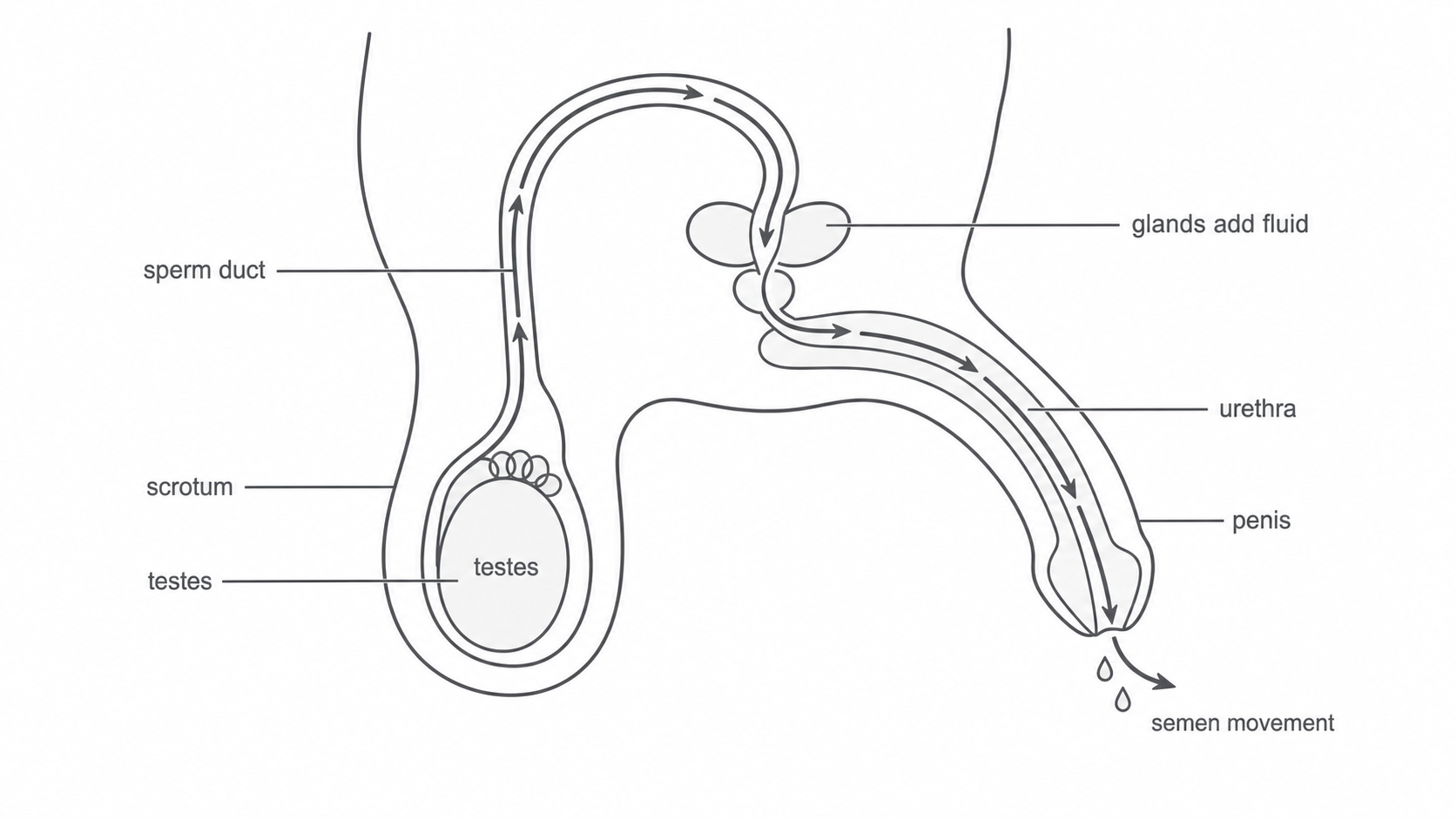
The main reproductive function of the male system is to produce sperm and transfer them into the female reproductive system. Its structures are adapted for that route from sperm production to semen release.
Semen
Semen is the fluid released from the penis during ejaculation. It contains sperm cells and fluid from glands.
| Structure | Function and adaptation |
|---|---|
| Testes | Produce sperm cells. |
| Scrotum | Holds the testes outside the body, where the temperature is lower and more suitable for sperm production. |
| Sperm ducts | Carry sperm away from the testes towards the urethra. |
| Glands | Add fluid to sperm to form semen, giving sperm a liquid medium for transport. |
| Urethra | Carries semen through the penis during ejaculation. |
| Penis | Transfers semen into the female reproductive system. |
The route matters because exam answers often need a linked structure-function explanation: testes make sperm -> ducts transport sperm -> glands add fluid -> urethra and penis release semen. Do not describe sperm as travelling through the bladder; the bladder stores urine and is not part of the sperm route.
[DIAGRAM: asset_name: Human reproductive systems and menstrual-cycle hormones - diagram 01; asset_slug: b43_human_reproductive_systems_and_menstrual_cycle_hormones__diagram_01; recommended_method: deterministic_drawing; description: Monochrome labelled male reproductive system route showing testes in the scrotum, sperm ducts, glands adding fluid, urethra through the penis and arrows for semen movement out of the body.]
The female reproductive system
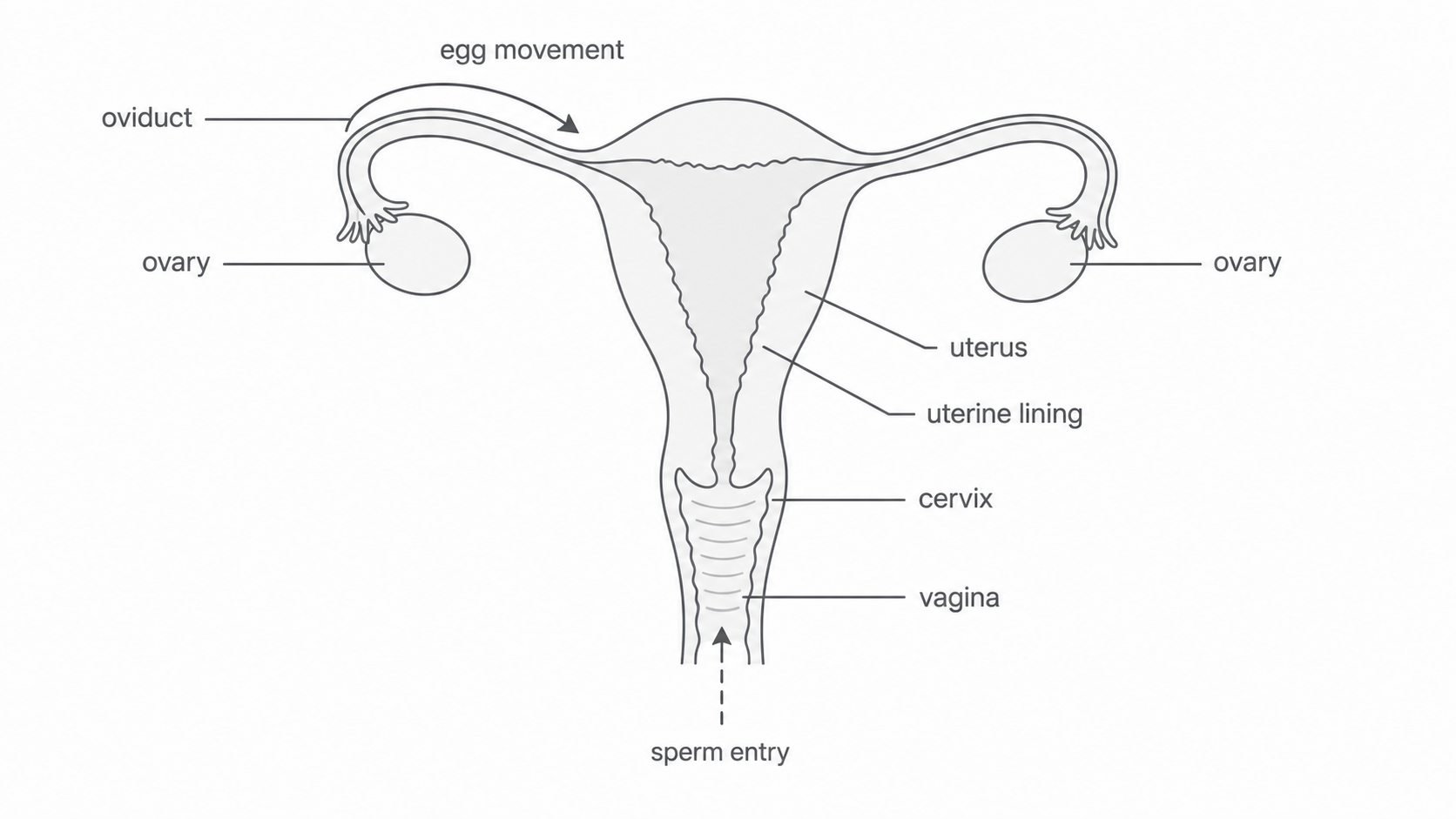
The female reproductive system produces egg cells, receives sperm, provides a site where fertilisation can occur, and prepares the uterus for possible implantation. Its structures are arranged as a pathway from ovary to oviduct to uterus, with the vagina connecting the uterus to the outside of the body.
| Structure | Function and adaptation |
|---|---|
| Ovaries | Contain egg cells and usually release one egg during a menstrual cycle. |
| Oviducts | Carry the egg from an ovary towards the uterus; fertilisation usually occurs here if sperm meet an egg. |
| Uterus | Has a muscular wall and a lining that thickens during the cycle, preparing for possible implantation of an embryo. |
| Cervix | Narrow opening between the uterus and vagina; allows sperm to enter and menstrual blood to leave. |
| Vagina | Receives semen and provides a route for menstrual blood to leave the body. |
The words ovary, oviduct and uterus are easy to mix up. Ovaries produce and release eggs. Oviducts carry eggs. The uterus is where the lining thickens and where an embryo could implant if fertilisation has occurred.
[DIAGRAM: asset_name: Human reproductive systems and menstrual-cycle hormones - diagram 02; asset_slug: b43_human_reproductive_systems_and_menstrual_cycle_hormones__diagram_02; recommended_method: deterministic_drawing; description: Monochrome labelled female reproductive system showing ovaries, oviducts, uterus, uterine lining, cervix and vagina, with arrows for egg movement from ovary to oviduct to uterus and sperm entry through vagina and cervix.]
Oestrogen and progesterone
The menstrual cycle includes changes in the uterus lining. Day 1 is counted as the first day of menstrual bleeding, when the lining of the uterus is being shed. After menstruation, the lining must be rebuilt before it can be maintained.
Oestrogen is involved mainly in the first half of the cycle. As oestrogen rises, it causes the uterus lining to repair and thicken. A high oestrogen level also helps bring about the LH surge that leads to ovulation.
Continue this lesson.
You’re previewing NovaLearn without an account. Create a free account to read the rest.
Create free account