2.72B-2.73B - Kidney function and urinary system
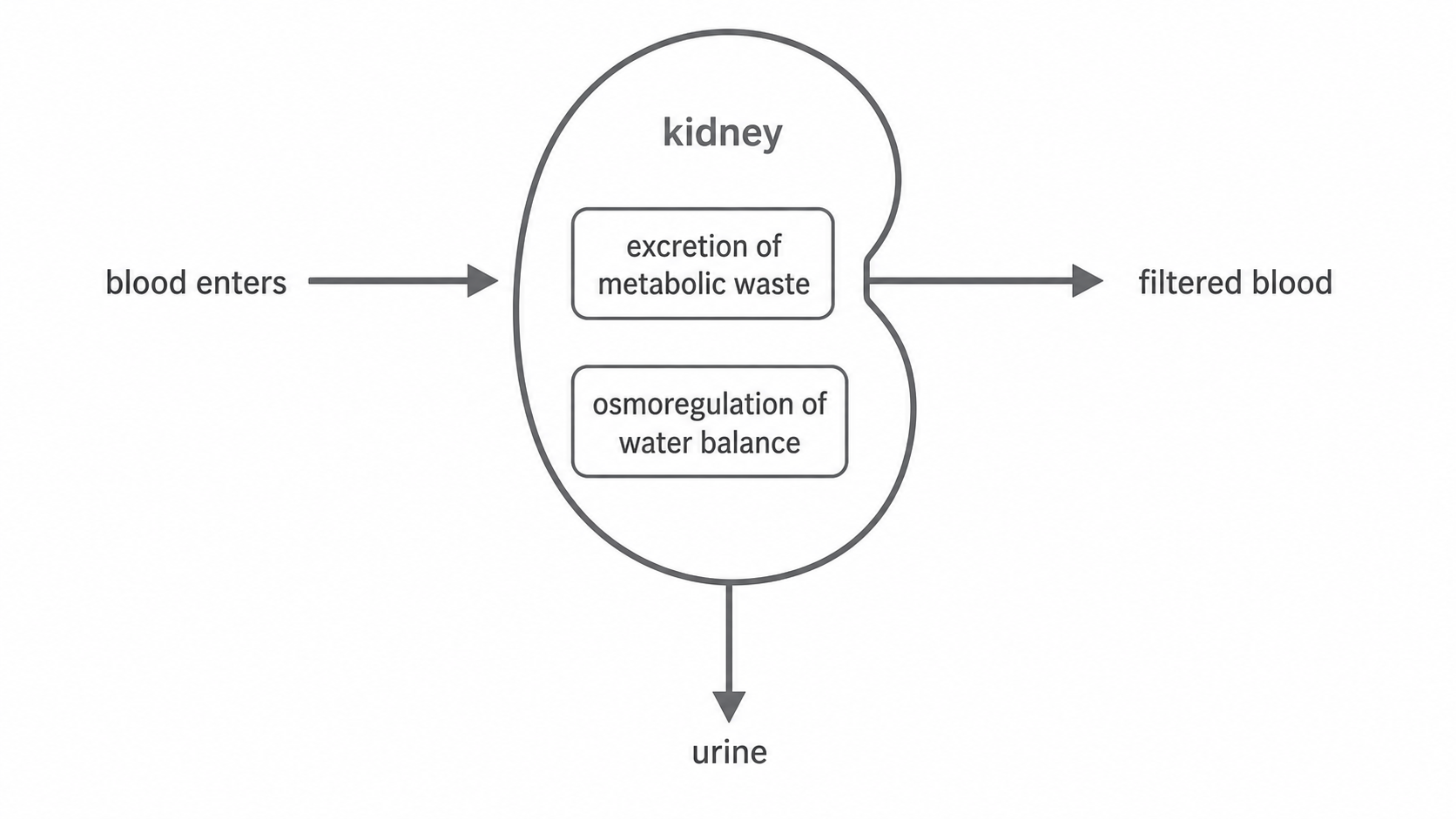
Your kidneys are not just "urine-making organs". They constantly help keep the internal environment suitable for cells by removing metabolic waste and controlling water balance. This lesson focuses on the kidney's two required roles, then follows urine through the named parts of the urinary system.
The kidney's two roles
The Edexcel specification names two roles of the kidney: excretion and osmoregulation. These roles are linked because both involve controlling what stays in the blood and what leaves the body in urine.
Excretion
Excretion is the removal of metabolic waste products from the body.
Metabolic waste is made by chemical reactions inside cells. If these waste products stayed in the blood, they could interfere with normal cell processes. The kidney helps solve this by removing wastes from the blood and sending them into urine.
Osmoregulation
Osmoregulation is the control of the water content of body fluids, including the blood.
Cells need body fluids to stay at a suitable water concentration. The kidney helps keep that concentration steady by controlling how much water is lost from the body in urine.
[DIAGRAM: asset_name: Kidney roles overview; asset_slug: b30_kidney_function_and_urinary_system__diagram_01; recommended_method: deterministic_drawing; description: Monochrome flow diagram showing blood entering the kidney, with the kidney carrying out excretion of metabolic waste and osmoregulation of water balance, producing filtered blood and urine.]
Excretion: removing waste from blood
The kidney receives blood that contains useful substances as well as waste substances. Its excretory role is to remove metabolic waste from the blood so that the waste can leave the body.
The key kidney waste example is urea, a nitrogen-containing waste product. The kidney does not store urea safely for later; it removes it from the blood and passes it into urine. The urine then travels through the urinary system until it leaves the body.
This is different from egestion. Egestion is the removal of undigested food from the alimentary canal as faeces. Excretion is about metabolic waste made inside the body, such as waste carried in the blood to the kidneys.
For excretion, the key idea is "waste out of the blood, into urine, then out of the body".
The detailed structures that filter the blood are taught in the next kidney lesson. Here, the exam focus is the role of the whole kidney: it removes waste from blood as part of excretion.
Osmoregulation: controlling water balance
Water is constantly gained and lost by the body. You gain water from drinks, food and some metabolic reactions. You lose water in urine, sweat, breath and faeces.
Continue this lesson.
You’re previewing NovaLearn without an account. Create a free account to read the rest.
Create free account