3.1-3.2 - Sexual - asexual reproduction and fertilisation
Reproduction produces new organisms, but not all reproduction works in the same way. This lesson compares sexual and asexual reproduction, then follows the exact fertilisation sequence required by Pearson Edexcel: male gamete plus female gamete, zygote, cell division, embryo. The main exam skill is to use the comparison words precisely instead of writing vague statements such as "one uses cells" or "one makes babies".
Two routes to new organisms
Sexual and asexual reproduction are two ways of producing offspring. The difference is not whether the organism is an animal or a plant. The difference is whether male and female gametes fuse during fertilisation.
Asexual reproduction
Asexual reproduction produces offspring from one parent, without the fusion of gametes.
In asexual reproduction, genetic information comes from one parent only. The offspring are genetically identical to that parent and to each other, unless a mutation occurs. Genetically identical organisms are called clones.
Sexual reproduction
Sexual reproduction involves the fusion of a male gamete and a female gamete during fertilisation.
In sexual reproduction, genetic information from two gametes is combined. The gametes are sex cells, such as sperm and egg cells in animals. Sexual reproduction usually involves two parents, but the most important biological feature is the fusion of male and female gametes.
[DIAGRAM: asset_name: Sexual/asexual reproduction and fertilisation - diagram 01; asset_slug: b40_sexual_asexual_reproduction_and_fertilisation__diagram_01; recommended_method: deterministic_drawing; description: Monochrome comparison map with an asexual route showing one parent, no gamete fusion, and genetically identical clone offspring; and a sexual route showing male and female gametes fusing in fertilisation to produce genetically different offspring.]
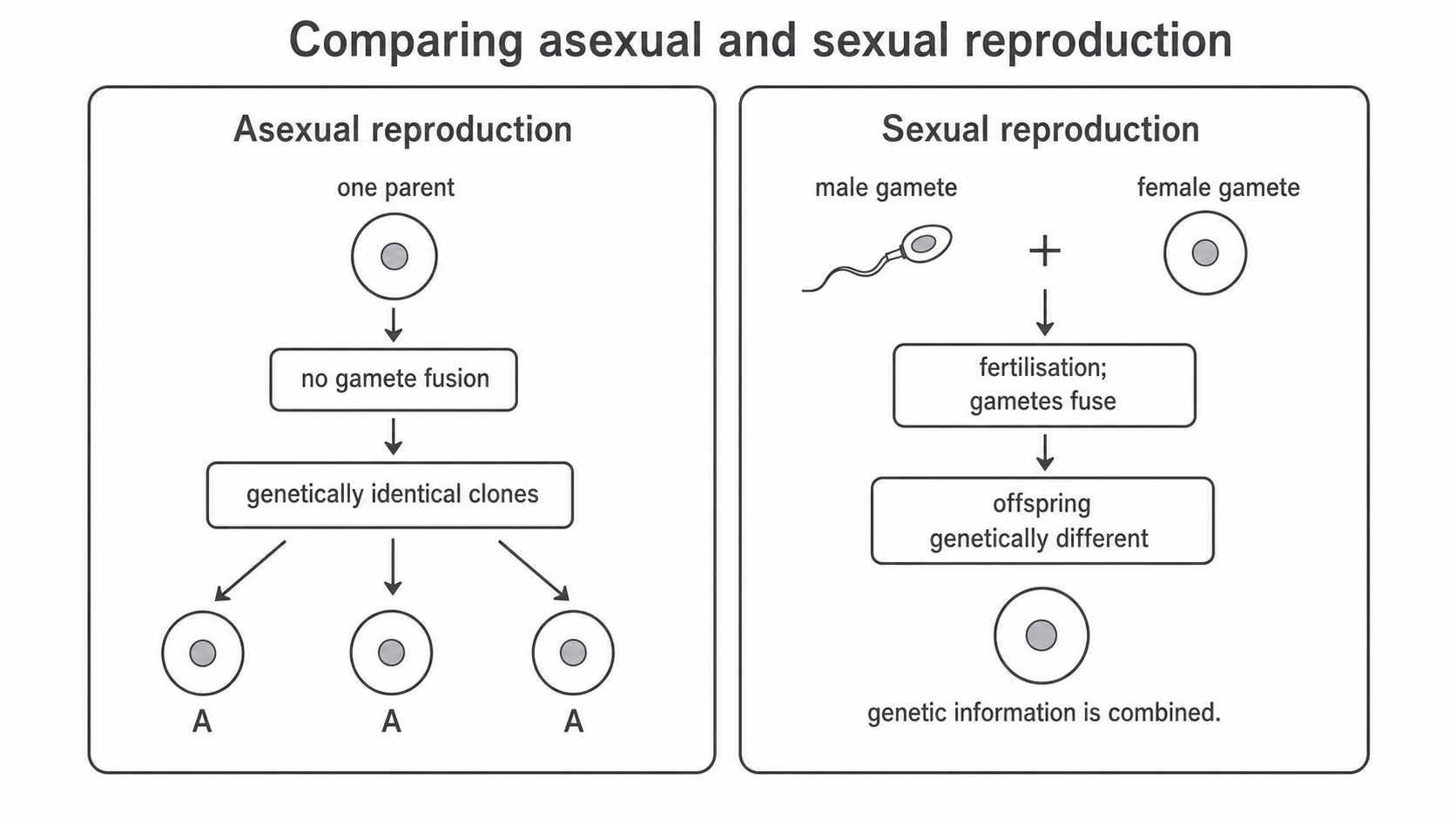
The core comparison is:
| Feature | Asexual reproduction | Sexual reproduction |
|---|---|---|
| Parents | one parent | usually two parents |
| Gametes | no fusion of gametes | male and female gametes fuse |
| Fertilisation | does not occur | occurs |
| Offspring | genetically identical clones | genetically different offspring |
Genetic similarity and variation
The word "genetic" refers to inherited information. In this topic, it matters because the two types of reproduction handle inherited information differently.
In asexual reproduction, there is no fertilisation and no mixing of genetic information from two gametes. One parent passes on the genetic information used to produce the offspring. This is why asexual offspring are described as genetically identical clones.
In sexual reproduction, a male gamete and a female gamete fuse. Each gamete contributes genetic information to the first cell of the new organism. Because the offspring receives a combination of genetic information, sexual reproduction produces variation between offspring.
Do not overstate the comparison. Genetically identical does not always mean looking exactly the same in every condition, because the environment can affect appearance and growth. For this specification point, the key idea is inherited genetic similarity: asexual reproduction makes clones, while sexual reproduction makes genetically different offspring.
Continue this lesson.
You’re previewing NovaLearn without an account. Create a free account to read the rest.
Create free account