3.34-3.37B - Mutation and effects on proteins - phenotype
A mutation is a change in genetic material. Most mutations do not cause a noticeable change in phenotype, but a mutation can matter if it changes the amino acid sequence of a protein and the protein's function. This lesson follows the chain from DNA change to possible phenotype change, then finishes with the mutagens that can increase the incidence of mutations.
Mutations in genetic material
A mutation is a rare, random change in genetic material. In this course, "genetic material" means DNA in chromosomes and genes. Mutations are described as random because they are not produced because an organism needs them, and they are described as rare because the DNA sequence is usually copied accurately.
Mutation
A mutation is a rare, random change in genetic material that can be inherited.
The phrase "can be inherited" needs careful handling. A mutation in a body cell may affect only that organism, or only the cells produced from that mutated body cell. A mutation can be inherited by offspring if it is present in a gamete or in a cell that gives rise to gametes, because that DNA can be passed on at fertilisation.
Do not write that every mutation is inherited. The exam-ready idea is narrower: mutation changes genetic material, and some mutations can be passed from parent to offspring.
From DNA to phenotype
DNA contains the coded instructions for making proteins. The order of bases in a gene helps determine the order of amino acids in a protein. If a mutation changes the DNA sequence in a gene, it may change the sequence of amino acids in the protein made from that gene.
[DIAGRAM: asset_name: Mutation and effects on proteins/phenotype - diagram 01; asset_slug: b53_mutation_and_effects_on_proteins_phenotype__diagram_01; recommended_method: deterministic_drawing; description: Monochrome flow diagram comparing an original gene sequence with a mutated gene sequence, showing one base change leading to a changed amino acid sequence, a possibly altered protein, and a possible phenotype effect.]
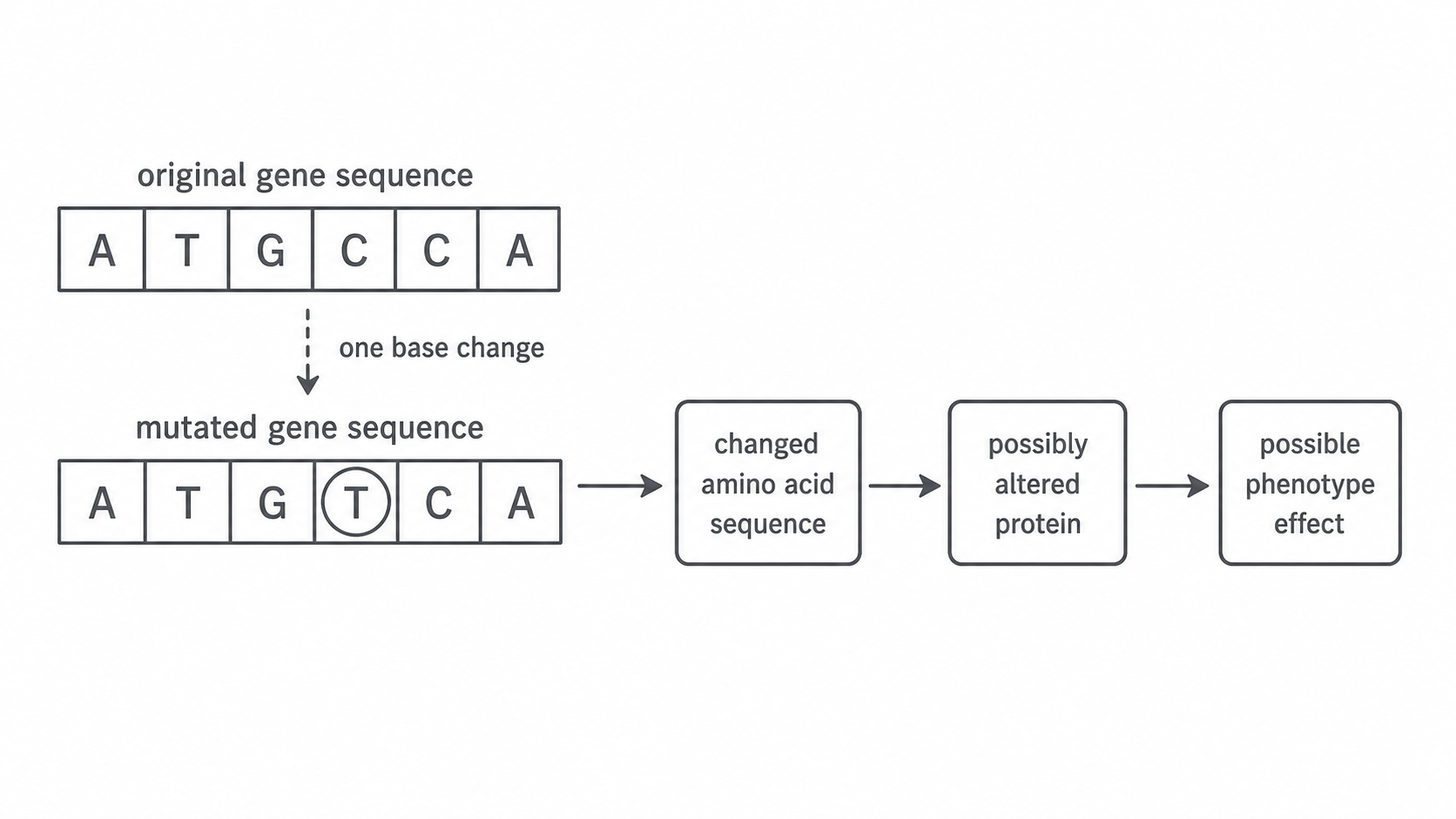
Proteins are important because their shapes allow them to carry out particular functions. A protein with the correct amino acid sequence usually folds into the correct shape. If a mutation changes the amino acid sequence, the protein may fold differently or may not work properly.
Phenotype means the observable characteristics of an organism. A changed protein can affect phenotype if the protein has a role in a visible or measurable characteristic, such as producing a pigment, controlling a reaction, or forming a structure in the body.
The linked chain for this specification point is:
- DNA sequence changes.
- The amino acid sequence in a protein may change.
- The protein's shape or function may change.
- The organism's phenotype may change.
The word "may" matters. A DNA change does not automatically cause a changed phenotype.
Continue this lesson.
You’re previewing NovaLearn without an account. Create a free account to read the rest.
Create free account