2.48-2.50 - Alveoli, smoking and breathing practical
Gas exchange in humans depends on diffusion across the alveoli, the tiny air sacs at the ends of the bronchioles. This lesson links alveolar structure to fast diffusion, then follows the biological consequences of smoking for the lungs and the circulatory system. It finishes with the specified practical: investigating carbon dioxide in exhaled air and the effect of exercise on breathing rate.
Alveoli for diffusion
An alveolus is a small air sac where oxygen enters the blood and carbon dioxide leaves the blood. The gases move by diffusion: each gas moves from a higher concentration to a lower concentration across the gas exchange surface.
Alveolus
One of the tiny air sacs in the lungs where gas exchange occurs between air and blood in capillaries.
Oxygen concentration is higher in the air inside an alveolus than in the blood arriving in the surrounding capillaries, so oxygen diffuses into the blood. Carbon dioxide concentration is higher in the blood arriving at the alveolus than in the alveolar air, so carbon dioxide diffuses into the alveolus and is breathed out.
[DIAGRAM: asset_name: Alveoli, smoking and breathing practical - diagram 01; asset_slug: b21_alveoli_smoking_and_breathing_practical__diagram_01; recommended_method: deterministic_drawing; description: Cross-section of one alveolus wrapped in capillaries, showing oxygen diffusing from alveolar air into blood and carbon dioxide diffusing from blood into alveolar air. Labels identify one-cell-thick alveolus wall, capillary wall, moist lining, large surface area from many alveoli, and blood flow maintaining a concentration gradient.]
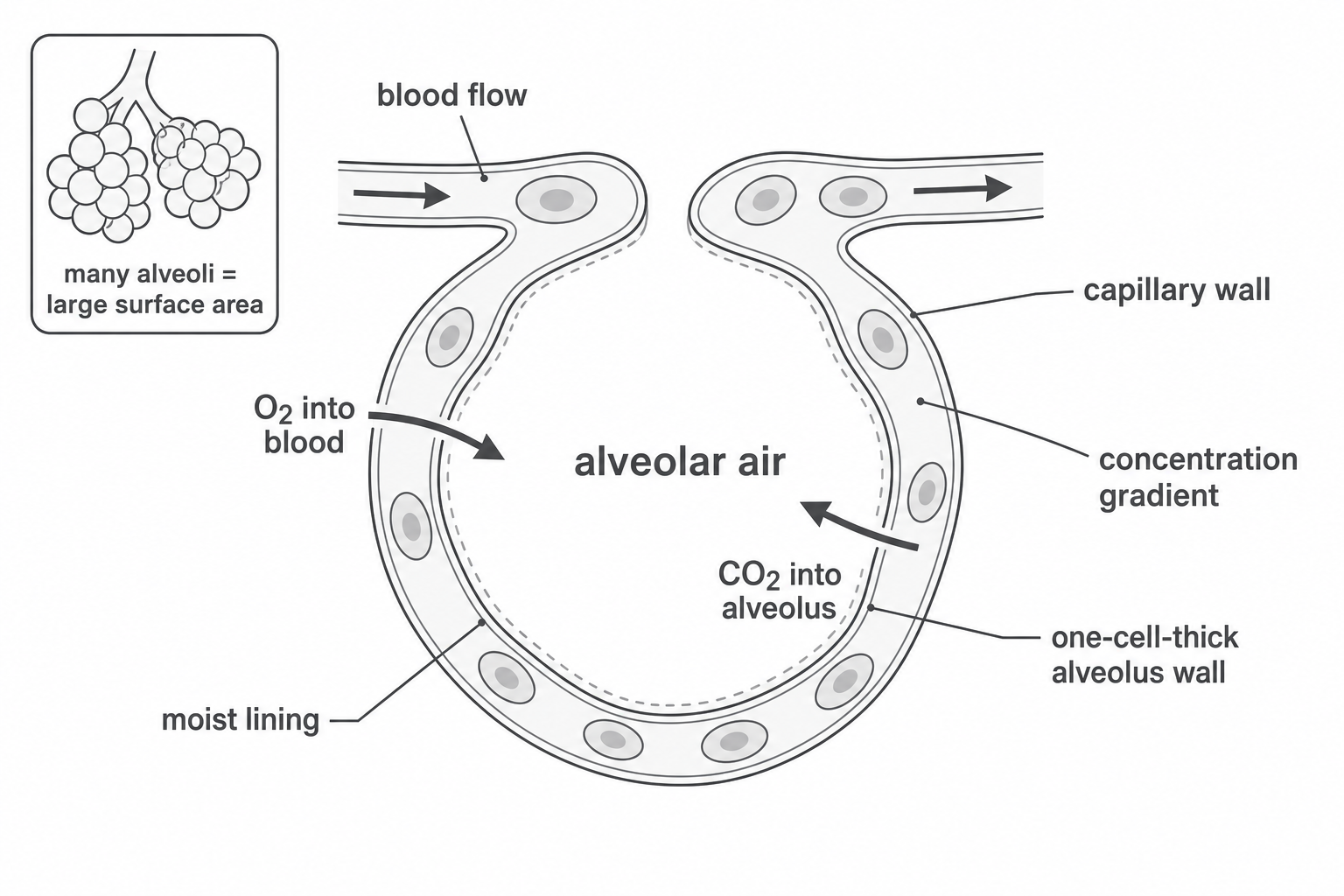
Alveoli are adapted for fast gas exchange in several linked ways:
- there are many alveoli, giving a large surface area for diffusion
- alveolar walls and capillary walls are each one cell thick, giving a short diffusion distance
- the alveolar surface is moist, so oxygen and carbon dioxide can dissolve before diffusing
- each alveolus has a good blood supply, so blood flow carries oxygen away and brings more carbon dioxide to the lungs
- ventilation refreshes the air in the alveoli, maintaining the concentration gradients for oxygen and carbon dioxide
The best exam answers do not just list features. They explain how each feature increases the rate of diffusion.
Smoking and the lungs
Cigarette smoke contains substances that damage the gas exchange system. At this level, the important idea is not just that smoking is harmful, but how the damage changes the movement of gases.
Tar and other particles can damage or paralyse cilia in the airways. Cilia normally move mucus and trapped particles away from the lungs. When cilia are damaged, mucus builds up, coughing becomes more likely, and pathogens are harder to remove, increasing the risk of infection and bronchitis.
Tar also contains carcinogens, which increase the risk of lung cancer by damaging DNA and increasing the chance that cells divide uncontrollably.
Emphysema is a lung disease in which alveolar walls are damaged and break down. This reduces the total surface area for diffusion and can reduce elasticity in the lungs. Less oxygen diffuses into the blood, so a person may become breathless, especially during exercise.
Carbon monoxide from smoke diffuses into the blood and binds strongly to haemoglobin in red blood cells. This reduces the amount of oxygen the blood can carry, so less oxygen reaches respiring cells.
Smoking and circulation
Smoking also affects the circulatory system. The required link to know is coronary heart disease, or CHD.
Coronary Heart Disease
A disease in which coronary arteries become narrowed or blocked, reducing blood flow to the heart muscle.
The coronary arteries supply the heart muscle with oxygenated blood. If fatty deposits build up in these arteries, their lumen narrows. Less oxygenated blood reaches the heart muscle, so the heart muscle has less oxygen for aerobic respiration. A complete blockage can cause a heart attack.
Smoking increases this risk in several ways. Nicotine can increase heart rate and blood pressure, putting more strain on the heart. Carbon monoxide reduces oxygen transport by haemoglobin, so the heart may need to work harder to supply oxygen. Other chemicals in smoke damage the lining of arteries and make fatty deposits and blood clots more likely.
Continue this lesson.
You’re previewing NovaLearn without an account. Create a free account to read the rest.
Create free account