2.70-2.71 - Excretion overview and plant wastes
Cells are always carrying out metabolic reactions. Some products of those reactions are useful, but others must be removed because they would build up, disturb conditions inside the organism, or simply be surplus to what the organism needs. In this lesson, excretion means knowing where key waste products come from and which structures remove them in plants and humans.
What excretion means
Excretion is the removal of waste products made by metabolism. Metabolism means the chemical reactions happening inside cells, such as respiration and photosynthesis. A substance counts as an excretory product when it is made by these reactions and must be removed from the organism, or when it is present in excess of what the organism needs.
Excretion
The removal from an organism of waste products of metabolism and substances in excess of requirements.
This is different from egestion. Egestion is the removal of undigested food from the gut as faeces. Faeces is not mainly made by chemical reactions inside body cells, so it is not an excretory product in this specification point.
For B29, the important idea is not a detailed excretory system. It is a matching job:
| Organism or organ | What must be removed | Why it counts here |
|---|---|---|
| Flowering plant leaf | carbon dioxide and oxygen | made by metabolism in plant cells |
| Human lungs | carbon dioxide and water vapour | carbon dioxide is made in respiration; water is also lost during breathing out |
| Human kidneys | urea, excess water and excess ions | removed from blood in urine |
| Human skin | water, ions and a small amount of urea | removed in sweat |
Plant waste gases
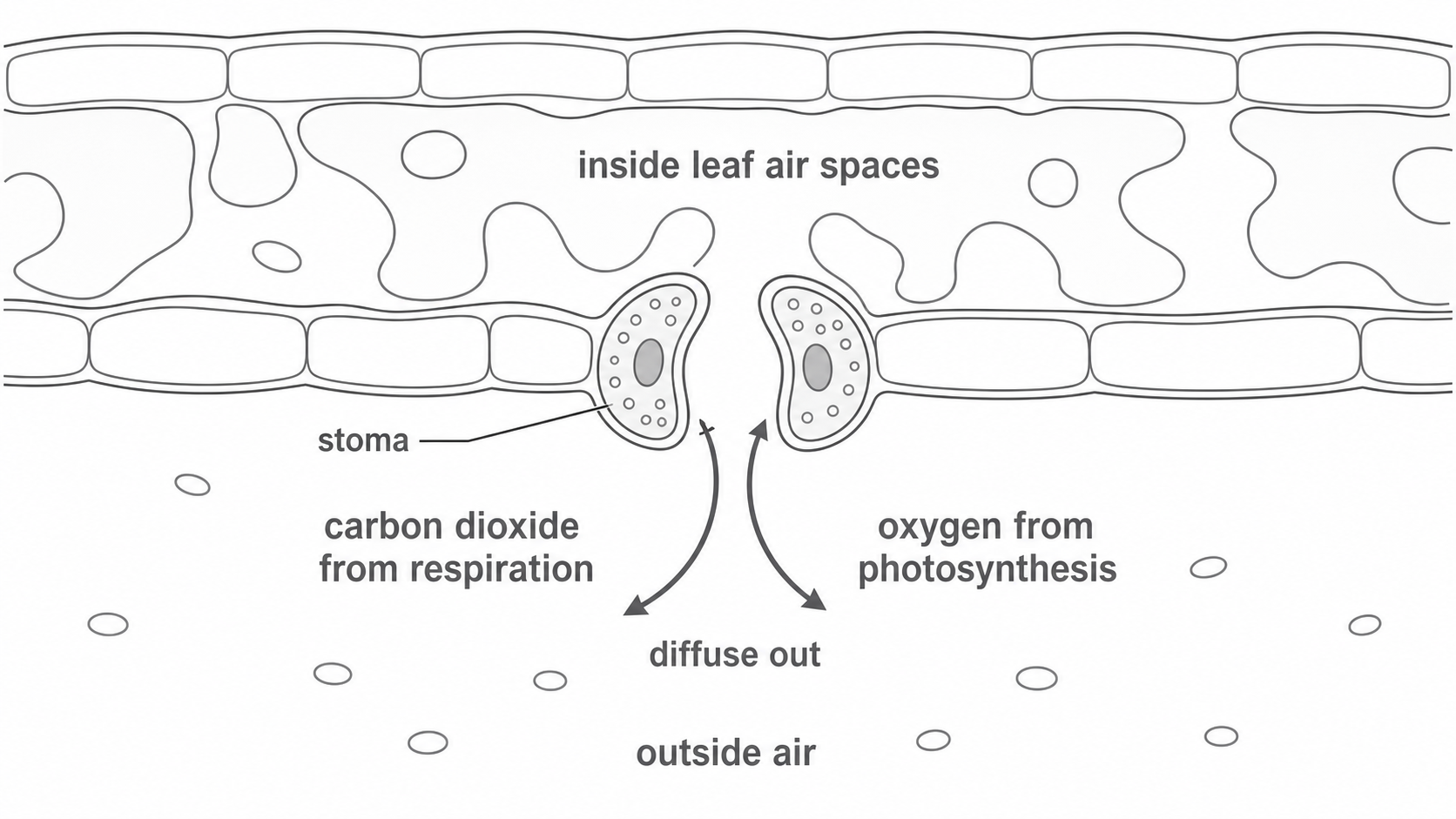
Flowering plants make waste products too. The two waste products named in this specification point are carbon dioxide and oxygen.
Carbon dioxide is produced during respiration. Plant cells respire all the time, using glucose to release energy for cell processes. One waste product of aerobic respiration is carbon dioxide, so any carbon dioxide that is not being used in photosynthesis can be lost from the plant.
Oxygen is produced during photosynthesis. In the light, chloroplast-containing cells use light energy to make glucose from carbon dioxide and water. Oxygen is released as a product of photosynthesis. Some oxygen may be used by the plant for respiration, but excess oxygen diffuses out.
The important exam phrase is origin. If asked for the origin of a waste gas in a flowering plant:
- carbon dioxide comes from respiration
- oxygen comes from photosynthesis
[DIAGRAM: asset_name: Excretion overview and plant wastes - diagram 01; asset_slug: b29_excretion_overview_and_plant_wastes__diagram_01; recommended_method: deterministic_drawing; description: Monochrome leaf surface and stomatal pore showing carbon dioxide from respiration and oxygen from photosynthesis diffusing out through the stoma.]
Stomata as exits
Stomata are tiny pores in the surface of a leaf, usually with guard cells on either side. They allow gases to diffuse between the air spaces inside the leaf and the air outside.
When a waste gas is at a higher concentration inside the leaf than outside, it diffuses out through open stomata. This is how carbon dioxide from respiration and oxygen from photosynthesis are lost from a leaf.
Continue this lesson.
You’re previewing NovaLearn without an account. Create a free account to read the rest.
Create free account