0.5 - Recognising chemical hazards
Recognise common pictograms on chemical containers and connect each warning to a suitable laboratory precaution. You will read the actual symbols and explain how a specific action reduces the danger they warn about.
Using a container label
A hazard symbol warns about a danger associated with the contents of a chemical container. It helps you choose appropriate precautions, but it does not remove the hazard or give a complete safe method.
Read the chemical name, pictograms and written hazard and precaution statements before use. A label may have several pictograms because a substance can present several hazards. The quantities, concentration and procedure also affect the risk.
Container pictograms use a black symbol on a white background inside a red diamond. The symbols below are six common examples; they are not the full set.
Recognising the symbols
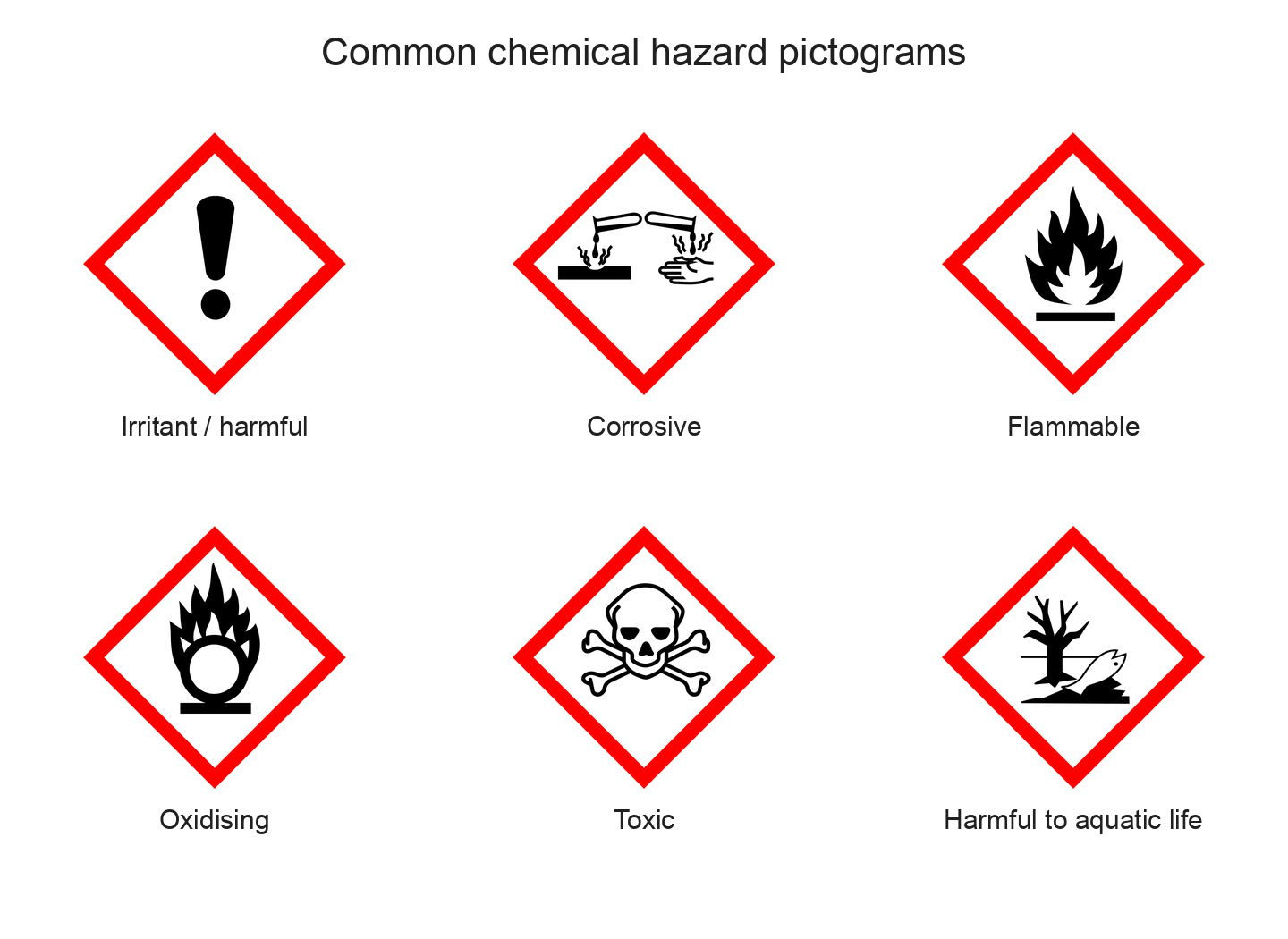
| Picture to recognise | Danger it can indicate |
|---|---|
| Exclamation mark | Irritation of skin or eyes, or harmful effects from exposure; check the wording on the label |
| Liquid from test tubes damaging a hand and metal | Corrosive: may cause severe skin burns or eye damage, or corrode metals |
| Flame | Flammable: can catch fire easily |
| Flame over a circle | Oxidising: may cause or intensify a fire by supporting combustion |
| Skull and crossbones | Toxic: can cause serious poisoning or death through exposure |
| Dead tree and fish | Hazardous to aquatic life |
The exclamation mark is often called irritant/harmful in school questions. It is different from the separate serious-health-hazard pictogram showing a person's silhouette with a star-shaped mark in the chest. A pictogram can cover more than one hazard, so the written label identifies the specific warning.
Standard symbols checked against the HSE pictogram reference.
Matching a precaution to the hazard
Choose a precaution that interrupts the way harm could happen. Eye protection reduces contact from splashes; separating a flammable chemical from ignition sources reduces the chance of fire.
| Hazard | Example linked precaution |
|---|---|
| Corrosive | Wear eye protection and prevent skin contact to reduce exposure to splashes |
| Flammable | Keep away from naked flames and sparks; close containers when not in use |
| Irritant/harmful | Avoid skin/eye contact and control dust or vapour as instructed |
| Oxidising | Keep away from flammable materials that could burn more fiercely |
| Toxic | Prevent swallowing, inhalation and skin exposure; use the specified containment or fume cupboard where required |
| Harmful to aquatic life | Collect waste for the specified disposal route so it does not enter waterways |
For a bottle with both a flame and an exclamation mark, the precautions must address both fire and harmful exposure. “Be careful” gives no specific action. Even a useful precaution such as goggles does not control every hazard: goggles cannot stop flammable vapour igniting.