4.14-4.16 - Pollutants and acid rain
Hydrocarbon fuels are useful because they release energy when they burn. Real fuels and real engines also produce small amounts of other gases that can harm the environment. This lesson follows the two pollutant routes in this cluster: oxides of nitrogen from hot car engines, and sulfur dioxide from sulfur impurities in fuels.
Two acid-rain pollutants
For this lesson, the two key pollutants are oxides of nitrogen and sulfur dioxide. They are not formed in the same way, so keep their sources separate.
| Pollutant | Formula or shorthand | Source in this lesson | Why it matters |
|---|---|---|---|
| Oxides of nitrogen | NOx, such as NO and NO2 | nitrogen and oxygen from air reacting in a hot car engine | can form nitric acid in the atmosphere |
| Sulfur dioxide | SO2 | sulfur impurities in hydrocarbon fuels burning in oxygen | can form sulfuric acid in the atmosphere |
A hydrocarbon contains hydrogen and carbon only. If sulfur dioxide is formed when a hydrocarbon fuel burns, the sulfur did not come from the hydrocarbon molecules themselves. It came from sulfur-containing impurities mixed with the fuel.
Pollutant
A pollutant is a substance released into the environment that can cause harm.
Oxides of nitrogen from engines
Air is mostly nitrogen with oxygen also present. At ordinary temperatures, nitrogen and oxygen in air do not react to any significant extent. A car engine is different because the temperature reached during combustion is very high.
[DIAGRAM: asset_name: Pollutants and acid rain - diagram 01; asset_slug: c52_pollutants_and_acid_rain__diagram_01; recommended_method: image_gen; description: Monochrome process diagram showing air containing nitrogen and oxygen entering a hot car engine, high temperature allowing nitrogen and oxygen to react, and NOx leaving in the exhaust.]
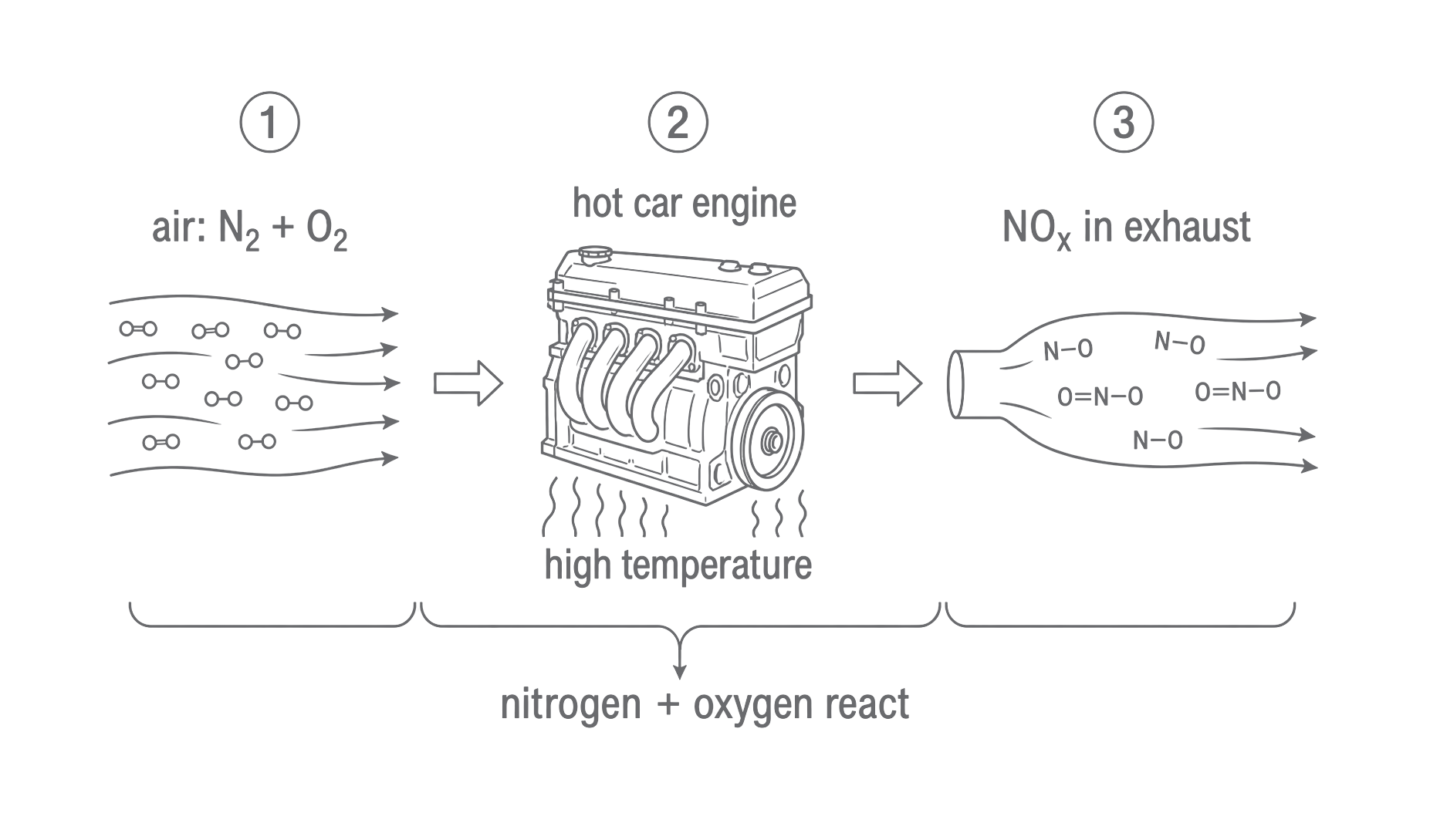
The important chain is:
Oxides of nitrogen are often written as NOx because more than one oxide can be formed. For Pearson-style answers, the key points are usually that the nitrogen and oxygen come from the air, the engine reaches a high temperature, and that high temperature allows them to react.
Do not say that the nitrogen comes from the fuel. In this specification point, the nitrogen source is the air drawn into the engine.
Sulfur dioxide from impurities
Some hydrocarbon fuels contain sulfur impurities. When the fuel burns, these impurities can also burn. Sulfur reacts with oxygen to form sulfur dioxide.
[DIAGRAM: asset_name: Pollutants and acid rain - diagram 02; asset_slug: c52_pollutants_and_acid_rain__diagram_02; recommended_method: image_gen; description: Monochrome process diagram showing a hydrocarbon fuel with a sulfur impurity, combustion in oxygen, and formation of sulfur dioxide, with the equation S + O2 -> SO2.]
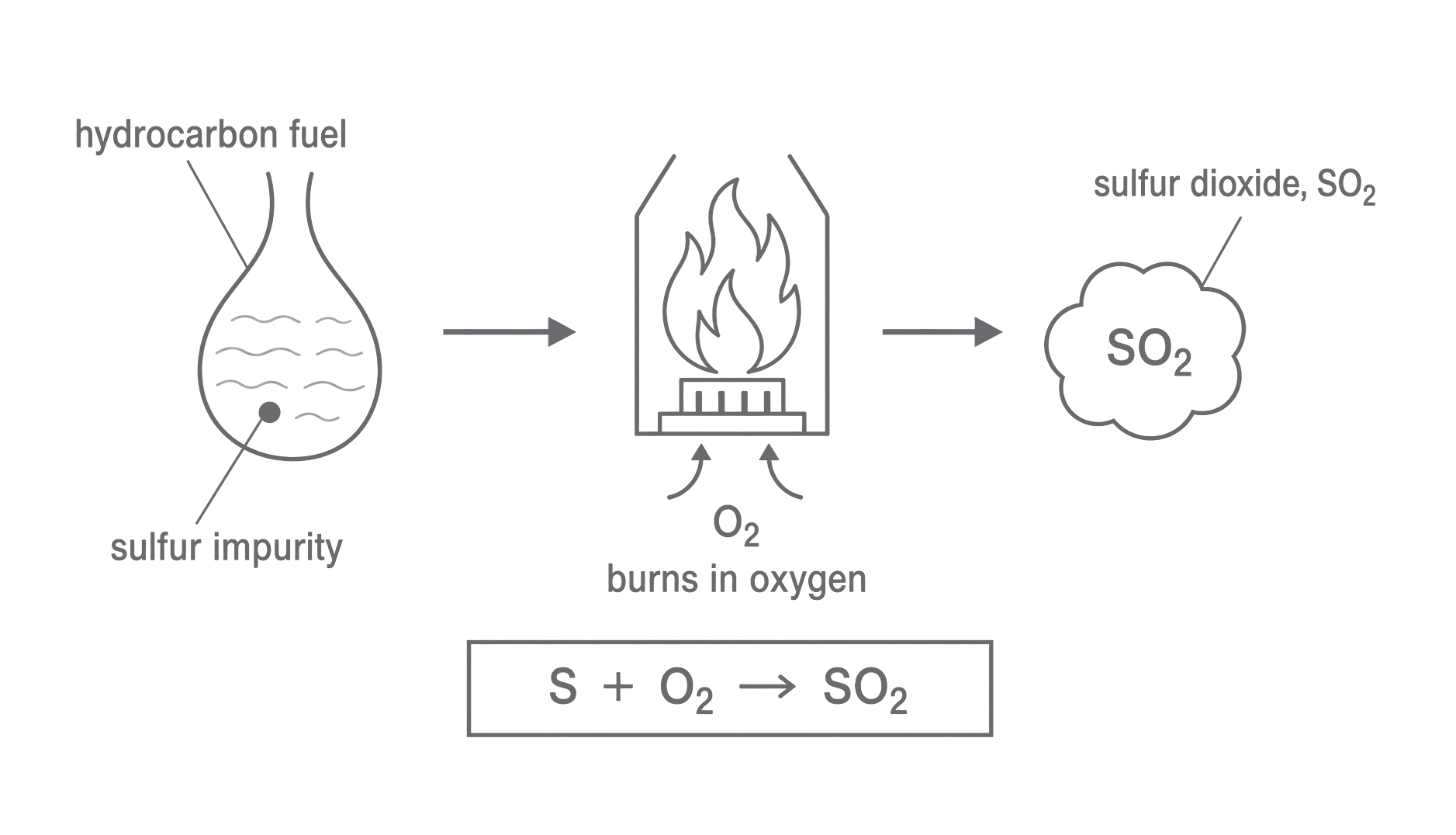
The reaction for sulfur burning is:
This equation is already balanced: one sulfur atom and two oxygen atoms on each side. The exam point is not that all fuel becomes sulfur dioxide. The point is that the sulfur impurity reacts with oxygen during combustion and produces sulfur dioxide.
Continue this lesson.
You’re previewing NovaLearn without an account. Create a free account to read the rest.
Create free account