2.34-2.36 - Solubility rules and proton transfer
Some ionic compounds dissolve in water and some do not. Edexcel expects you to use a short set of solubility rules to predict whether a common ionic compound is soluble, and to understand acid-base reactions as transfers of protons. These two ideas sit together because many reactions in this topic are best explained by following particles: which ions stay in solution, which form a solid, and which species donate or accept H+.
Soluble and insoluble ionic compounds
An ionic compound is soluble in water if enough of it dissolves to form an aqueous solution. In equations, a soluble ionic compound in water is usually shown with the state symbol (aq). The ions are separated and spread through the water.
An ionic compound is insoluble in water if it does not dissolve to any significant extent. In equations, an insoluble compound is shown as a solid, (s). If it forms when two aqueous solutions are mixed, the solid is called a precipitate.
[DIAGRAM: asset_name: Solubility rules and proton transfer - diagram 01; asset_slug: c33_solubility_rules_and_proton_transfer__diagram_01; recommended_method: image_gen; description: Monochrome two-beaker particle schematic comparing a soluble ionic compound with separated ions dispersed through water and an insoluble ionic compound with particles settled as a solid precipitate at the bottom of the beaker.]
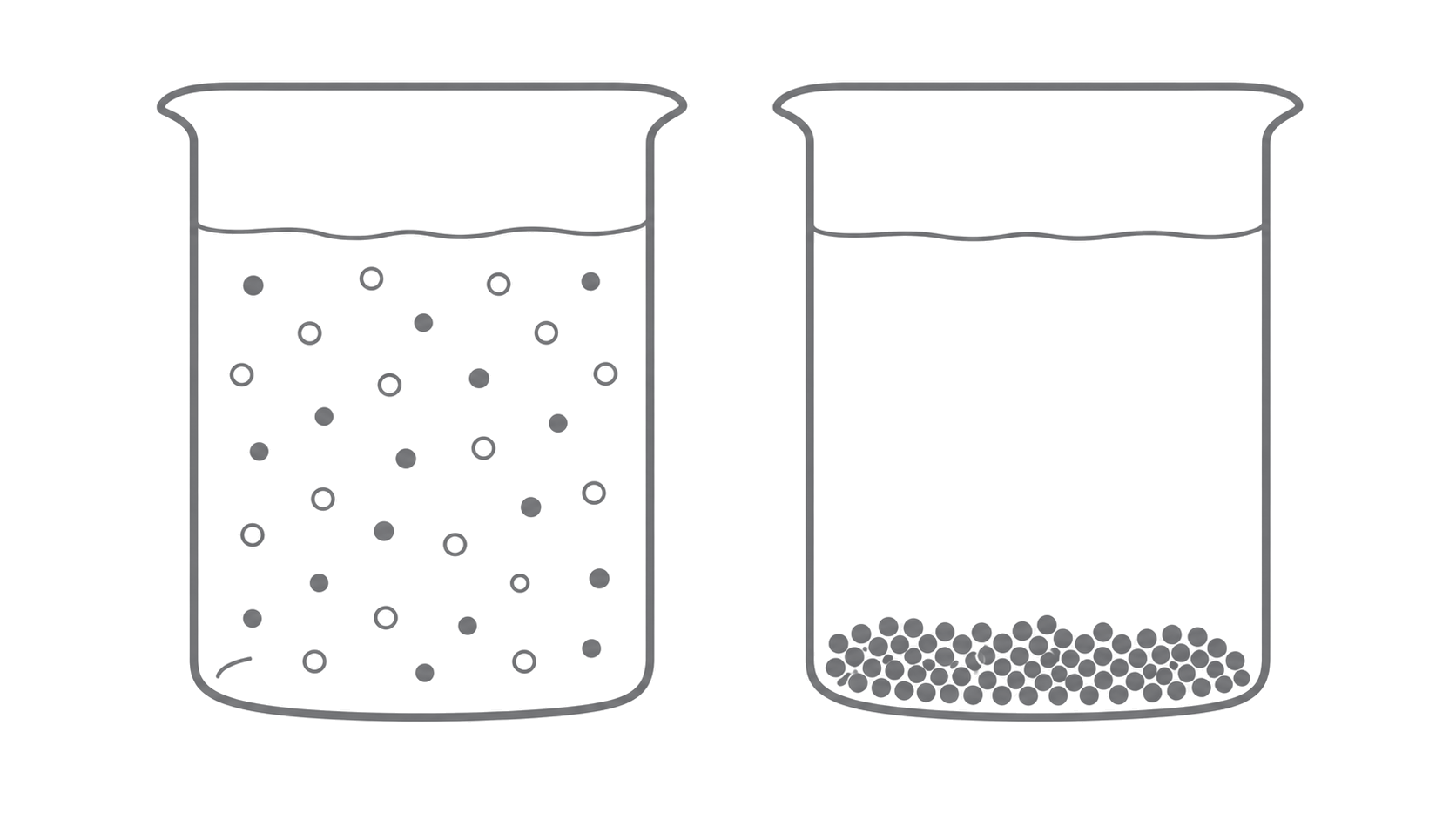
Precipitate
A precipitate is an insoluble solid formed when solutions are mixed.
Do not decide solubility from the name "salt" alone. Sodium chloride is soluble, but silver chloride is insoluble. Copper(II) sulfate is soluble, but barium sulfate is insoluble. The formula tells you which ions are present, and the ions decide which rule to use.
For this lesson, the word common matters. The specification gives general rules for common ionic compounds, not a complete solubility data book for every possible compound.
Edexcel solubility rules
You need to know these rules for predicting solubility in water.
| Ion or compound family | Edexcel solubility rule |
|---|---|
| Common sodium compounds | soluble |
| Common potassium compounds | soluble |
| Common ammonium compounds | soluble |
| Nitrates | soluble |
| Common chlorides | soluble, except silver chloride and lead(II) chloride |
| Common sulfates | soluble, except barium sulfate, calcium sulfate and lead(II) sulfate |
| Common carbonates | insoluble, except sodium carbonate, potassium carbonate and ammonium carbonate |
| Common hydroxides | insoluble, except sodium hydroxide, potassium hydroxide and calcium hydroxide |
Calcium hydroxide is an important special case: it is slightly soluble. That means some dissolves in water, but much less than a fully soluble compound such as sodium hydroxide.
A good order for applying the rules is:
- Look for sodium, potassium, ammonium or nitrate. These usually make the compound soluble in this specification.
- If the compound is a chloride or sulfate, check the named exceptions.
- If the compound is a carbonate or hydroxide, start from "insoluble", then check the named soluble exceptions.
Worked examples:
| Compound | Ions to notice | Prediction |
|---|---|---|
Na2CO3 | sodium compound | soluble |
PbCl2 | chloride with lead(II) | insoluble |
BaSO4 | sulfate with barium | insoluble |
KNO3 | potassium compound and nitrate | soluble |
CuCO3 | carbonate, not sodium/potassium/ammonium | insoluble |
Ca(OH)2 | hydroxide with calcium | slightly soluble |
The most common error is to remember only the family rule and forget the exception. For example, "chlorides are soluble" is not enough when the metal ion is silver or lead(II).
Predicting precipitates
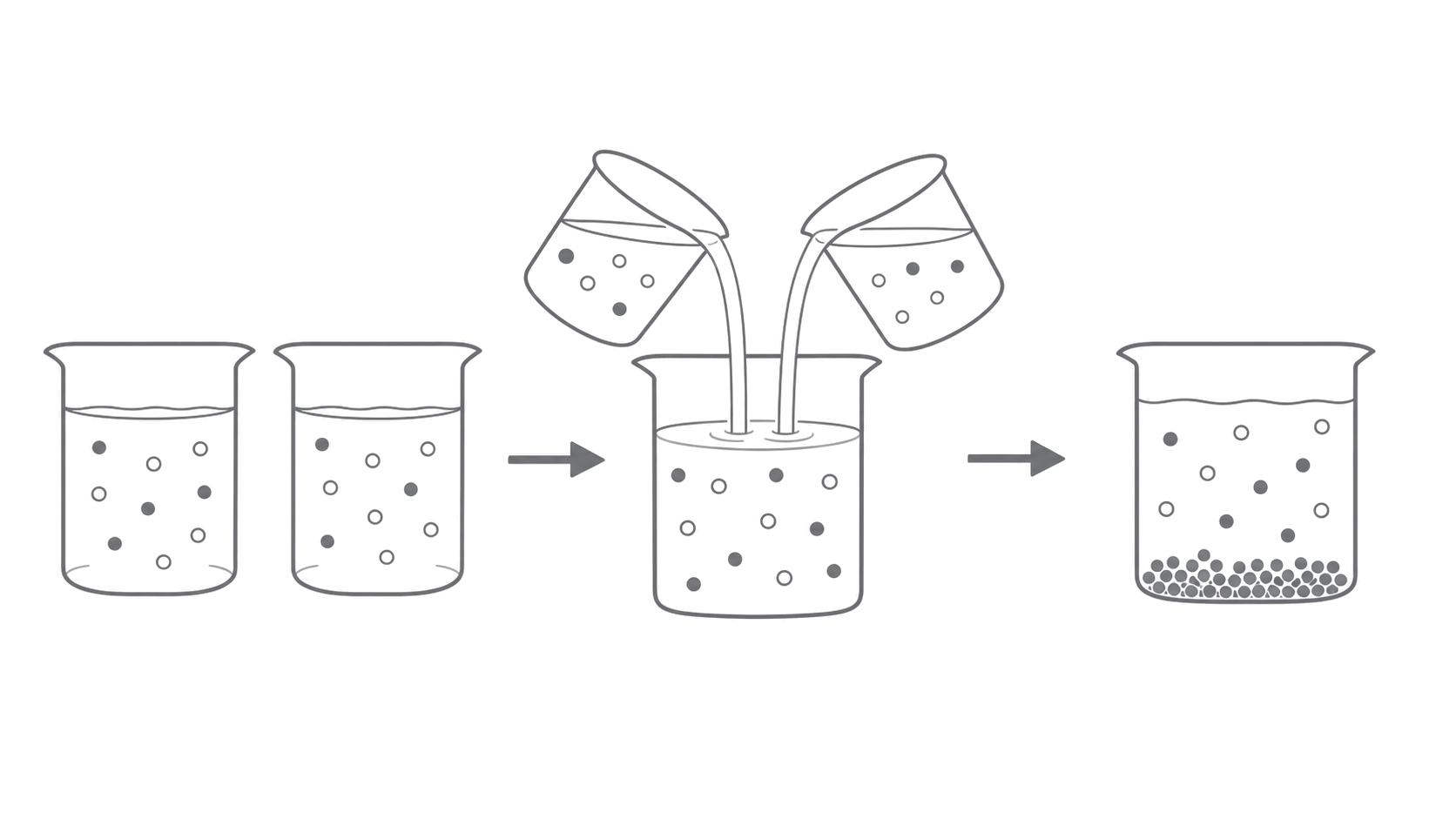
The solubility rules let you predict whether a solid will form when two aqueous ionic solutions are mixed. This is not the full salt-preparation practical from a later cluster; here the key skill is prediction.
[DIAGRAM: asset_name: Solubility rules and proton transfer - diagram 02; asset_slug: c33_solubility_rules_and_proton_transfer__diagram_02; recommended_method: image_gen; description: Monochrome three-stage schematic showing two soluble ionic solutions, the solutions being mixed, and a solid precipitate settled at the bottom of the final beaker with some ions remaining dispersed in solution.]
Continue this lesson.
You’re previewing NovaLearn without an account. Create a free account to read the rest.
Create free account