2.9-2.11 - Air, oxygen and combustion
Air is a mixture of gases, and only part of it is oxygen. This lesson shows how chemists use volume changes to estimate the oxygen content of air, then connects oxygen to the combustion of some simple elements. The exam skill is to describe the method and use the correct volume in the percentage calculation.
Dry air composition
Dry air means air without water vapour included. Water vapour varies with humidity, so Edexcel asks for the approximate percentages by volume of the four most abundant gases in dry air.
| Gas in dry air | Approximate percentage by volume |
|---|---|
| Nitrogen | 78% |
| Oxygen | 21% |
| Argon | 1% |
| Carbon dioxide | 0.04% |
Those figures are approximate. In an exam, 0.9% for argon is also acceptable, but it is usually easiest to remember it as about 1%. Carbon dioxide is much less abundant than argon, even though it is chemically and environmentally important.
Dry air
Air with water vapour excluded from the composition.
Air does not have a chemical formula because it is a mixture. The gases are not chemically bonded together, and the proportions can be measured by volume.
Measuring oxygen in air
To determine the percentage by volume of oxygen in air, trap a known volume of air and react the oxygen with another substance. The substance must remove oxygen from the gas mixture. If the apparatus is sealed, the decrease in gas volume is the volume of oxygen that reacted.
A metal can be used. For example, wet iron filings or iron wool react slowly with oxygen in air to form iron oxide. Water is needed for rusting, and the iron is used in excess so that oxygen, not iron, is the limiting reactant.
[DIAGRAM: asset_name: Air, oxygen and combustion - diagram 01; asset_slug: c24_air_oxygen_and_combustion__diagram_01; recommended_method: image_gen; description: Monochrome schematic of a sealed conical flask containing wet iron filings connected by tubing to a gas syringe, showing the syringe volume decreasing as oxygen is removed from trapped air.]
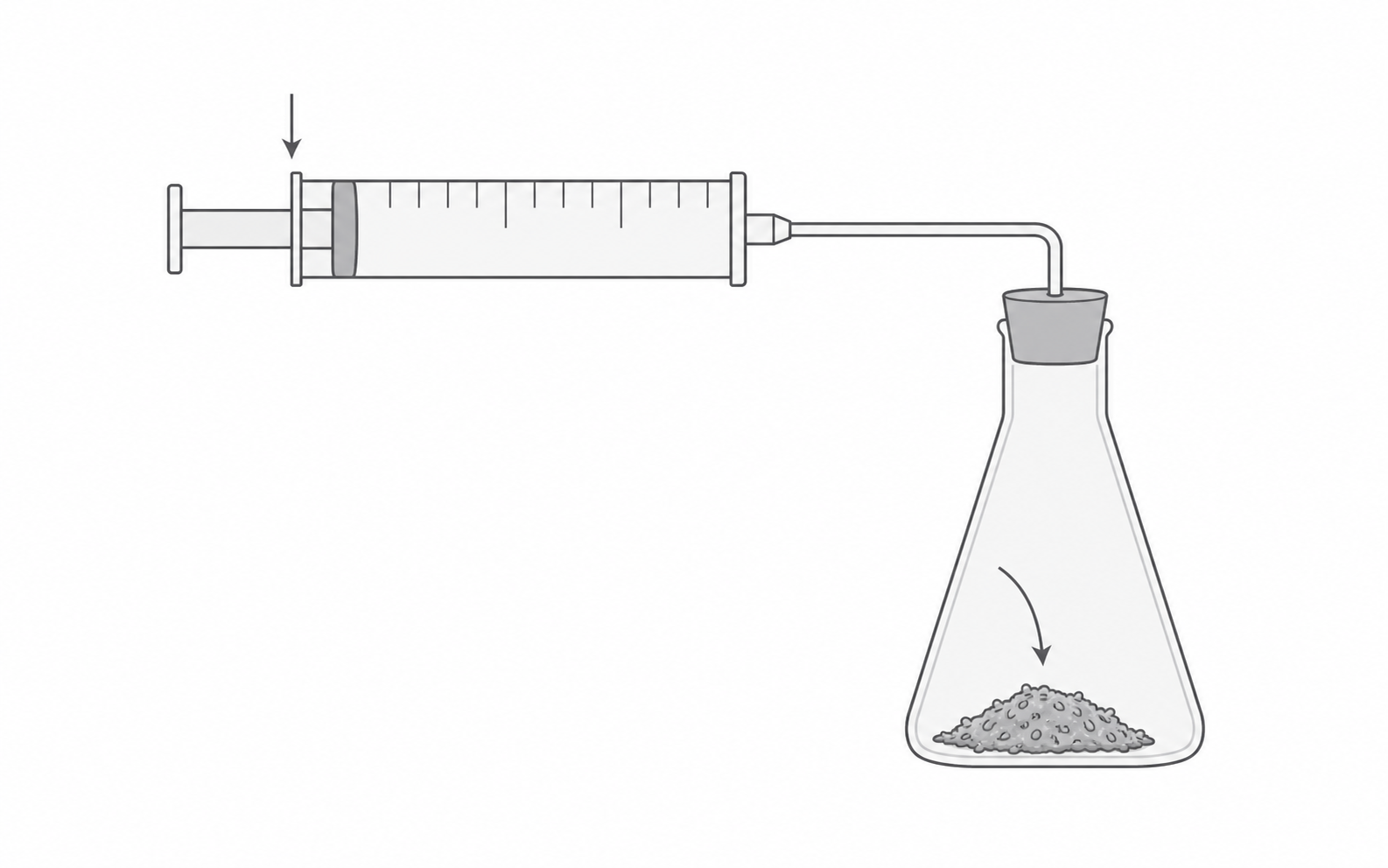
The key method points are:
- measure the original volume of trapped air
- leave the metal in contact with the air until the reaction is complete
- measure the final gas volume
- calculate the oxygen volume from the decrease in gas volume
Percentage of oxygen in air
If the result is much less than 21%, the reaction may not have finished, the reacting substance may not have been in excess, or the apparatus may not have trapped the air properly.
Calculating the percentage
In oxygen-in-air calculations, use the total original volume of trapped air, not just the volume in the gas syringe. Pearson-style apparatus can include air in a flask, a connecting tube and a syringe.
Suppose an experiment starts with:
| Part of apparatus | Volume of air |
|---|---|
| Conical flask | 100 cm^3 |
| Connecting tube | 10 cm^3 |
| Gas syringe at start | 80 cm^3 |
| Gas syringe at end | 43 cm^3 |
The volume of oxygen used is the fall in syringe reading:
Continue this lesson.
You’re previewing NovaLearn without an account. Create a free account to read the rest.
Create free account