2.1-2.4C - Group 1 alkali metals
Group 1 contains the alkali metals. In this lesson, the key examples are lithium, sodium and potassium. Their reactions with water and air show both why they are treated as one family and why reactivity increases down the group.
A family of metals
The alkali metals are the elements in Group 1 of the periodic table. For this specification, the main examples are lithium, sodium and potassium.
Alkali metal
A Group 1 metal that reacts with water to form an alkaline metal hydroxide solution and hydrogen gas.
Lithium, sodium and potassium have similar chemical reactions with water. Each one:
- floats on the surface of the water
- moves around as gas is produced
- fizzes because hydrogen gas is made
- forms a soluble metal hydroxide, so the solution becomes alkaline
That repeated pattern is evidence that they are a family of elements. The observations are not identical, but the same type of reaction happens and the same type of products form.
Group 1 metal with water
For a Group 1 metal represented by M:
For example, sodium forms sodium hydroxide and hydrogen:
The word "alkali" comes from the alkaline hydroxide solution formed. If phenolphthalein is added after the reaction, it turns pink because hydroxide ions are present. If universal indicator is used, the final solution is blue or purple.
Reactivity trend with water
The differences between the reactions show the trend in reactivity. Down Group 1, the reaction with water becomes more vigorous:
| Metal | Typical observations with water | Reactivity |
|---|---|---|
| Lithium | Floats, fizzes gently, moves slowly, gets smaller | Least reactive of these three |
| Sodium | Floats, fizzes more, moves faster, often melts into a ball | More reactive than lithium |
| Potassium | Floats, fizzes very vigorously, moves very fast, hydrogen may ignite with a lilac flame | More reactive than sodium |
[DIAGRAM: asset_name: Group 1 alkali metals - diagram 01; asset_slug: c22_group_1_alkali_metals__diagram_01; recommended_method: image_gen; description: Monochrome three-panel diagram of lithium, sodium and potassium reacting with water, showing increasing fizzing, movement and possible ignition of hydrogen from lithium to potassium.]
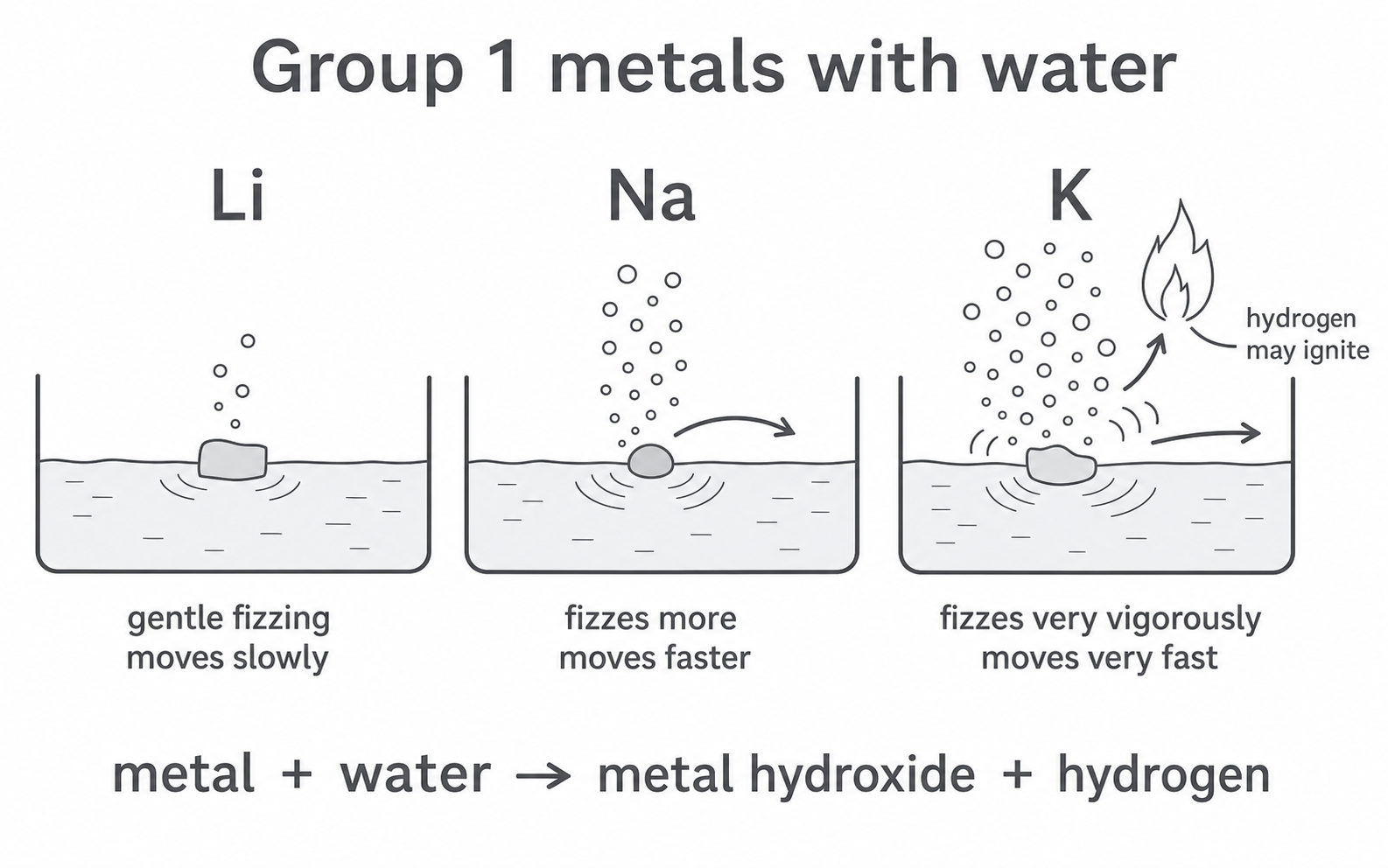
The important comparison is not just "they all fizz". The key evidence is that the fizzing, movement and heat released become greater from lithium to sodium to potassium. That means the reactivity order for these three is:
The product pattern stays the same. The trend is shown by how quickly and vigorously the reaction happens.
Reactivity trend with air
Group 1 metals also react with air. A freshly cut surface quickly loses its shine because the metal reacts with oxygen, water vapour and other gases in air. This is why these metals are stored away from air and water, often under oil.
Lithium reacts with air, but more slowly than sodium. Sodium tarnishes faster and burns more readily when heated. Potassium reacts faster still and is more likely to ignite during handling or reaction.
The reaction with oxygen can be summarised as:
Continue this lesson.
You’re previewing NovaLearn without an account. Create a free account to read the rest.
Create free account