3.1-3.4 - Exothermic - endothermic reactions and calorimetry
Chemical reactions can transfer heat energy to or from their surroundings. Calorimetry is the set of simple experiments that measure this transfer using a temperature change. In this lesson, the thermometer reading becomes useful data: it tells you whether a reaction is exothermic or endothermic, and it lets you calculate and then .
Heat energy direction
An exothermic reaction gives out heat energy. The nearby surroundings gain that heat energy, so the temperature you measure usually rises.
Exothermic reaction
A chemical reaction in which heat energy is given out.
An endothermic reaction takes in heat energy. The nearby surroundings lose heat energy to the reacting chemicals, so the temperature you measure usually falls.
Endothermic reaction
A chemical reaction in which heat energy is taken in.
In a simple calorimetry experiment, the "surroundings" are usually the water or solution around the reacting chemicals, plus the cup or can. The thermometer does not measure the energy inside individual bonds. It measures the temperature of the water or solution that has gained or lost heat energy.
Use this practical rule:
| Measured temperature change | What the surroundings did | Type of change |
|---|---|---|
| temperature increases | gained heat energy | exothermic |
| temperature decreases | lost heat energy | endothermic |
Combustion reactions and many neutralisation reactions are exothermic. Some dissolving processes are endothermic and some are exothermic, so you classify them using the measured temperature change, not by guessing from the word "dissolving". Displacement reactions in solution can also be studied by temperature change.
Energy level diagrams, bond energy calculations and reaction profile diagrams are separate later ideas. For this cluster, keep the focus on heat energy given out or taken in, simple calorimetry, , and molar enthalpy change.
Solution calorimetry
Many simple calorimetry experiments use a polystyrene cup. The cup is a better insulator than a glass beaker, so less heat energy is transferred between the reaction mixture and the room. Supporting the cup inside a beaker makes it more stable.
[DIAGRAM: asset_name: Exothermic/endothermic reactions and calorimetry - diagram 01; asset_slug: c40_exothermic_endothermic_reactions_and_calorimetry__diagram_01; recommended_method: image_gen; description: Monochrome text-free schematic of a polystyrene cup supported inside a beaker, with a lid, thermometer tip in the reaction mixture, stirring rod, and reagent being added.]
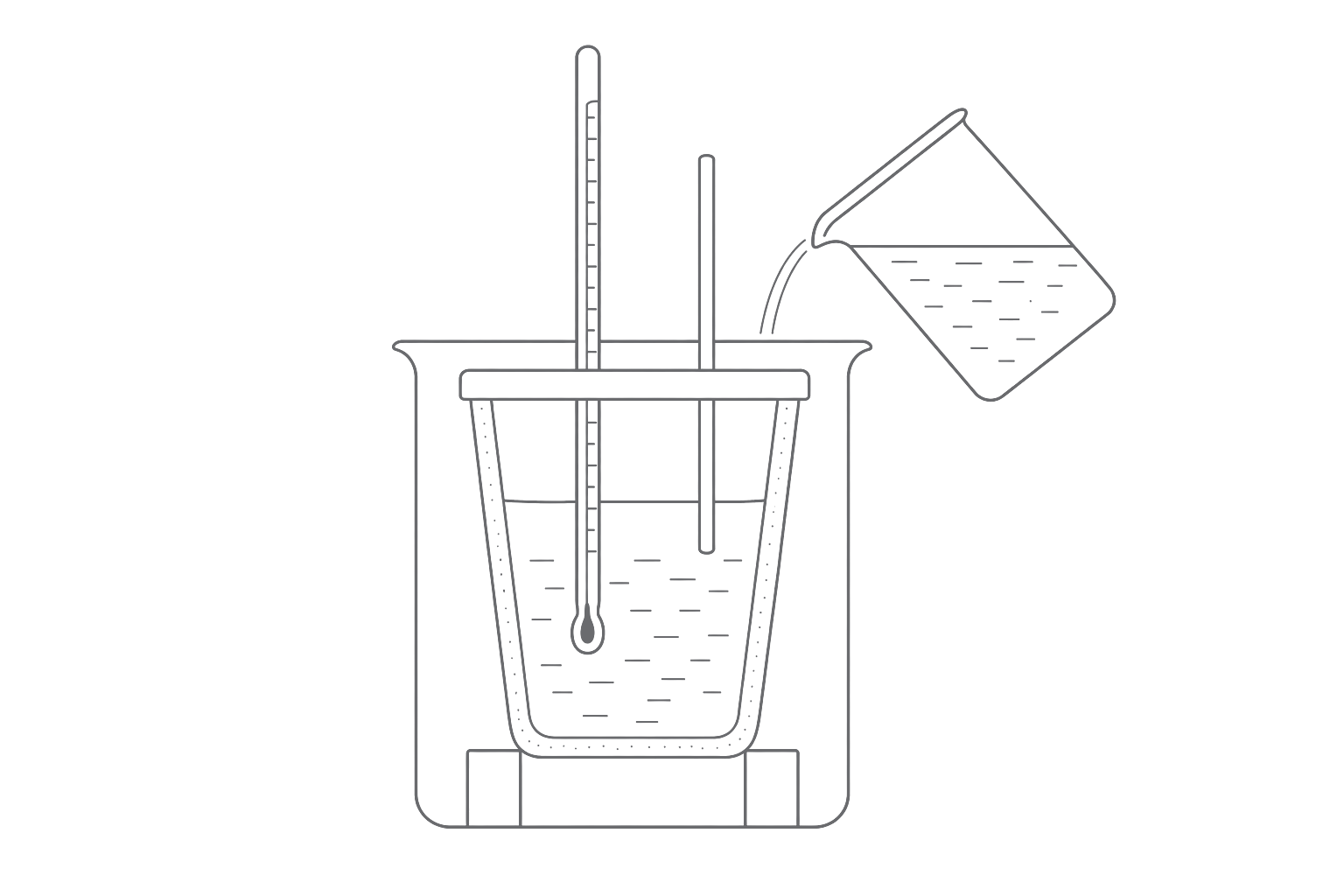
A general method for neutralisation, displacement or dissolving calorimetry is:
- Measure a known volume or mass of the first substance into the polystyrene cup.
- Measure its initial temperature.
- Add a measured volume or mass of the second substance, or add a measured mass of solid.
- Stir gently and record the highest temperature reached for an exothermic change, or the lowest temperature reached for an endothermic change.
- Calculate the temperature change, .
For neutralisation, the reacting solutions could be dilute hydrochloric acid and sodium hydroxide solution. For displacement, a metal powder could be added to a metal salt solution, such as magnesium to copper(II) sulfate solution. For dissolving, a known mass of solid is added to water and the maximum or minimum temperature is recorded.
Fair and accurate solution calorimetry depends on careful control. Keep relevant volumes, concentrations, masses, starting temperatures, stirring method and apparatus the same when comparing experiments. If you are adding one solution in portions, be specific about which solution's concentration or starting temperature is kept constant. A vague answer such as "keep the temperature the same" may not be enough if the method contains more than one liquid.
Common improvements are using a polystyrene cup instead of a glass beaker, using a lid with a hole for the thermometer, stirring at the same rate, and recording the maximum or minimum temperature promptly.
Combustion calorimetry
Combustion calorimetry measures the heat energy transferred from a burning fuel to a known mass of water. A simple school experiment uses a spirit burner, a metal can containing water, and a thermometer.
[DIAGRAM: asset_name: Exothermic/endothermic reactions and calorimetry - diagram 02; asset_slug: c40_exothermic_endothermic_reactions_and_calorimetry__diagram_02; recommended_method: image_gen; description: Monochrome text-free schematic of combustion calorimetry apparatus with a spirit burner heating a metal can of water, thermometer tip in the water, tripod or clamp support, and burner cap set aside.]
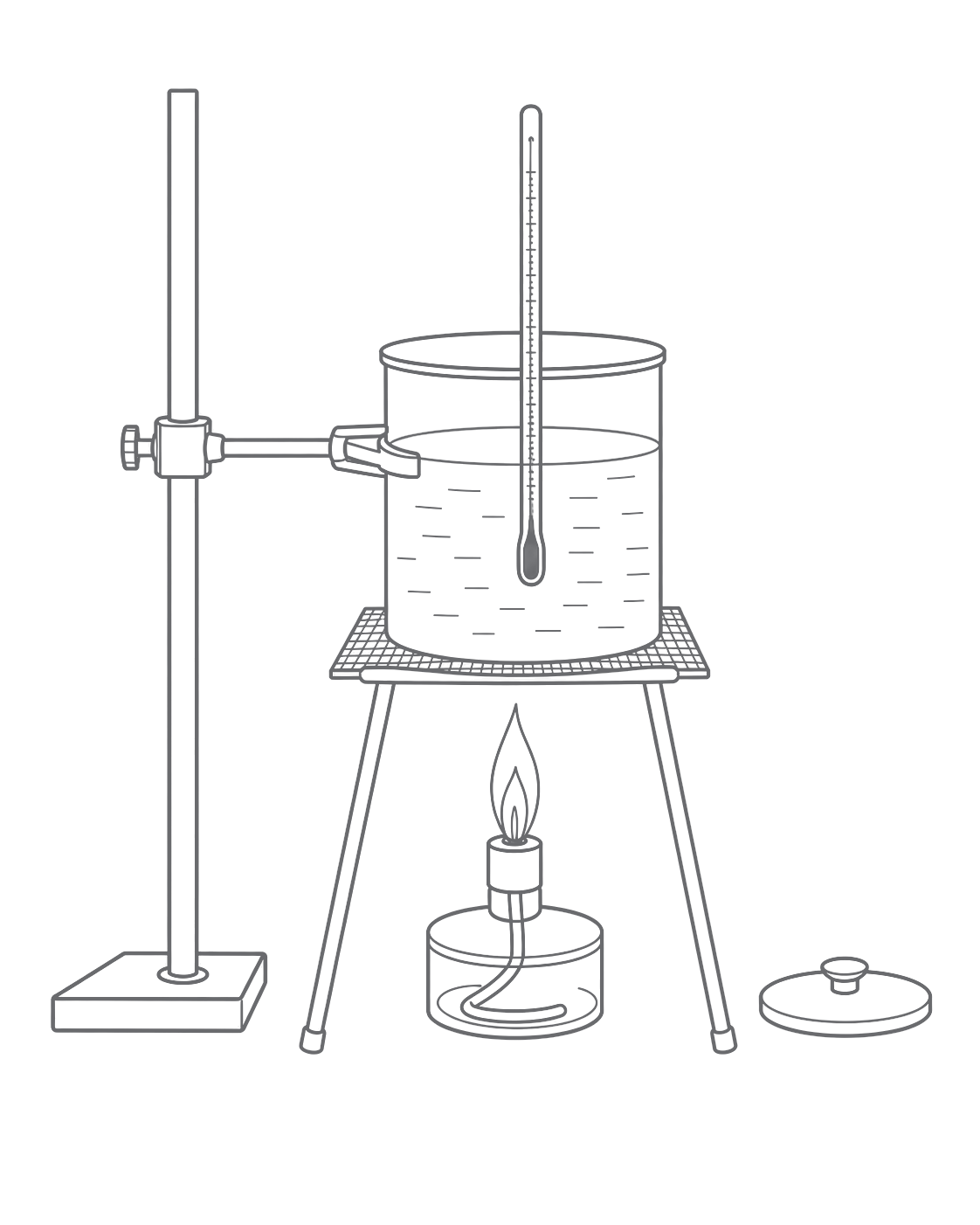
A suitable method is:
- Find the initial mass of the spirit burner and fuel.
- Add a known volume of water to the metal can.
- Measure the initial temperature of the water.
- Light the spirit burner and use it to heat the water.
- Stir the water so the heat energy is distributed evenly.
- Stop when the temperature has risen by a measured amount, or after a planned temperature interval.
- Extinguish the flame and immediately find the final mass of the spirit burner and fuel.
- Use the temperature change of the water and the mass of fuel burned in the calculation.
The final mass is found immediately because liquid fuel can evaporate after the flame is extinguished. If fuel evaporates before the final mass is measured, the calculated mass of fuel burned will be too large.
Continue this lesson.
You’re previewing NovaLearn without an account. Create a free account to read the rest.
Create free account