2.44 - Gas tests
Some reactions make gases, and the gas is often the evidence that tells you what happened. In this lesson, the job is to describe the positive tests for five named gases: hydrogen, oxygen, carbon dioxide, ammonia and chlorine. A strong Edexcel answer normally gives both the test method and the positive result.
What a gas test answer needs
A gas test is a practical method used to identify a gas from a characteristic observation. For this specification point, you do not need to design gas preparation methods. You need to describe the test that is carried out and the result that confirms the gas.
Gas test
A gas test is a practical test used to identify a gas by producing a characteristic positive observation.
The two halves of the answer matter:
| Gas | Method needed | Positive result needed |
|---|---|---|
| Hydrogen | use a burning splint | a squeaky pop is heard |
| Oxygen | use a glowing splint | the splint relights |
| Carbon dioxide | bubble the gas through limewater | limewater turns milky or cloudy white |
| Ammonia | use damp red litmus paper | the litmus turns blue |
| Chlorine | use damp litmus paper, usually damp blue litmus | the paper is bleached white; blue litmus may turn red then white |
If a question asks for a test for a gas, avoid giving only a property. For example, "chlorine has a smell" is not a good test answer, and "carbon dioxide puts out a flame" is not specific enough because several gases can do that. Give the named test and its positive observation.
Splint tests for hydrogen and oxygen
Hydrogen and oxygen are often confused because both tests use a wooden splint. The difference is whether the splint is burning or only glowing.
[DIAGRAM: asset_name: Gas tests - diagram 01; asset_slug: c37_gas_tests__diagram_01; recommended_method: image_gen; description: Monochrome side-by-side schematic of the hydrogen and oxygen splint tests: a burning splint at the mouth of a gas test tube giving a pop for hydrogen, and a glowing splint relighting inside a gas test tube for oxygen. No colour coding; positive results are taught in the surrounding text.]
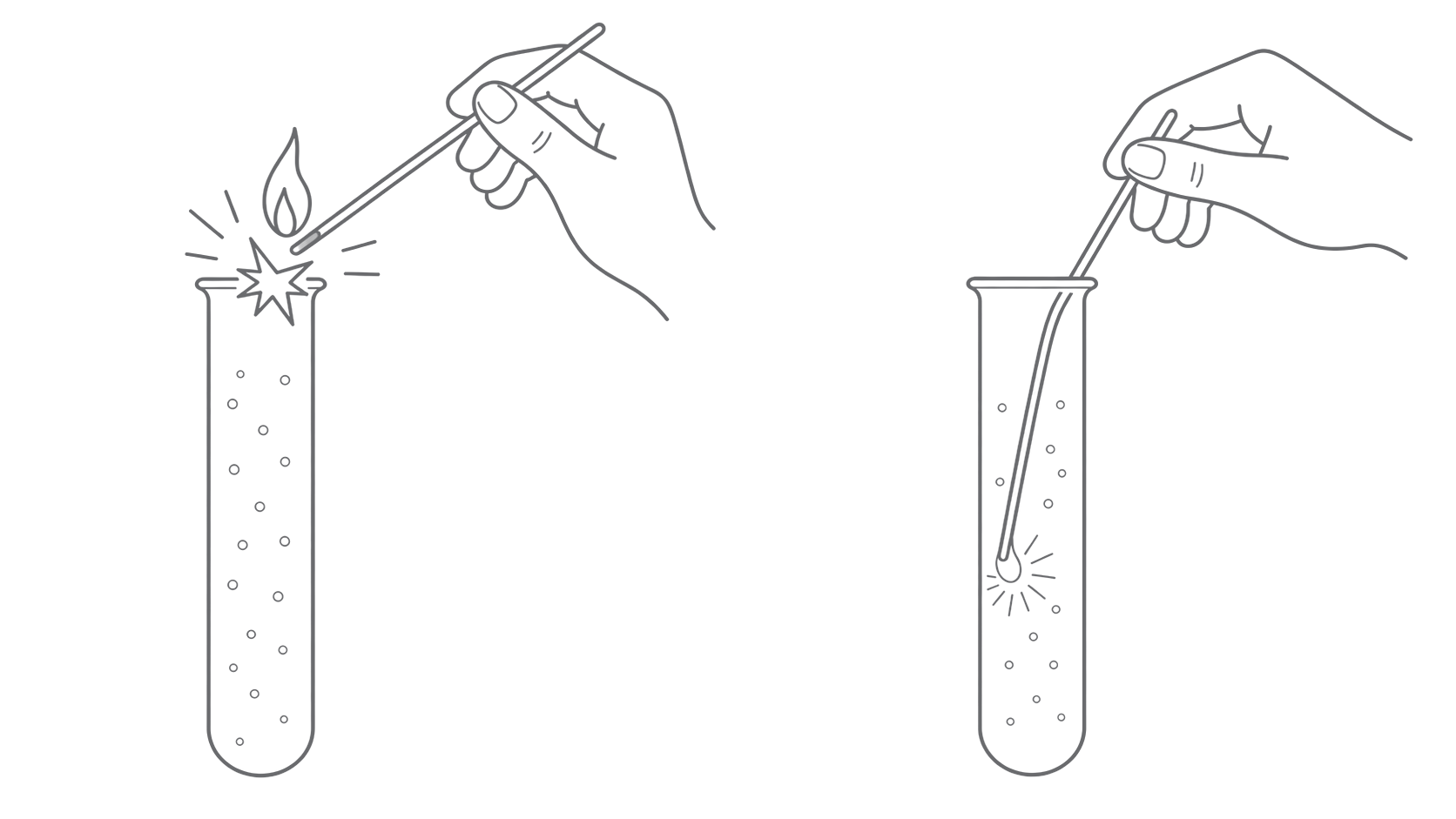
To test for hydrogen, hold a burning splint at the mouth of a test tube of the gas. If the gas is hydrogen, it burns with a squeaky pop.
To test for oxygen, place a glowing splint into the gas. If the gas is oxygen, the glowing splint relights.
Keep the wording precise. A burning or lighted splint is used for hydrogen. A glowing splint is used for oxygen. Writing "use a splint" without saying burning or glowing is usually too vague.
Continue this lesson.
You’re previewing NovaLearn without an account. Create a free account to read the rest.
Create free account