2.22P-2.24P - Electrical conductors, insulators and charging by friction
Static electricity begins with where charge can move. In this lesson you will identify common conductors and insulators, plan the friction-charging practical, and explain positive and negative charge in terms of electrons being lost or gained.
Conductors and insulators
An electrical conductor is a material that allows charge to move through it easily. Metals are the most important examples for this specification: copper, aluminium, iron and steel are all conductors.
Electrical Conductor
An electrical conductor is a material that allows electric charge to move through it easily.
An electrical insulator is a material that does not allow charge to move through it easily. Plastics are the key examples to know. Rubber, glass, dry wood, ceramic and dry air are also common insulators.
Electrical Insulator
An electrical insulator is a material that does not allow electric charge to move through it easily.
[DIAGRAM: asset_name: Electrical conductors, insulators and charging by friction - diagram 01; asset_slug: p20_electrical_conductors_insulators_and_charging_by_friction__diagram_01; recommended_method: image_gen; description: Monochrome two-panel diagram comparing a metal conductor, where electrons can move freely and spread out, with a plastic insulator, where charge stays near where it is placed.]
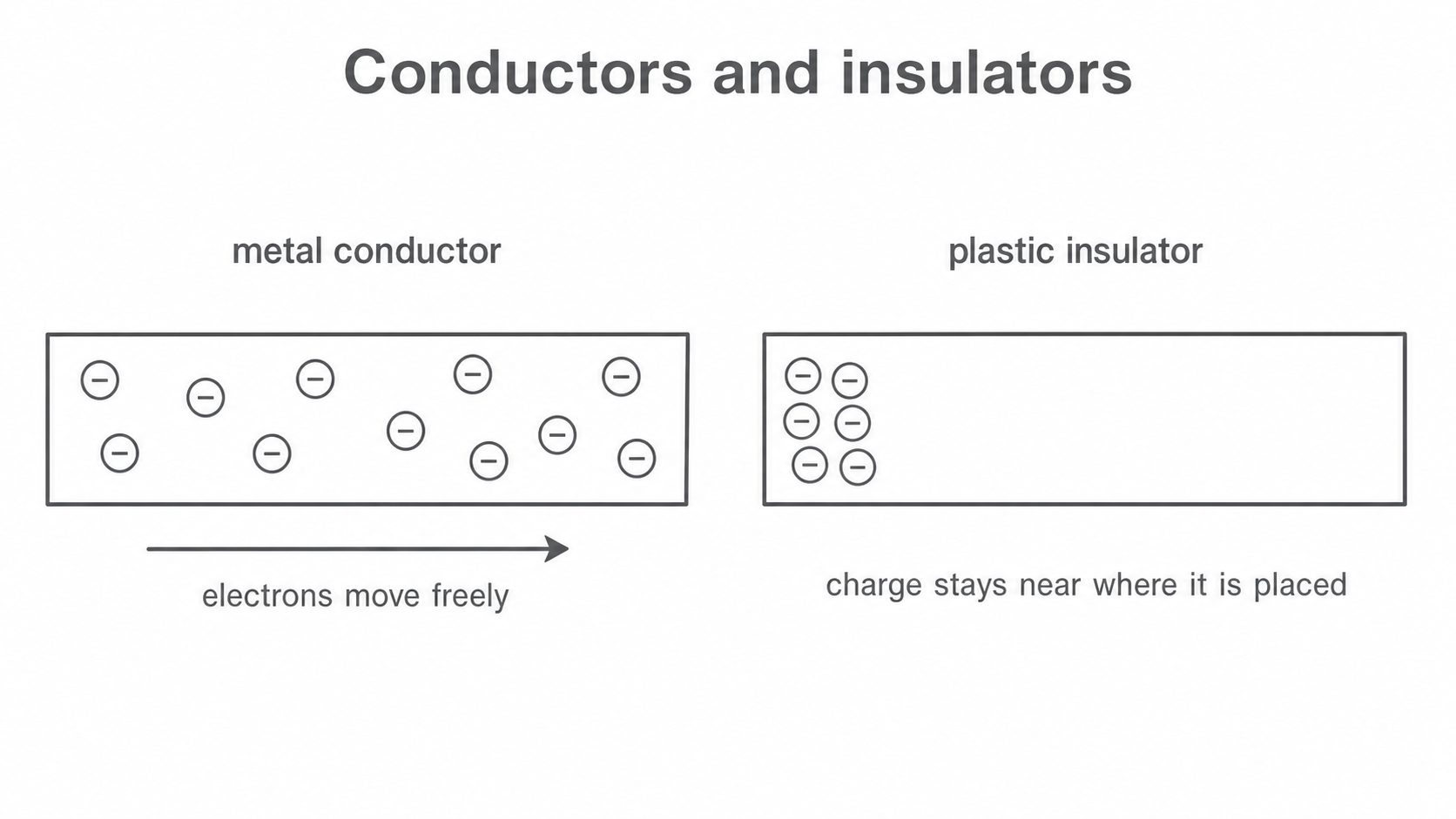
For Edexcel questions, the safest examples are:
| Conductors | Insulators |
|---|---|
| metals such as copper, aluminium, iron and steel | plastics such as polythene, PVC and acrylic |
| graphite | rubber, glass, ceramic and dry wood |
| impure water or the human body, because they contain mobile charged particles | dry air, paper and many fabrics |
The word "electrical" matters. A material might be a good thermal conductor but that is not the same property. Here, conductor means charge can move easily through the material.
Charging insulators by friction
The practical in this lesson investigates how insulating materials can be charged by friction. It uses insulating rods or strips, such as plastic, polythene, PVC, Perspex or acrylic, rubbed with materials such as wool, polyester or a dry cloth.
Rubbing is useful because it brings two insulating surfaces into very close contact again and again. That contact can transfer electrons from one surface to the other. Because the materials are insulators, the charge stays on the rubbed region instead of quickly spreading away or leaking through the hand holding it. A metal rod held in the hand would not stay charged in the same way: any charge could move through the metal and away through the body.
[DIAGRAM: asset_name: Electrical conductors, insulators and charging by friction - diagram 03; asset_slug: p20_electrical_conductors_insulators_and_charging_by_friction__diagram_03; recommended_method: image_gen; description: Monochrome apparatus diagram showing a plastic rod rubbed with a dry cloth, then a charged rod suspended from insulating thread while another charged rod is brought near without touching. Observe attraction or repulsion; repulsion of similarly rubbed rods is evidence that both are charged.]
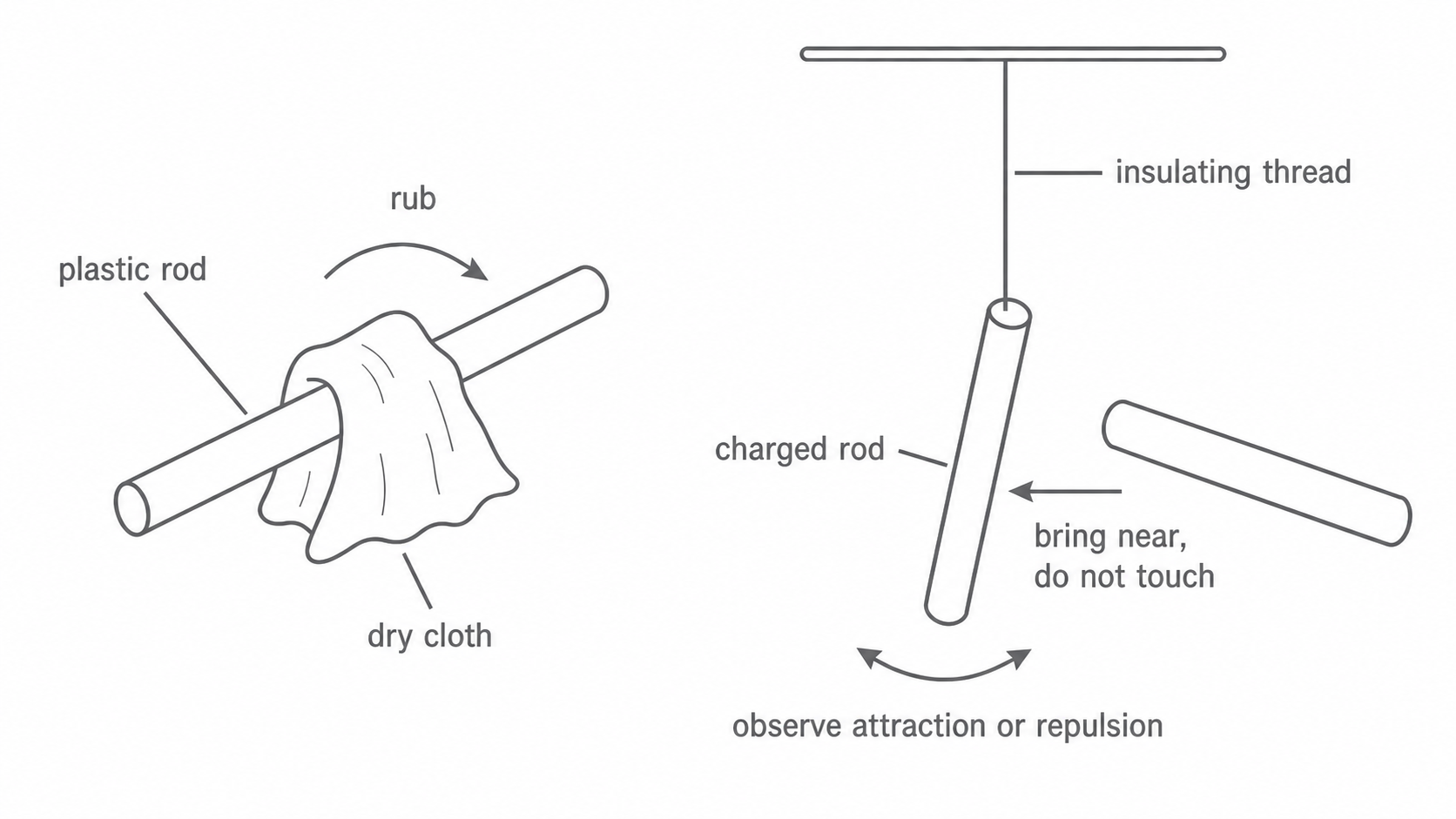
A suitable method is:
- Choose two identical insulating rods or strips and a dry rubbing cloth. Check the rods show no repulsion before rubbing.
- Suspend one rod from an insulating thread so that it can move freely.
- Rub the suspended rod with the cloth, always using the same number of strokes and the same part of the rod.
- Rub a second rod in the same way.
- Bring the second rod close to the suspended rod without touching it.
- Observe whether the suspended rod is repelled. Repulsion shows that both rods carry the same type of charge. Attraction alone is not conclusive: a charged rod can also attract a neutral rod.
- Discharge/reset the rods and repeat. Then change one material at a time, keeping the rubbing and testing conditions the same.
An alternative test is to bring the rod near small initially neutral paper pieces before and after rubbing. Attraction after rubbing is evidence that the tested rod is charged; avoid touching the paper, blowing on it or moving the rod so fast that air currents move it.
Touching the rod with a hand can discharge it because charge can move through the body. Keep fingers away from the charged region, use an insulating thread, and avoid damp surfaces. Moist air and damp materials make the effect weaker because charge leaks away more easily.
Continue this lesson.
You’re previewing NovaLearn without an account. Create a free account to read the rest.
Create free account