Biology 7.2 - 7.3 - Adrenalin and thyroxine
On Higher tier, explain how adrenalin prepares the body for sudden action and how TRH, TSH and thyroxine form a negative-feedback system that controls metabolic rate.
Adrenalin and fight or flight
Higher tier only
During a sudden threat, the body must make resources available for vigorous action. The adrenal glands produce adrenalin, which prepares the body for fight or flight. Pearson uses the spelling adrenalin; adrenaline is the same hormone.
The effects form one coordinated response:
| Change caused by adrenalin | How it prepares the body for action |
|---|---|
| Heart rate increases | The heart can pump more blood each minute, speeding transport around the body. |
| Blood pressure increases | Blood is driven through the circulation at a higher pressure. |
| Blood flow to the muscles increases | Muscle cells receive oxygen and glucose more rapidly for respiration. |
| Blood sugar level rises | Adrenalin stimulates the liver to change stored glycogen into glucose. The glucose enters the blood and is available for respiration. |
The direction of the sugar change is important: glycogen → glucose. Glycogen is the stored material in the liver; glucose is the soluble sugar released into the blood. It is incorrect to say that the liver releases glycogen into the bloodstream.
Thyroxine and negative feedback
Higher tier only
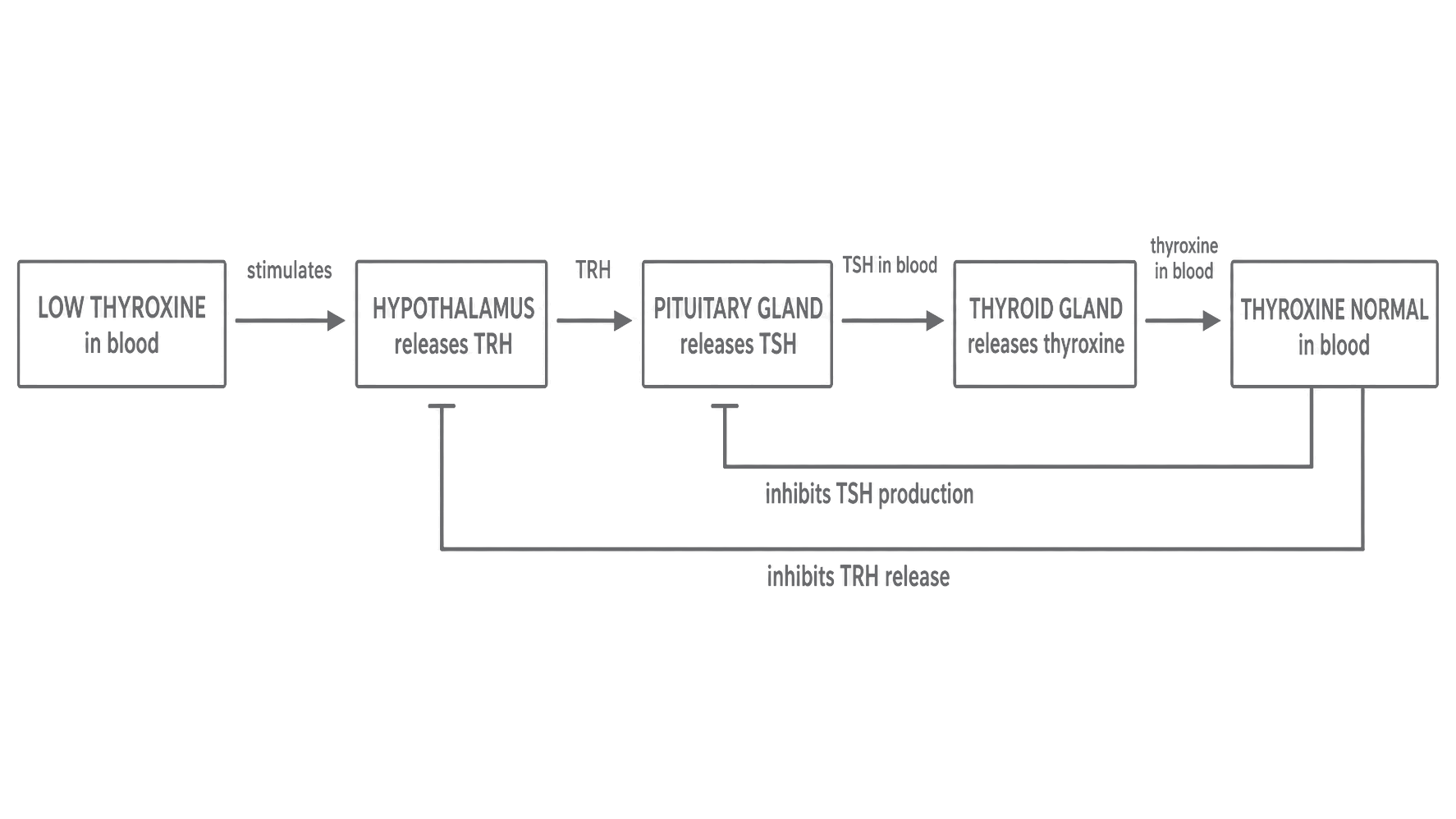
Arrowheads show stimulation; the flat-ended lines show inhibition of TRH release and TSH production.
Metabolic rate is the overall rate of chemical reactions in the body's cells. Thyroxine, a hormone produced by the thyroid gland, controls metabolic rate. Its concentration is regulated using negative feedback: a deviation from the normal level triggers responses that oppose the deviation and return the level towards normal.
Two other hormone signals control thyroxine:
- TRH is thyrotropin-releasing hormone.
- TSH is thyroid-stimulating hormone.
Follow the source, signal and target at each stage:
- When the thyroxine concentration is too low, the hypothalamus produces and releases more TRH.
- TRH acts on the pituitary gland, causing it to release TSH.
- TSH acts on the thyroid gland, causing it to produce and release more thyroxine. The thyroxine concentration rises towards normal.
- Once the thyroxine concentration is normal, thyroxine inhibits the release of TRH and the production of TSH. With less stimulation of the thyroid, further thyroxine production is reduced.
The response opposes the original low concentration, which is why it is negative feedback. Negative does not mean harmful, and inhibition does not switch the pathway off permanently. It reduces further stimulation once the normal level has been restored.
Two hormone control patterns
Higher tier only
Adrenalin and thyroxine show two different uses of endocrine signalling. Adrenalin coordinates several changes that prepare the body for a sudden demand. Thyroxine control is a feedback system: a low concentration increases stimulation, and restoration of the normal concentration reduces that stimulation.