Biology 5.25 - Treating cardiovascular disease
Compare life-long medication, procedures and lifestyle changes, then weigh their benefits and limitations for a patient with narrowed coronary arteries.
Treating cardiovascular disease
Cardiovascular disease is a group of conditions affecting the heart and blood vessels. Coronary heart disease is one example: atheroma, a fatty deposit in the artery wall, narrows a coronary artery, reducing blood flow and oxygen delivery to cardiac muscle. A treatment can reduce future risk, improve blood flow through the existing artery, or provide a new route around a blockage.
Life-long medication
Statins reduce cholesterol production in the liver, which lowers LDL cholesterol in the blood. Lower blood LDL reduces the chance of further fatty material building up in artery walls and lowers the future risk of heart attack or stroke. Statins are non-invasive and can benefit people with raised risk, but they must usually be taken long term and may be continued for life. Some people experience side effects, and a statin does not immediately widen a severely narrowed artery.
Procedures
In angioplasty, a balloon is inflated inside a narrowed coronary artery, pressing the atheroma outward. A wire-mesh stent is normally left in place to hold the lumen open, so blood flow to heart muscle improves. This is less invasive and usually has a shorter recovery than bypass surgery, but it carries procedural risks and the artery can narrow again.
In a coronary artery bypass graft (CABG), a healthy blood vessel is attached to make a route around a blocked or narrowed section. This can improve blood supply when several arteries are affected or angioplasty is unsuitable. It is major surgery, so recovery is longer and complications can be more serious.
Lifestyle changes
Stopping smoking removes an important source of artery damage, while a balanced diet and regular physical activity can improve modifiable risk factors such as body mass, blood pressure and blood lipids. These changes can have wide health benefits and avoid procedural risks. Their effects build over time, they require sustained change, and they may not restore enough blood flow when an artery is already severely narrowed.
[DIAGRAM: asset_slug: biology_5_25_stent_and_bypass; description: A stent holds the existing artery open; a graft carries blood from above the narrowing to the artery below it.]
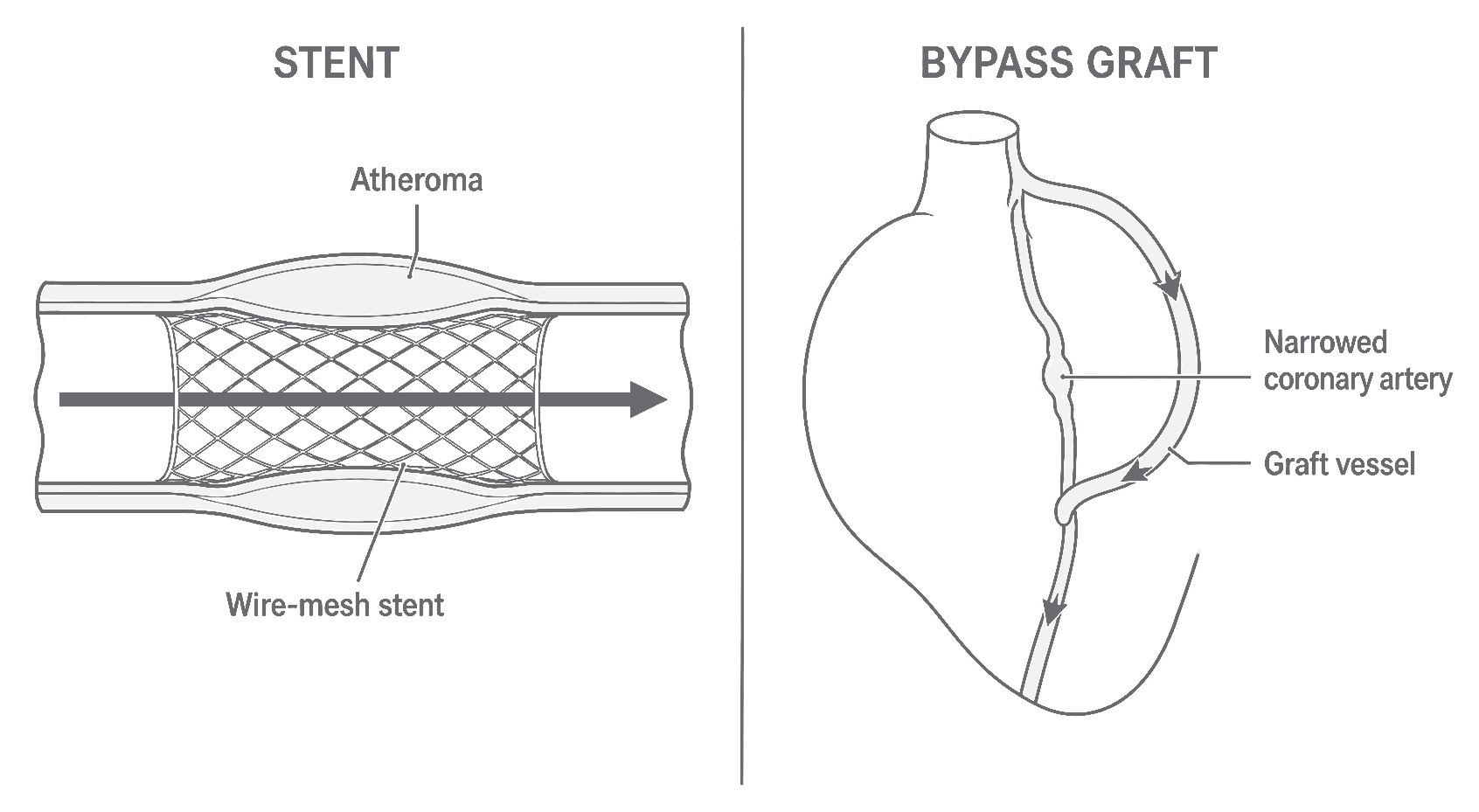
The two panels show how procedures improve blood flow. The stent widens the existing route, while the graft creates a route around a narrowing. Medication and lifestyle changes reduce future risk over time. A stent or bypass does not remove every underlying risk factor, so a procedure is often combined with medication and lifestyle change.
Choosing and combining treatments
To evaluate a treatment, compare benefits and limitations using the patient's situation, then reach a justified conclusion. A universal ranking is not valid because the best balance depends on the location and severity of narrowing, the urgency of restoring blood flow, other health conditions, procedural risk and whether the person can sustain medication or lifestyle change.
| Option | Main benefit | Main limitation |
|---|---|---|
| Life-long statin medication | lowers LDL cholesterol and future cardiovascular risk without an operation | requires continued use; side effects can occur; does not rapidly open a severe narrowing |
| Angioplasty and stent | directly widens one narrowed artery and can improve blood flow quickly; less invasive than bypass surgery | bleeding, clotting or artery damage can occur; narrowing can recur; underlying risks remain |
| Coronary bypass surgery | provides blood flow around severe or multiple blockages | major surgery with a longer recovery and greater complication risk |
| Lifestyle change | tackles modifiable causes, has broad health benefits and can support every other option | benefit develops over time; sustained change can be difficult; may be insufficient alone for severe disease |
Treatment categories are not mutually exclusive. A stent may address a dangerous narrowing now, a statin may reduce future atheroma risk, and stopping smoking may prevent further vessel damage. The strongest evaluation explains why a particular combination fits the evidence rather than simply naming the option with the most benefits.
Match the treatment mechanism to the problem: reduce future risk, widen the current route or bypass the blockage. Then weigh speed, likely benefit, risk, recovery and long-term adherence.