5.9B - 5.10B - Plant defences
Learn how a plant’s waxy cuticle, cell walls and defensive chemicals reduce attack by pests and pathogens. Connect a plant chemical’s biological activity with its possible use in a carefully controlled human medicine.
5.9B · Plant physical barriers
A pest feeds on or otherwise damages a plant, whereas a pathogen enters plant tissue and causes disease. Because many attacks begin at a surface, some plants have preformed physical barriers that make contact, entry or feeding more difficult.
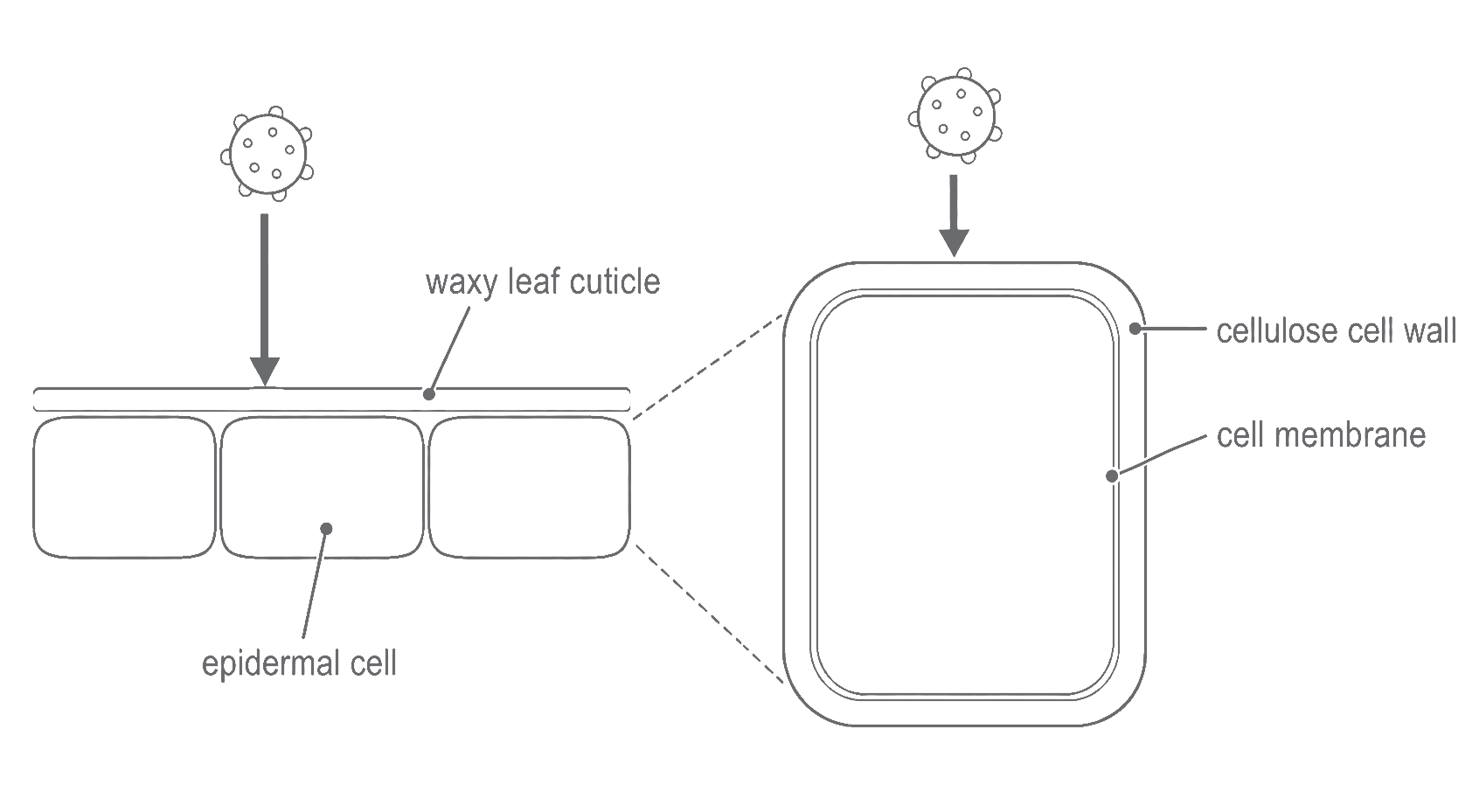
The leaf cuticle is a continuous, waxy, water-resistant layer over the leaf epidermis. It separates microbes from the living epidermal cells, so a pathogen must cross this layer before it can invade. Its water-resistant surface also reduces the film of water in which the spores of many fungal pathogens germinate.
Each plant cell is surrounded by a strong cellulose cell wall. This wall supports the cell, but it also forms a tough barrier that a pathogen must penetrate to reach the cell membrane and contents. Tough surface tissues also make it harder for some pests to pierce or chew into living tissue. Neither barrier is impenetrable: damage can break it, and some pathogens have ways to cross it, but the barrier reduces the chance of a successful attack.
[DIAGRAM: asset_name: 5.9B-5.12 - Plant and human defences - diagram 01; asset_slug: edexcel-gcse-biology-5-9b-plant-physical-barriers; recommended_method: image_gen; description: Simple monochrome textbook schematic with a leaf-surface view and one magnified epidermal cell. Label only waxy leaf cuticle, epidermal cell, cellulose cell wall and cell membrane. Show a fungal spore or generic pathogen outside the cuticle with an attempted-entry arrow stopping at the cuticle, then a second attempted-entry arrow stopping at the cell wall. Make the cuticle a continuous outer layer and the cell wall the rigid layer outside the cell membrane. Do not add stomata, immune signalling, callose, vascular tissue, named pathogens, colour coding or photorealistic microscopy.]
Continue this lesson.
You’re previewing NovaLearn without an account. Create a free account to read the rest.
Create free account