5.12 - Human barriers and defences
Explain how skin, mucus and cilia reduce pathogen entry, then follow how lysozyme and stomach acid act on microorganisms. Connect each defence’s structure or action to the protection it provides.
5.12 · Human physical barriers
The human body uses barriers before a specific immune response is needed. Intact skin is a continuous layer between the external environment and living tissues, so most pathogens cannot pass through it. A cut or burn breaches that barrier and creates a route into the body.
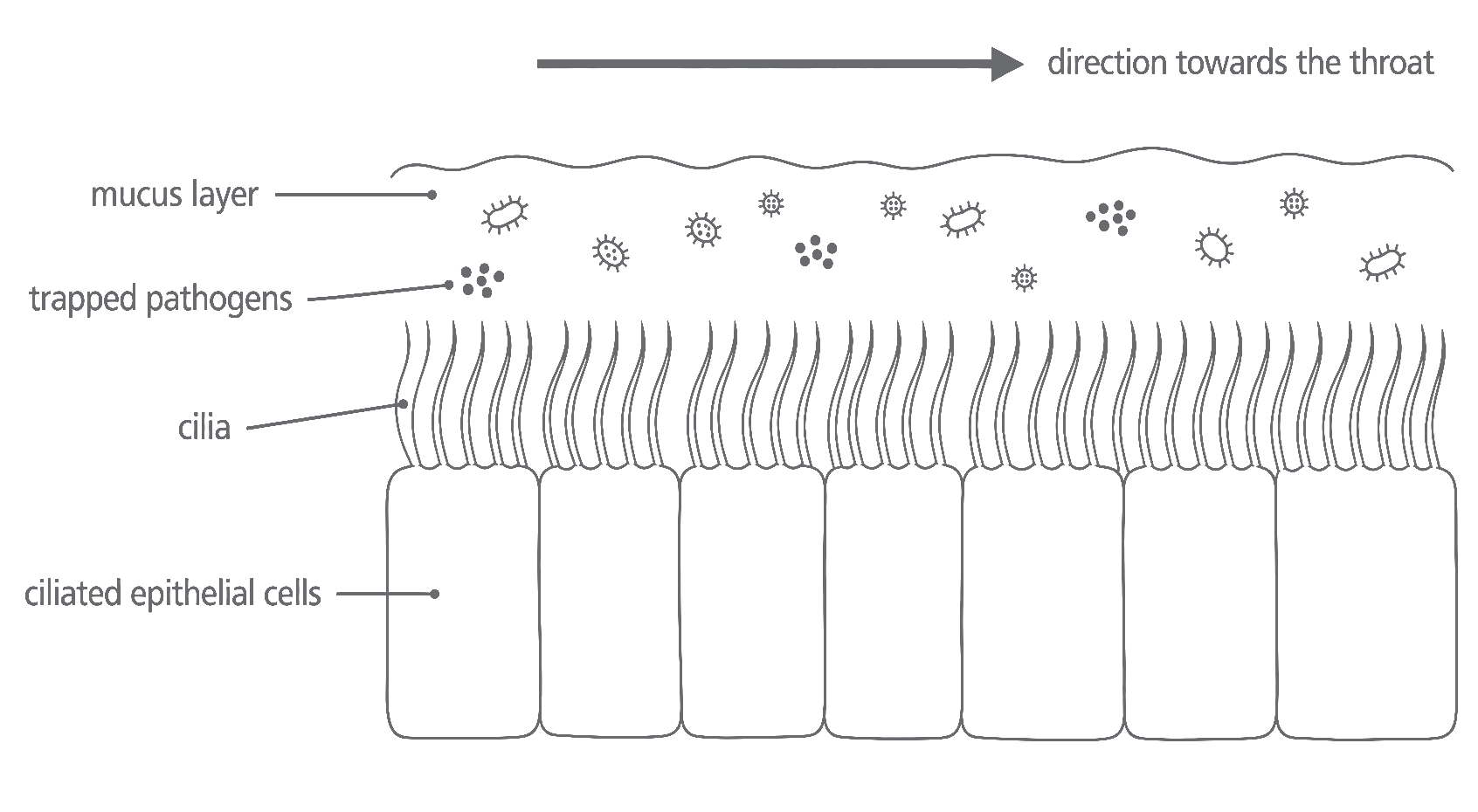
The airways need a different arrangement because air must enter. Their lining produces sticky mucus, which traps inhaled pathogens and particles before they reach deeper tissues. Cells in the airway lining have microscopic, hair-like cilia. Coordinated cilia beat to move the loaded mucus up towards the throat, where it can be swallowed or coughed out. Mucus does the trapping; cilia move the mucus rather than killing the pathogens directly.
[DIAGRAM: asset_name: 5.9B-5.12 - Plant and human defences - diagram 02; asset_slug: edexcel-gcse-biology-5-12-mucociliary-clearance; recommended_method: image_gen; description: Simple monochrome textbook cross-section of a human airway lining. Label only mucus layer, trapped pathogens, cilia, ciliated epithelial cells and direction towards the throat. Show pathogens embedded in mucus above the cilia and one clear arrow showing ciliary movement of the mucus towards the throat. Ensure cilia project from the epithelial cells into the mucus but do not touch or spear pathogens. Do not add lungs, antibodies, white blood cells, alveoli, named diseases, colour coding or photorealism.]
5.12 · Human chemical defences
Chemical defences act on pathogens that contact body surfaces or enter through food and air.
Continue this lesson.
You’re previewing NovaLearn without an account. Create a free account to read the rest.
Create free account